Zinus 14 Inch Ellie Bamboo Platform Bed Frame, Queen
Best for the ship-in-a-box bed frame
A bamboo platform frame with 11 inches of clearance underneath and no box spring to buy.
#ad · disclosure · Price as of September 24, 2026
Best Picks
Nobody wins every category. Here is which store to open for which piece - and the three measurements that decide whether any of it fits.
By Catherine Vizcaino · Home-renovation pro & founder
Updated September 2026

As an Amazon Associate, I Heart My Home earns from qualifying purchases. It never changes your price or our picks. Learn more.
Buying furniture online used to feel reckless. Now it is normal, and the risk has quietly moved somewhere else: not whether the sofa arrives, but whether it fits through the door, whether the “solid wood” in the listing is solid wood, and what happens if you hate it in the room. Those three things vary far more between stores than the furniture itself does.
I renovate homes for a living, which means I have furnished rooms from every one of the stores below, and I have also watched pieces get carried back down a staircase because somebody measured the room and not the turn at the landing. So this is not a ranking of who has the prettiest catalog. It is a working answer to a narrower question: which store should you open for the piece you are actually buying right now, and what does each one cost you in trade-offs.
The six Amazon pieces below are the ones I would start a room with, on the site’s only affiliate retailer — every one checked live before publishing, with the current price on the button rather than a number I typed once and let go stale. See our editorial policy for how picks get made, and the store-by-store breakdown underneath for everything Amazon is not the right answer for.
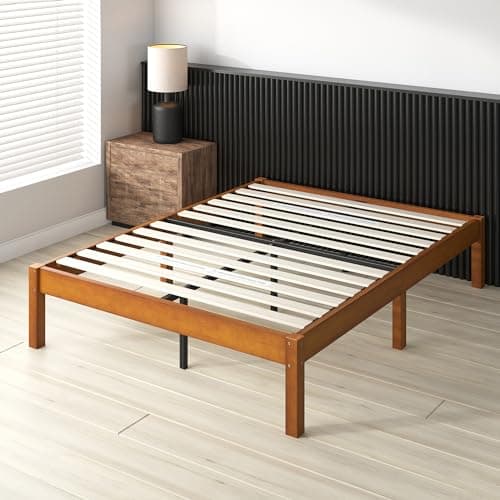
Best for the ship-in-a-box bed frame
A bamboo platform frame with 11 inches of clearance underneath and no box spring to buy.
#ad · disclosure · Price as of September 24, 2026

Best for the piece that works in three rooms
A 60-inch scalloped sideboard that holds a TV up to 70 inches or serves as a dining buffet.

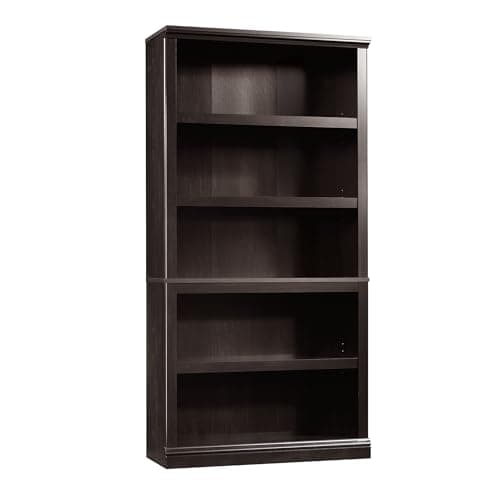
Best for ready-to-assemble storage that lasts
A nearly 70-inch five-shelf bookcase with three adjustable shelves and a finish on every side.
#ad · disclosure · Price as of September 24, 2026

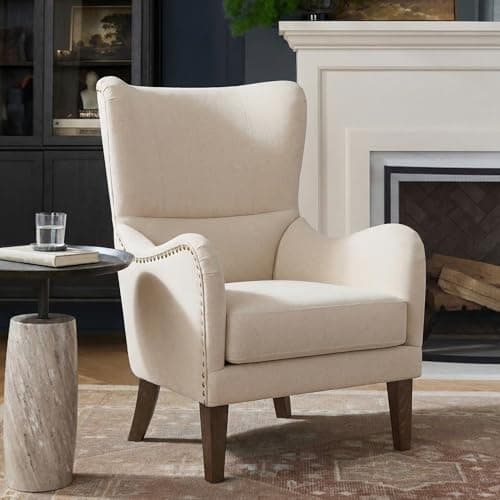
Best for the chair that finishes a room
A high wingback in beige linen on solid ash legs, with nailhead trim and tailored pleats.

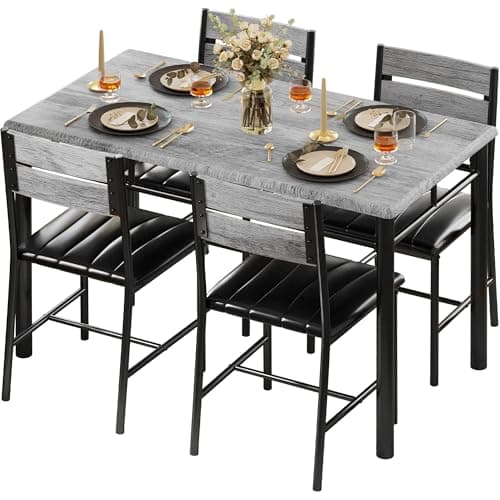
Best for a small kitchen or apartment dining nook
A compact 43-inch table on a steel frame with padded chairs that tuck fully underneath.

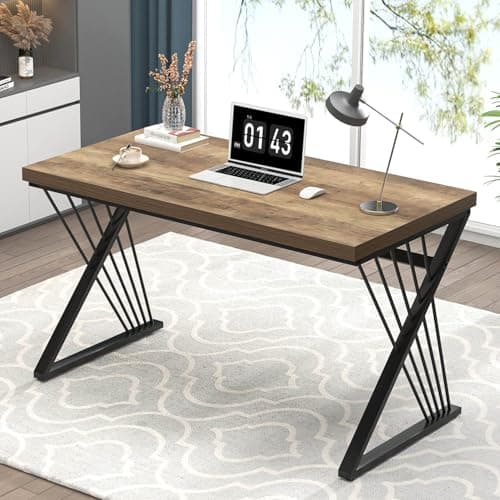
Best for a work surface that does not look like office furniture
A 47-inch oak-look desk on a black Z-frame that goes together in about fifteen minutes.
#ad · disclosure · Price as of September 24, 2026
| Marketplace (Amazon, Wayfair, Walmart) | Specialist retailer (IKEA, Article, West Elm) | |
|---|---|---|
| Who you are buying from | Thousands of sellers under one checkout - brand accountability varies per listing | One company that designed, sourced and warranties the piece |
| Selection | Effectively unlimited, including sizes nobody builds a showroom around | A curated catalog - if they do not make it, you cannot have it |
| Materials disclosure | Inconsistent - some listings state the frame, many say nothing | Usually stated on the product page, often down to the joinery |
| Delivery | Parcel carrier to your door for most items, and it is fast | Freight or in-house delivery, scheduled, sometimes room-of-choice |
| Assembly | Almost always yours to do | Ranges from flat-pack (IKEA) to fully assembled (Article, West Elm) |
| Returns on bulky items | Depends entirely on the seller - read the listing, not the site policy | One published policy that applies to everything they sell |
| Price for the look | Lowest, and the sales are real rather than theatrical | Higher, and the design usually justifies some of it |
| Best for | Frames, storage, small dining, accent seating, filling a room fast | Upholstery you will sit on daily, and anything you want to keep a decade |
Bottom line: buy the hard pieces — bed frames, bookcases, media units, desks, small dining sets — from a marketplace, where the money you save is not buying you anything a specialist would have done better. Buy the soft pieces you sit on every day — a main sofa, a sectional, a bed you want a headboard on — from a specialist with a published materials spec and a returns policy that covers freight, because that is where a bad guess is expensive and hard to undo. Almost every well-furnished room I have worked in is a mix of both, and nobody walking into it can tell which piece came from where.
Catalog size is the thing every store competes on and the thing that matters least. These are the five questions I actually ask, in the order they cost you money:
For frames, cases, desks and anything that is essentially panels and hardware, Amazon is the default and has been for a while. The catalog reaches sizes nobody builds a showroom around — the 43-inch dining table, the 47-inch desk, the low-clearance bed frame — and it arrives by parcel carrier in days rather than on a freight appointment in weeks. The six picks above are where I would start.
Its weakness is the same as its strength: anyone can list, so the quality floor is very low and the listing copy is not always written by the manufacturer. The way through it is to buy labels with a track record rather than the cheapest look-alike in the grid — our furniture brands guide sorts the ones worth trusting, and the best furniture roundup covers the core pieces category by category.
When you want every version of a thing under one set of filters, Wayfair is still the biggest room in the house. The filtering is genuinely good on the specifications that matter — seat depth, leg style, upholstery type — and the sales cycle is frequent enough that patience is a legitimate strategy rather than wishful thinking.
The catch is that quality varies enormously across so many suppliers, house brands rename the same factory piece more than once, and returns on large items are where the experience can turn. Read the specific listing’s return terms before you order anything freight-sized. We put the two head to head in Wayfair vs Amazon and Wayfair vs IKEA.
IKEA does one thing no marketplace can match: it publishes complete, trustworthy dimensions for a catalog that barely changes, which makes it the only store you can genuinely plan a small room around. If a piece has to fit an alcove to the inch, this is where I start, and the storage systems are the best value in furniture at any price.
You pay for it in assembly — real assembly, on the floor, with the little wrench — and in the fact that the finishes are honest about being finishes. Delivery reach and cost depend heavily on how close you are to a store. Our IKEA vs Amazon comparison lays out which pieces belong to which, and the small-space solutions guide covers the planning side.
Article sells its own designs direct, which means one company owns the spec, the photograph and the complaint. For a mid-century sofa or a leather chair — pieces where frame construction and cushion fill decide whether you still like it in year five — that accountability is worth paying for, and the pieces arrive assembled.
The catalog is small by design, delivery is scheduled freight rather than next-day, and it sits well above marketplace pricing. It is not the place to furnish a whole apartment; it is the place to buy the one piece you sit on every evening. If a sofa is your next purchase, start with how to choose a sofa before you shop anywhere.
West Elm and Pottery Barn are the stores people mean when they say they want their house to look like a catalog, and there is nothing wrong with that — the collections are coordinated, the materials are usually stated plainly, and a room bought from either will hang together without much effort from you.
Expect long lead times on upholstery, expect to pay for the design work, and expect the recognizable pieces to be genuinely recognizable in other people’s homes. We compare them directly in West Elm vs Pottery Barn, and against the cheaper route in West Elm vs Amazon.
Walmart has quietly become a serious furniture marketplace, and Target is the more curated, more trend-led version of the same idea. Both have something the pure online stores do not: a physical location near you that turns a return into an errand instead of a freight booking. For a first apartment or a rental turnover, that alone can decide it.
Walmart’s marketplace has the same quality-floor problem as any marketplace, and Target’s furniture catalog is narrow next to the others here. Both are strongest on the small stuff — see Target vs Amazon and our decorate-on-a-budget guide.
Costco carries very little furniture and what it carries rotates, but the value on a big-ticket item when it does appear is hard to match, and the returns culture is the friendliest in retail. Treat it as something to check rather than somewhere to shop — if the sectional you want happens to be there this month, buy it.
And the one I recommend most often that has no affiliate program at all: local secondhand. Facebook Marketplace, estate sales and Craigslist are where actual solid-wood furniture is cheap, because nobody wants to move a dresser. You get no returns, no delivery and no warranty, and you have to look at it in person — but a hundred-dollar solid oak dresser will outlive everything else on this page, and it is the only route that gets you real timber at engineered-board prices. Our furniture paint guide and furniture wax guide cover the part where you make it yours.
Every piece of furniture I have watched go back went back for one of three reasons, and all three are measurable in about ten minutes:
Take those three numbers once, write them in your phone, and every furniture decision afterward gets faster and much less risky — whichever store you end up buying from.
There isn’t one, and any page that names a single winner is picking for a reader it has never met. The useful version of the answer is by piece: Amazon for bed frames, bookcases, desks, media units and small dining sets; IKEA when a piece has to fit an alcove to the inch; Article or West Elm for the sofa you sit on every night; Wayfair when you want every variation of something under one set of filters; Walmart or Target when being able to drive a return back is worth more than the catalog.
It is safe if you buy the specification rather than the photograph. Shape photographs honestly; comfort does not. Look for a stated frame material, a stated cushion fill, and published seat depth and seat height — then compare those numbers to a sofa you already know you like. Where a listing states none of that, you are guessing, and a guess on the one piece you use every day is the guess most worth avoiding. Our how to choose a sofa guide covers what to look for.
For hard furniture, genuinely yes — a bed frame, a bookcase, a desk or a media unit is panels and hardware, and the established labels on Amazon build those to the same standard as anyone at the price. For upholstery it is much more uneven, because the things that decide whether a sofa lasts are the things a marketplace listing is least likely to state. Buy labels with a history rather than the cheapest look-alike in the grid.
It means wood fiber or particles bonded into a panel and given a surface — MDF and particleboard are the common versions. It is not a scam: it is flat, stable, does not warp with humidity the way solid timber can, and it is why a 60-inch cabinet can cost what it costs. What it will not do is refinish, hold a screw that has been removed and replaced several times, or survive standing water. Price it as engineered wood and it is often the right buy; pay solid-wood money for it and it is not.
For most flat-pack pieces, no — a bookcase or a desk is an hour with a screwdriver and the instructions are better than they used to be. Pay for it when the piece is heavy enough that a second person is not optional, when it has to be carried up a turn, or when a mistake is structural rather than cosmetic. Our furniture assembly guide covers the shortcuts that actually help.
Local secondhand, without much competition. Facebook Marketplace, estate sales and thrift stores are full of solid oak, maple and teak at engineered-board prices, because the cost of moving a dresser is what sets its resale value rather than what it is made of. You take on the inspection, the transport and the lack of any returns — and in exchange you get timber you can sand and refinish for decades.
Measure the narrowest point on the route from the street to the room — usually a door frame or a stair turn — and compare it to the boxed dimensions on the listing rather than the assembled ones. Where a store does not publish box dimensions, that is itself information. Flat-pack clears tight routes that pre-assembled furniture cannot, which is frequently the deciding factor between two otherwise identical pieces.
Browse the roundups I'd actually hand a client — honest picks, real trade-offs, and the one to buy first.