Skip to content
IMy Home

Best Picks

The Best TV Stands to Ground a Living Room

The media console sets the whole tone of a living room - here is what I pick, and how I hide the cable mess.

By Catherine Vizcaino · Home-renovation pro & founder

Updated August 2026

A decorated, cozy living room with a sofa

As an Amazon Associate, I Heart My Home earns from qualifying purchases. It never changes your price or our picks. Learn more.

The TV stand is the anchor of most living rooms whether you plan it that way or not — it sits under the biggest bright rectangle in the space, so the eye goes straight to it. That makes the media console one of the few furniture buys where getting the proportion right matters as much as the storage. Too small and the TV looks like it is toppling off the ends; too tall and everyone is craning their neck. Get the width and height right and the whole wall suddenly looks intentional.

The picks below span the layouts I set up most: a wide 65-inch-rated wood console, a fluted-front cabinet for a softer modern look, an open-shelf industrial stand, a corner unit for awkward rooms, a low credenza-style console, and a barn-door stand that hides clutter behind sliding panels. Each is chosen for the way it handles a real TV and real cable mess, not just how it looks empty in a photo. Pair one with the best coffee tables and best console tables for a coordinated living room.

For the full room, my living room decor guide covers layout around the TV wall. Amazon pricing changes constantly, so each pick shows a Check price on Amazon button instead of a number I cannot stand behind — our affiliate disclosure explains how that works.

Quick picks at a glance

#ProductBest forPrice
1
An entryway console table with decor and a mirror
Walker Edison 65-Inch Wood TV Console

A wide wood-tone console rated for a big TV, with open cubbies and a solid top that reads warm and grounded.

large TVs on a long wall
2
A decorated, cozy living room with a sofa
Fluted-Front Media Cabinet

A cabinet with vertical fluted doors that hides clutter behind a texture that is very on-trend right now.

a soft, current modern look with hidden storage
3
An entryway console table with decor and a mirror
Industrial Open-Shelf TV Stand

A wood-and-metal open stand that keeps gear on display and airflow open, with a raw industrial edge.

loft and industrial-style rooms
4
A decorated, cozy living room with a sofa
Corner TV Stand

A stand shaped to tuck into a corner and angle the TV out into the room, reclaiming an awkward space.

angling a TV into a room corner
5
A styled wood coffee table in a living room
Low Modern Credenza Media Console

A long, low credenza-style console on legs that reads mid-century and lifts the whole piece off the floor.

a low, mid-century modern TV wall
6
A decorated, cozy living room with a sofa
Sliding Barn-Door TV Stand

Sliding barn doors on a track hide gear and add farmhouse character without swinging out into the room.

hiding clutter with farmhouse character

Tap any row to jump to the full write-up. Prices open on Amazon in a new tab.

How we chose these picks

Every pick here is chosen the way I’d choose it for a client’s home: real-world durability first, build quality and materials second, and value for the money third. Where I’ve installed or lived with a product on a job, I say so and tell you what I saw. Where a pick is based on research and verified buyer feedback rather than hands-on use, I say that too — I never claim to have tested something I haven’t.

Read our full editorial policy for how we evaluate and update these guides.
1

Walker Edison 65-Inch Wood TV Console

Walker Edison · Best for large TVs on a long wall

An entryway console table with decor and a mirror

A wide wood-tone console rated for a big TV, with open cubbies and a solid top that reads warm and grounded.

Most people undersize their TV stand, and the fix is a console clearly wider than the TV so nothing overhangs and the proportions feel calm. Walker Edison builds this width at a sensible price in warm wood tones that ground a room. The open cubbies fit a soundbar and a streaming box without a cabinet door in the way of the remote signal.

Pros

  • Wide enough that a 65-inch TV does not overhang the ends
  • Open cubbies fit a soundbar and console gear
  • Warm wood tone anchors a neutral living room

Cons

  • Open shelves show whatever you store, so tidy gear helps
  • Large flat-pack - clear a big space to assemble it
2

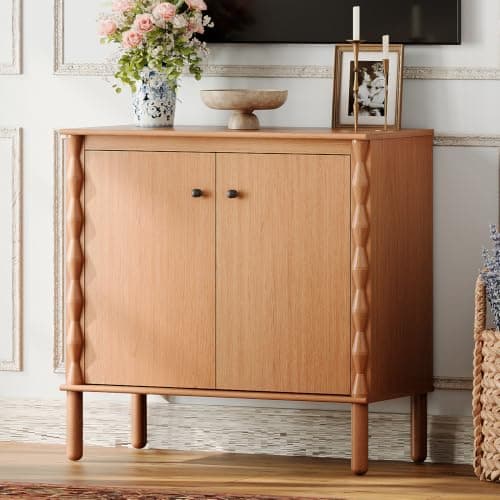
Fluted-Front Media Cabinet

Rolanstar · Best for a soft, current modern look with hidden storage

A decorated, cozy living room with a sofa

A cabinet with vertical fluted doors that hides clutter behind a texture that is very on-trend right now.

Fluted, reeded surfaces are everywhere in current design because the vertical lines add texture and catch light without adding color. On a media cabinet that texture does double duty: it looks current and it hides the electronics behind doors. This is the pick when you want the console itself to feel like a design element, not just a shelf.

Pros

  • Fluted doors hide gear and add on-trend vertical texture
  • Closed storage keeps the whole console looking tidy
  • Doors usually include a cutout or mesh for the remote signal

Cons

  • Closed cabinets trap heat, so ventilation for gear matters
  • Fluting collects dust in the grooves and wants a soft brush
3

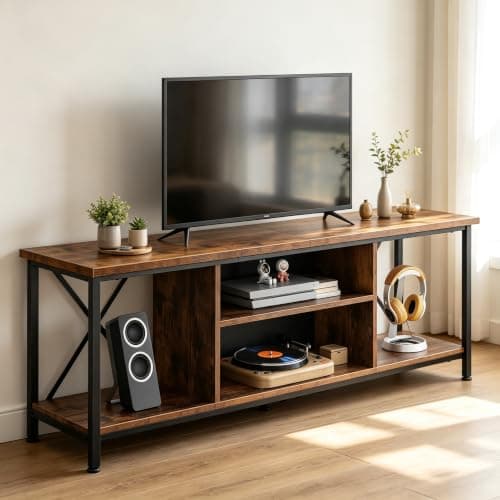
Industrial Open-Shelf TV Stand

WLIVE · Best for loft and industrial-style rooms

An entryway console table with decor and a mirror

A wood-and-metal open stand that keeps gear on display and airflow open, with a raw industrial edge.

An open-shelf stand keeps electronics cool and remote signals clear, and the wood-and-metal build leans into an industrial or loft aesthetic that a solid cabinet cannot. It also reads lighter and airier in a small room, since you can see the floor through it. The trade is that everything shows, so it rewards tidy gear and good cable habits.

Pros

  • Fully open shelves keep electronics cool and easy to reach
  • Metal-and-wood mix suits industrial and loft rooms
  • Lighter, airier look than a solid closed cabinet

Cons

  • Everything is on display, so cable management is essential
  • Open metal frames can wobble if not tightened fully
4

Corner TV Stand

WAMPAT · Best for angling a TV into a room corner

A decorated, cozy living room with a sofa

A stand shaped to tuck into a corner and angle the TV out into the room, reclaiming an awkward space.

Some rooms simply do not have a good flat wall for the TV, and forcing a straight console into the layout fights the room. A corner stand turns a dead diagonal into the media wall, angling the screen toward the seating and freeing the long walls for a sofa or shelving. In a small or oddly shaped room it is often the only layout that works.

Pros

  • Fits a corner that a straight console wastes
  • Angles the TV toward the seating from a diagonal
  • Frees up the main walls for other furniture

Cons

  • Corner shape takes more depth out from the walls
  • Sizing to the corner and TV takes careful measuring
5

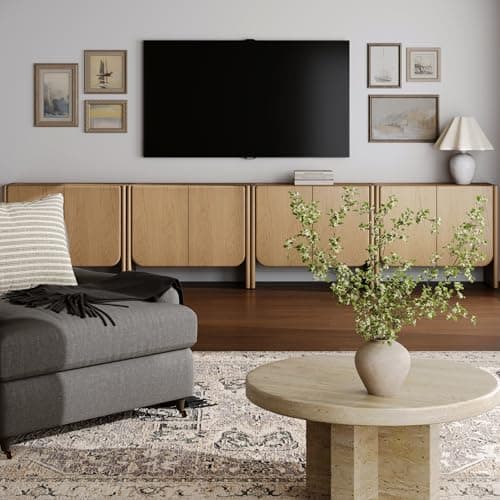
Low Modern Credenza Media Console

Nathan James · Best for a low, mid-century modern TV wall

A styled wood coffee table in a living room

A long, low credenza-style console on legs that reads mid-century and lifts the whole piece off the floor.

A low credenza on legs is the mid-century move - it keeps the TV at a comfortable seated height and lifts the mass off the floor so the room breathes. The long horizontal line reads calm and modern, and closed doors keep the clutter out of sight. It pairs beautifully with a mid-century room where legs and warm wood already set the tone.

Pros

  • Low, leggy profile suits mid-century and modern rooms
  • Legs lift it off the floor for a lighter, airier look
  • Closed doors hide gear while the silhouette stays sleek

Cons

  • Low height suits floor or low-sofa seating, not tall setups
  • Legs mean cables drop in the open and need managing
6

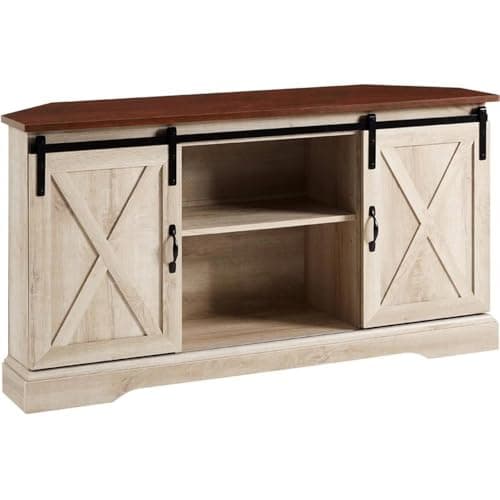
Sliding Barn-Door TV Stand

Walker Edison · Best for hiding clutter with farmhouse character

A decorated, cozy living room with a sofa

Sliding barn doors on a track hide gear and add farmhouse character without swinging out into the room.

Barn-door hardware is the shortcut to farmhouse character, and on a TV stand the sliding doors solve a real problem: they hide the gear without a swinging door that needs clearance in a tight layout. Slide one panel to reach the electronics, slide it back to hide them. It is practical and full of character at once, which is a rare combination.

Pros

  • Sliding doors hide storage without swinging into the room
  • Barn-door hardware adds farmhouse and rustic character
  • Wide surface handles a large TV with storage below

Cons

  • Sliding tracks can rattle or stick if not assembled level
  • Only half the interior is open at once behind the sliders

Sizing a TV stand to the screen and the room

The single most common media-console mistake is buying one that is too narrow, which makes even an expensive TV look precarious. Size it right with two simple rules:

  • Wider than the TV. The console should be clearly wider than the screen so the base of the TV never reaches the ends. A few inches of console showing on each side reads stable and intentional.
  • Height to your seating. The center of the screen should land near eye level when you are seated. Lower seating wants a lower console; a taller setup can take a taller cabinet.
  • Depth for the room. Corner and deep cabinets pull furniture further into the room, so measure the walk-around clearance, not just the wall.

Nail the width and height and the TV wall looks designed instead of improvised. My guide to arranging living room furniture covers how the media wall relates to the seating group.

Cable management that actually stays clean

A beautiful console with a nest of cables spilling out the back looks worse than a plain one that is tidy. Cable management is the step people skip and then regret, and it takes fifteen minutes:

  • Mount a power strip to the console. Adhesive-back or screw a strip to an inside wall or a back leg so one cord runs to the outlet instead of six.
  • Leave a service loop. Keep enough slack that you can pull the TV forward to reach the ports without unplugging everything.
  • Sleeve and route down one leg. Bundle the cables in a fabric wrap and bring them down a single back leg so what shows reads as one line.
  • Vent closed cabinets. Gear behind doors makes heat - use a vented back or a cable cutout so air can move.

Do it once at setup and it stays clean for years. This is the same behind-the-scenes discipline that makes a whole living room feel finished rather than lived-in-messy.

Open shelves or closed doors - which to choose

The open-versus-closed decision changes how a console looks and how it lives, and there is no single right answer — it depends on your gear and your tolerance for tidying:

  • Open shelves keep electronics cool, make remotes work without a hitch, and look lighter and airier — but everything shows, so they demand tidy gear and good cables.
  • Closed doors hide the clutter and look sleeker at a glance, but they trap heat and can block remote signals unless the cabinet is vented and cut for cables.
  • Fluted and barn doors add texture and character on top of hiding storage, which is why they are having a moment.

If your gear runs hot or you love a clean surface, go closed and vented. If you value easy access and an airy look, go open and tidy. Either way, the styling around it — a small stack of books, a plant, a framed piece leaning above — is what pulls it into the room, exactly like the vignettes in my home decor ideas hub.

Frequently asked questions

How wide should a TV stand be for my TV?

Wider than the TV. The console should be clearly wider than the screen so the base of the TV never reaches the ends — a few inches showing on each side looks stable and intentional. A stand the same width or narrower than the TV makes even an expensive screen look like it is about to topple off. Buy up a size if you are between widths.

How high should a TV stand be?

Size the height to your seating so the center of the screen lands near eye level when you are seated. Lower sofas and floor seating want a lower console, like a credenza on short legs, while a taller setup can take a taller cabinet. If you crane your neck up or down to watch, the console is the wrong height.

How do I hide the cables behind a TV stand?

Mount a power strip to the console so one cord runs to the outlet, leave a service loop of slack so you can pull the TV forward to reach the ports, then sleeve the cables in a fabric wrap and route them down a single back leg. Fifteen minutes at setup keeps the whole wall looking clean for years. Vent any closed cabinet so the gear inside does not overheat.

Should I get an open-shelf or closed-cabinet TV stand?

Open shelves keep electronics cool, keep remotes working, and look airier, but everything shows so they need tidy gear and good cable management. Closed cabinets hide clutter and look sleeker but trap heat and can block remote signals unless the cabinet is vented and cut for cables. Choose based on your gear and how much you like tidying.

Is a corner TV stand a good idea?

In a room without a good flat wall for the TV, a corner stand is often the best layout — it turns a dead diagonal into the media wall, angles the screen toward the seating, and frees the long walls for other furniture. Just measure carefully, because a corner unit extends out from both walls and eats more room depth than its footprint suggests.

Ready to make your space feel like home?

Browse the roundups I'd actually hand a client — honest picks, real trade-offs, and the one to buy first.