Skip to content
IMH

Best Picks

The Best Closet Organizers, Ranked by the Problem They Solve

Measure first, then buy. The seven pieces that fix a reach-in closet, and the order I add them in.

By Catherine Vizcaino · Home-renovation pro & founder

Updated October 2026

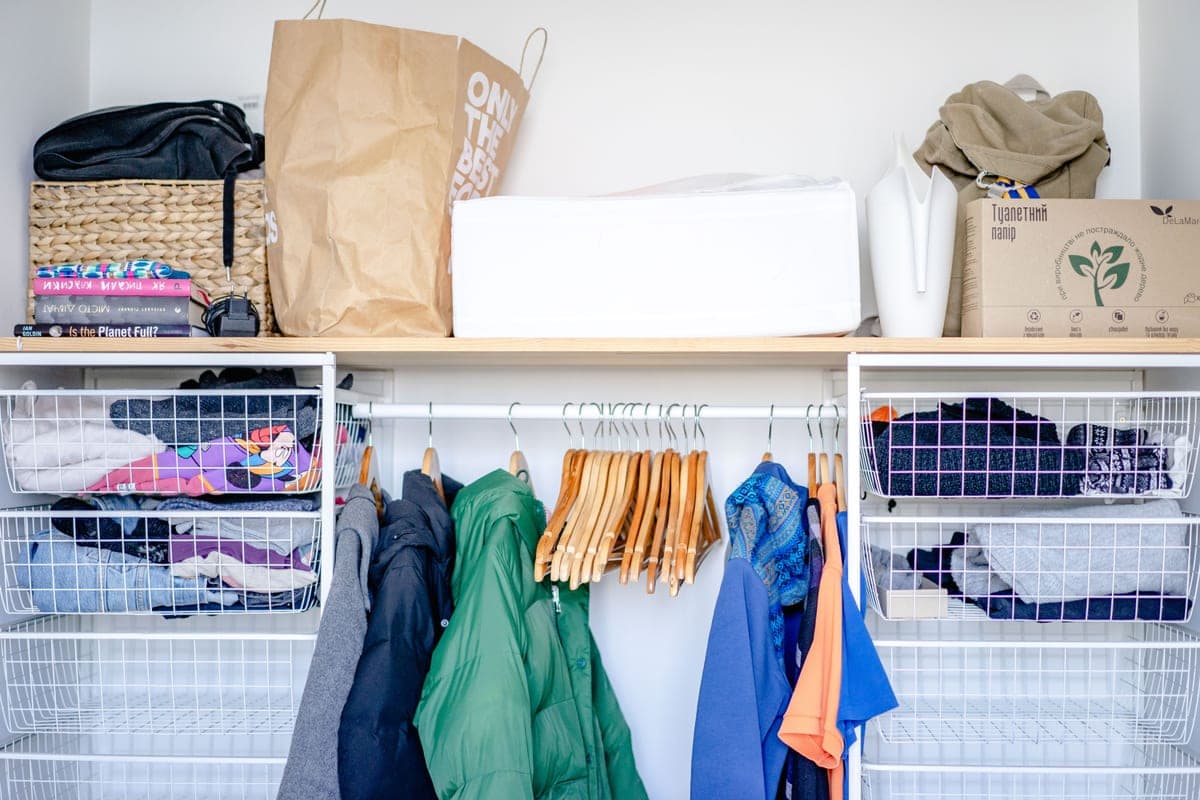
An organized closet with storage bins and baskets

As an Amazon Associate, I Heart My Home earns from qualifying purchases. It never changes your price or our picks. Learn more.

Almost nobody has a closet problem. What people have is one of four specific problems wearing a closet costume: dead vertical air under short garments, folded clothes with nowhere to live, a top shelf that collapses every time you pull a sweater out of the middle, and small loose items that migrate to the floor. Each of those has a different fix, and buying the wrong one is how a closet ends up holding a hundred dollars of organizers and no more usable space than before.

So this roundup is not ordered by price or by popularity. It is ordered by the failure each piece corrects, starting with the one that returns the most space for the least money, because that is genuinely how I would sequence it for a client. If your closet already works and you just want the rest of the house to feel calmer, you want my broader storage and organization picks instead — that page covers bins and baskets room by room rather than the closet specifically.

Before any of it, take three measurements with a tape: the rod height off the floor, the shelf depth, and the clear width of the opening. I renovate homes for a living, and the single most common thing I see sent back is an organizer that was correct for a different closet. Every dimension and weight figure below comes from the product’s own live listing rather than from memory or a round number, and prices move constantly, so each card shows the live current price rather than a figure that would be stale by next week. See our editorial policy for how these picks get made.

Quick picks at a glance

#ProductBest forPrice
1
An organized closet with storage bins and baskets
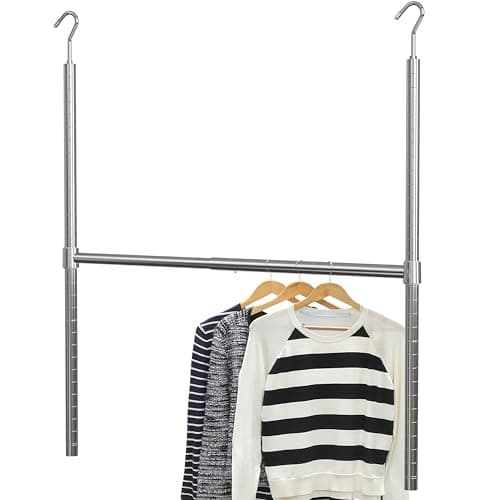
Simple Houseware Adjustable Closet Hanging Rod, Chrome

A steel bar that hooks over your existing rod and adds a second hanging tier underneath, expanding 18 to 30 inches wide with 1-inch height steps.

the dead air under short clothes
2
A warm, decorated bedroom
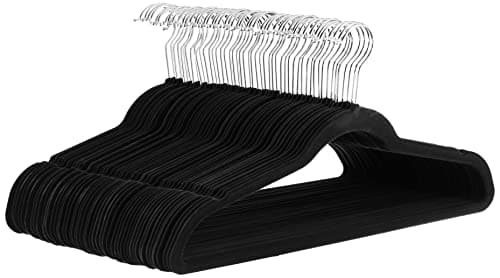
Amazon Basics Slim Velvet Non-Slip Hangers, 50-Pack

Fifty metal-core velvet hangers at 0.24 inches thick, each rated to hold 10 pounds, with notched shoulders that stop strappy pieces sliding off.

the most space gained per dollar
3
Woven storage baskets on an organized shelf
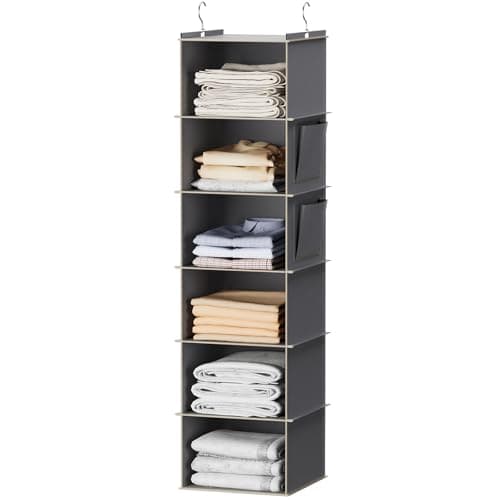
YOUDENOVA 6-Shelf Hanging Closet Organizer

A 47-inch fabric tower with six compartments and side pockets that hangs from the rod, stiffened with bamboo inserts in every shelf.

folded clothes in a closet with no shelves
4
An organized closet with storage bins and baskets
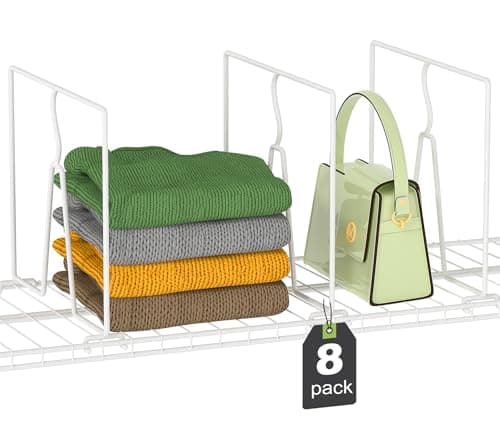
SortNStore Wire Shelf Dividers, 8-Pack

Eight rubber-coated metal dividers, 10.6 inches tall and 12 inches deep, that snap onto 12-inch wire shelving to hold stacks upright.

a top shelf that keeps collapsing
5
Woven storage baskets on an organized shelf
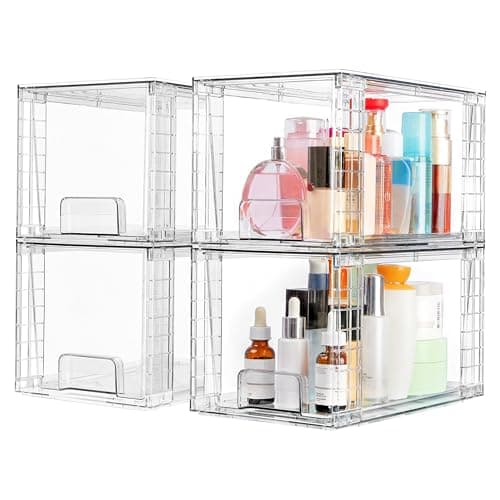
Vtopmart 4-Pack Large Stackable Storage Drawers, Clear

Four clear PET drawers, each 12 by 7.5 by 7 inches outside, that stack into a tower on a shelf or a closet floor and hold 15 pounds stacked.

small items that migrate to the floor
6
A welcoming entryway with a console and mirror
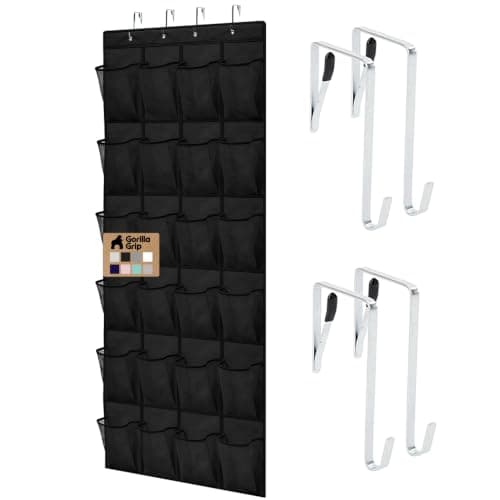
GORILLA GRIP Over-the-Door Shoe Organizer, 24 Pockets

A 64 by 19 inch panel with 24 breathable mesh pockets, four over-door hooks, and a stated 40-pound capacity for the whole organizer.

the back of the closet door
7
A warm, decorated bedroom
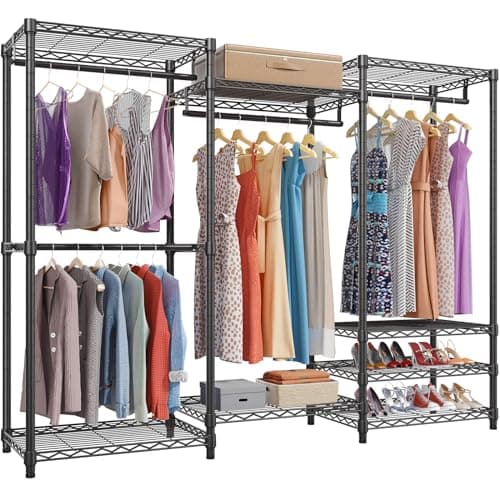
VIPEK V5 Freestanding Modular Closet System

A 68.9 by 76.4 inch steel wardrobe wall with four hanging rods and eight shelves, stated at 890 pounds total and 60 pounds per rod.

a bedroom with no real closet

Tap any row to jump to the full write-up. Prices open on Amazon in a new tab.

How we chose these picks

Every pick here is chosen the way I’d choose it for a client’s home: real-world durability first, build quality and materials second, and value for the money third. Where I’ve installed or lived with a product on a job, I say so and tell you what I saw. Where a pick is based on research and verified buyer feedback rather than hands-on use, I say that too — I never claim to have tested something I haven’t.

Read our full editorial policy for how we evaluate and update these guides.

1

Simple Houseware Adjustable Closet Hanging Rod, Chrome

Simple Houseware · Best for the dead air under short clothes
An organized closet with storage bins and baskets

A steel bar that hooks over your existing rod and adds a second hanging tier underneath, expanding 18 to 30 inches wide with 1-inch height steps.

In a standard reach-in closet, the space between the bottom of a hanging shirt and the floor is usually about three feet of nothing. This is the cheapest, fastest way to convert that into real hanging capacity, and it comes back out in ten seconds, which matters if you rent.

$19.87 · View on Amazon

#ad · disclosure · Price as of October 1, 2026

Pros

  • Turns the empty space under shirts and skirts into a second full hanging tier
  • Expands from 18 in to 30 in wide, so one unit covers a meaningful run of rod
  • Height adjusts in 1-inch increments rather than two or three fixed positions
  • Hooks over the existing rod with no drills, screws or hardware
  • Steel construction with a rust-resistant finish, 30.5 in by 35.5 in at full extension

Cons

  • The 35.5 in maximum drop suits short garments only - dresses and long coats will not fit the lower tier
  • All of the added weight still hangs from your original rod and its brackets
  • One unit spans up to 30 in, so a wide closet needs two
  • Plain chrome is a utility look, not a finished-closet look
2

Amazon Basics Slim Velvet Non-Slip Hangers, 50-Pack

Amazon Basics · Best for the most space gained per dollar

A warm, decorated bedroom

Fifty metal-core velvet hangers at 0.24 inches thick, each rated to hold 10 pounds, with notched shoulders that stop strappy pieces sliding off.

This is the highest-return change in the whole category and it is not close. Swapping a closet of assorted plastic, wire and wooden hangers for one consistent slim profile frees up a meaningful share of the rod, costs less than any shelving system, and makes the closet look deliberate instead of accumulated.

$19.99 · View on Amazon

#ad · disclosure · Price as of October 1, 2026

Pros

  • At 0.24 in thick they take a fraction of the rod length a bulky plastic or wooden hanger does
  • The velvet surface genuinely grips - knits and silk stop sliding to the floor
  • Notched shoulders hold camisoles, slip dresses and anything with thin straps
  • Metal core rated to 10 lb per hanger
  • Fifty in a pack is enough to convert a whole closet at once, which is the only way this works

Cons

  • The 10 lb rating is marginal for a heavy wool or leather coat
  • Velvet flocking wears thin at the shoulder over years of use
  • The 17.24 in width is standard adult sizing and is too wide for children's clothes
  • Mixing them with your old hangers defeats the purpose - you have to replace the lot
3

YOUDENOVA 6-Shelf Hanging Closet Organizer

YOUDENOVA · Best for folded clothes in a closet with no shelves

Woven storage baskets on an organized shelf

A 47-inch fabric tower with six compartments and side pockets that hangs from the rod, stiffened with bamboo inserts in every shelf.

Most reach-in closets are a rod and one shelf, which is a poor arrangement for anything you fold. This solves that without touching the walls, and the bamboo stiffeners are the detail worth paying slightly more for - a fabric organizer whose shelves sag is one that gets thrown out inside a year.

$18.9821% off

$14.98 · View on Amazon

#ad · disclosure · Price as of October 1, 2026

Pros

  • Six compartments give folded sweaters, jeans and tees a home in a closet that only has a rod
  • Two bamboo inserts per shelf plus MDF at the top and bottom - the shelves resist the sag that ruins cheaper versions
  • Side pockets catch the small things that otherwise end up loose on the floor
  • Just under 1 lb empty, so it adds almost nothing to the rod before you load it
  • Hangs and unhangs in seconds, which suits a rental

Cons

  • It occupies about 12 in of rod length - real hanging space you are trading away
  • Needs roughly 48 in of clear drop below the rod; measure rod-to-floor before ordering
  • Open-fronted shelves mean stacks topple if you pull from the middle of one
  • Non-woven fabric is functional rather than handsome, so it reads as storage
4

SortNStore Wire Shelf Dividers, 8-Pack

SortNStore · Best for a top shelf that keeps collapsing

An organized closet with storage bins and baskets

Eight rubber-coated metal dividers, 10.6 inches tall and 12 inches deep, that snap onto 12-inch wire shelving to hold stacks upright.

The top shelf is the most wasted real estate in a standard closet, because without dividers a stack can only go as high as it can stay standing, which is about four items. These are the cheapest way to make that shelf hold what it is physically capable of holding.

$20.995% off

$19.94 · View on Amazon

#ad · disclosure · Price as of October 1, 2026

Pros

  • Lets you stack vertically on the top shelf without the stack sprawling into its neighbors
  • At 10.6 in tall they are tall enough to actually contain a sweater stack, not just mark a boundary
  • Snap on with no tools and come off again, so you can re-space them as the contents change
  • Protective rubber coating resists rust and wipes clean - fine for a humid linen closet
  • Coated edges mean nothing catches or snags on fabric

Cons

  • Designed for 12-inch-deep wire shelving - useless on a solid melamine or wood shelf
  • Spacing is limited to where the shelf wires actually run, so you cannot place them anywhere you like
  • 10.6 in is the ceiling on your stack height
  • Eight is more than a single reach-in closet usually needs
5

Vtopmart 4-Pack Large Stackable Storage Drawers, Clear

Vtopmart · Best for small items that migrate to the floor

Woven storage baskets on an organized shelf

Four clear PET drawers, each 12 by 7.5 by 7 inches outside, that stack into a tower on a shelf or a closet floor and hold 15 pounds stacked.

Belts, socks, scarves, chargers and the forty small things nobody has a plan for are what actually makes a closet look chaotic. Drawers beat bins here because you can open the bottom one without lifting the three above it, which is the reason stacked lidded bins always end up abandoned.

$38.998% off

$35.99 · View on Amazon

#ad · disclosure · Price as of October 1, 2026

Pros

  • Drawers pull out on a built-in rail, so you reach the bottom one without unstacking the tower
  • Clear PET means you find things by looking instead of by excavating
  • Grooved tops lock the stack together and silicone pads stop it sliding on a shelf
  • Built-in handles on every drawer
  • Works equally well on a closet floor, a top shelf or in a linen cupboard

Cons

  • The usable interior is 11 by 5.8 by 6.5 in - noticeably smaller than the 12 by 7.5 by 7 in outside dimensions
  • 15 lb is the stated limit when stacked, so these are for light goods, not books or tools
  • Clear plastic displays whatever mess is inside it
  • PET scuffs and scratches with repeated sliding
6

GORILLA GRIP Over-the-Door Shoe Organizer, 24 Pockets

GORILLA GRIP · Best for the back of the closet door

A welcoming entryway with a console and mirror

A 64 by 19 inch panel with 24 breathable mesh pockets, four over-door hooks, and a stated 40-pound capacity for the whole organizer.

Every closet has a door, and almost nobody uses it. Twenty-four pockets of storage for the price of a takeout meal is the best value on this page by a distance, and the mesh rather than solid-vinyl pockets is what keeps it from turning into a smell problem.

$14.997% off

$13.99 · View on Amazon

#ad · disclosure · Price as of October 1, 2026

Pros

  • Uses the one surface in every closet that is otherwise completely dead
  • Stated 40 lb capacity across the panel, with reinforced stitching
  • Mesh pockets let shoes breathe, which matters if anything goes in damp
  • Four hooks and no hardware - nothing is screwed into the door
  • Pockets take far more than shoes; on a utility closet door they hold cleaning supplies well

Cons

  • Pockets expand to about 4.25 in deep, which is not enough for boots or bulky high-tops
  • The hooks add thickness at the top of the door and can stop a tight door closing flush
  • At 64 in tall the lowest pockets sit near the floor, behind a door that has to swing over them
  • Hooks can mark the paint on the top edge of the door over time
7

VIPEK V5 Freestanding Modular Closet System

VIPEK · Best for a bedroom with no real closet

A warm, decorated bedroom

A 68.9 by 76.4 inch steel wardrobe wall with four hanging rods and eight shelves, stated at 890 pounds total and 60 pounds per rod.

Older houses, converted rooms and a lot of apartments simply do not have a closet, and no amount of rod doublers fixes that. This is the one pick on the page that creates storage rather than recovering it, and the per-rod rating is published, which is unusual in a category full of unlabeled headline numbers.

$139.99 · View on Amazon

#ad · disclosure · Price as of October 1, 2026

Pros

  • Four rods and eight shelves replace an entire closet rather than improving one
  • Stated 890 lb total capacity and 60 lb per hanging rod
  • Shelf and rod positions are configurable at assembly, so you can set it up for coats or for folded stacks
  • Freestanding, so nothing is anchored into a wall you may have to make good later
  • At 33 lb the frame is substantial enough not to rack when you pull clothes off it

Cons

  • 68.9 in wide by 76.4 in tall needs most of a bedroom wall
  • 15.7 in deep is shallower than a standard 24 in closet, so wide hangers and coats overhang the frame
  • Everything is on open display and collects dust in a way a closed closet does not
  • Four rods and eight shelves is a real assembly session, not a ten-minute job
  • By far the most expensive pick here

How I picked, and the order to buy in

There are thousands of closet products and most of them are the same four ideas in different fabrics. Rather than rank by brand or by review count, I sorted the category by the problem being solved, then picked the most cleanly executed option for each problem using the specifications each listing actually publishes. Three criteria did the filtering.

  • It has to publish a real number. A capacity, a depth, a thickness, a drop. Anything described only as “large” or “heavy duty” is unbuyable, because you cannot check it against your tape measure.
  • It has to be reversible. Most people organizing a closet are renting, or are not ready to commit to a built-in. Six of the seven picks here install with no tools and leave nothing behind.
  • It has to earn the rod space it takes. This is the criterion nobody applies. A hanging organizer that eats a foot of rod has to give back more storage than that foot of rod was already providing, or it is a downgrade with extra steps.

The buying order follows from that. Hangers first, because they cost little and free the most. Then the rod doubler, because the empty air under short clothes is the biggest single pocket of waste in a standard closet. Then shelf dividers, because the top shelf is the next worst. Only then the fabric tower and the drawers, which add organization but spend space to do it. The freestanding system is a different purchase entirely — it is for people who have no closet to organize in the first place.

The four measurements that decide what fits

Almost every closet-organizer return traces back to one of these four numbers. Take them before you open a cart, not after something arrives.

  • Rod height to floor. This decides whether a hanging tower fits at all. The six-shelf organizer above needs roughly 48 inches of clear drop. A typical single rod sits well above that, so it usually works — but not under a doubled rod, and not in a closet with a dresser on the floor beneath.
  • Garment drop. Measure your longest shirt and your longest dress on the hanger. A rod doubler only pays off when a real section of your wardrobe is short enough to leave about three feet of air underneath.
  • Shelf depth and type. Twelve-inch ventilated wire is the builder standard and is what the dividers clip onto. A solid painted shelf takes bins instead. Measure the depth too, since 16-inch shelving exists and 12-inch dividers will not span it.
  • Door swing and clearance. Over-door organizers add roughly an inch at the top of the door and several inches of loaded thickness to its face. Check the door still clears the jamb, the frame and anything standing on the closet floor.

Write the four numbers in your phone. They are the same numbers you will want when you come back for under-bed storage, which is the natural next move once the closet is full — that roundup turns on a single clearance measurement in exactly the same way.

When a closet organizer is the wrong answer

I would rather you did not buy something you do not need, so here are the cases where the honest advice is to spend the money elsewhere, or not at all.

  • If the closet is full because you own too much, organizers postpone the problem at a cost. Nothing on this page creates capacity out of nothing except the freestanding system, and that one needs a wall.
  • If you are about to renovate, wait. A proper built-in with a second rod, adjustable shelving and a drawer bank does everything on this page permanently and better, and anything you buy now ends up in the garage.
  • If your rod bracket is loose, fix that before you add weight. Doubling the hanging load on a bracket anchored only into drywall is a predictable failure, and it usually takes a chunk of wall with it.
  • If the real problem is lighting, no organizer helps. A closet you cannot see into reads as chaotic no matter how it is arranged, and a battery puck light costs less than any pick here.
  • If the room itself is the constraint, the closet is a symptom. Our small-space solutions guide and the bedroom ideas page both deal with storage you can add outside the closet, which is often the cheaper fix.

Where an organizer genuinely does pay off is the ordinary builder reach-in: one rod, one wire shelf, one door, and about half the volume in it going unused. That closet is extremely common, and a set of slim hangers plus a rod doubler changes it more than any amount of tidying will.

Frequently asked questions

What is the best closet organizer?

There is no single best one, because closets fail in different ways. For the dead space under short clothes, an adjustable rod doubler that expands 18 to 30 inches wide. For the most space gained per dollar, a 50-pack of slim velvet hangers at roughly a quarter inch thick. For folded clothes in a closet that only has a rod, a six-shelf hanging tower with stiffened shelves. For a top shelf that keeps collapsing, wire shelf dividers sized to your shelf depth. Diagnose the failure first, then buy for it.

Do slim velvet hangers really save space?

Yes, and it is the biggest return in the category. Slim velvet hangers measure about 0.24 inches thick, against roughly half an inch or more for a standard plastic hanger and considerably more for wood, so converting a full closet frees a meaningful share of the rod. The catch is that it only works if you replace all of them — a mixed closet keeps the thickness of its bulkiest hanger, so buying ten as a trial tells you nothing.

Will a closet rod doubler hold my clothes?

The bar itself is steel and is rarely the weak point. The real question is what your original rod is anchored into, because a doubler hangs from that rod and roughly doubles its load. Builder closets very often have the bracket screwed into drywall with a plastic anchor rather than into a stud or a wood cleat. Tug the bracket before you buy. If it has any movement in it, secure it into framing first — that is a ten-minute job, and it is the difference between a second tier and a pile of clothes on the floor.

How do I organize a closet with only one rod and one shelf?

In this order: replace every hanger with a slim velvet one, add a rod doubler under the short garments, put dividers on the wire shelf so stacks can go higher, hang an over-door organizer on the back of the door, and only then consider a fabric hanging tower or stackable drawers. The first four recover space you already own. The last two spend space to buy organization, which is often worth it — but not before the free wins are taken.

Are hanging closet organizers worth the rod space they take?

Only if you have folded clothes with nowhere else to go. A six-shelf tower occupies roughly 12 inches of rod — call it 15 to 20 hanging garments on slim hangers — and gives back six compartments plus side pockets. That is a clear win for sweaters, jeans and tees, which stretch out of shape on hangers anyway, and a clear loss if you were going to hang shirts there instead. Run that trade before you order, not after.

What fits in an over-the-door shoe organizer besides shoes?

Pockets on a 24-pocket panel expand to about 4.25 inches deep, which rules out boots and bulky high-tops but suits almost everything small. In a bedroom closet they take socks, belts, scarves, hats and small bags; on a hall or utility closet door they are excellent for cleaning supplies; in a kids’ room they hold small toys and craft materials. Choose mesh rather than solid vinyl pockets — vinyl traps moisture and turns a shoe organizer into a smell problem.

Is a freestanding closet system better than a built-in?

No, but it solves a different problem. A built-in is deeper — about 24 inches against roughly 16 for a typical freestanding frame — closes to keep dust off your clothes, and adds value to the house. A freestanding system creates a wardrobe where no closet exists, needs no construction, and comes with you when you move. Choose it when the room genuinely has no closet or you cannot alter the walls, not as an upgrade to a closet you already have.

Ready to make your space feel like home?

Browse the roundups I'd actually hand a client — honest picks, real trade-offs, and the one to buy first.