Skip to content
IMH

Best Picks

The Best Dolly for Moving Heavy Furniture

Published capacities, deck sizes and the rating math nobody explains - so you buy for the load you actually have.

By Catherine Vizcaino · Home-renovation pro & founder

Updated September 2026

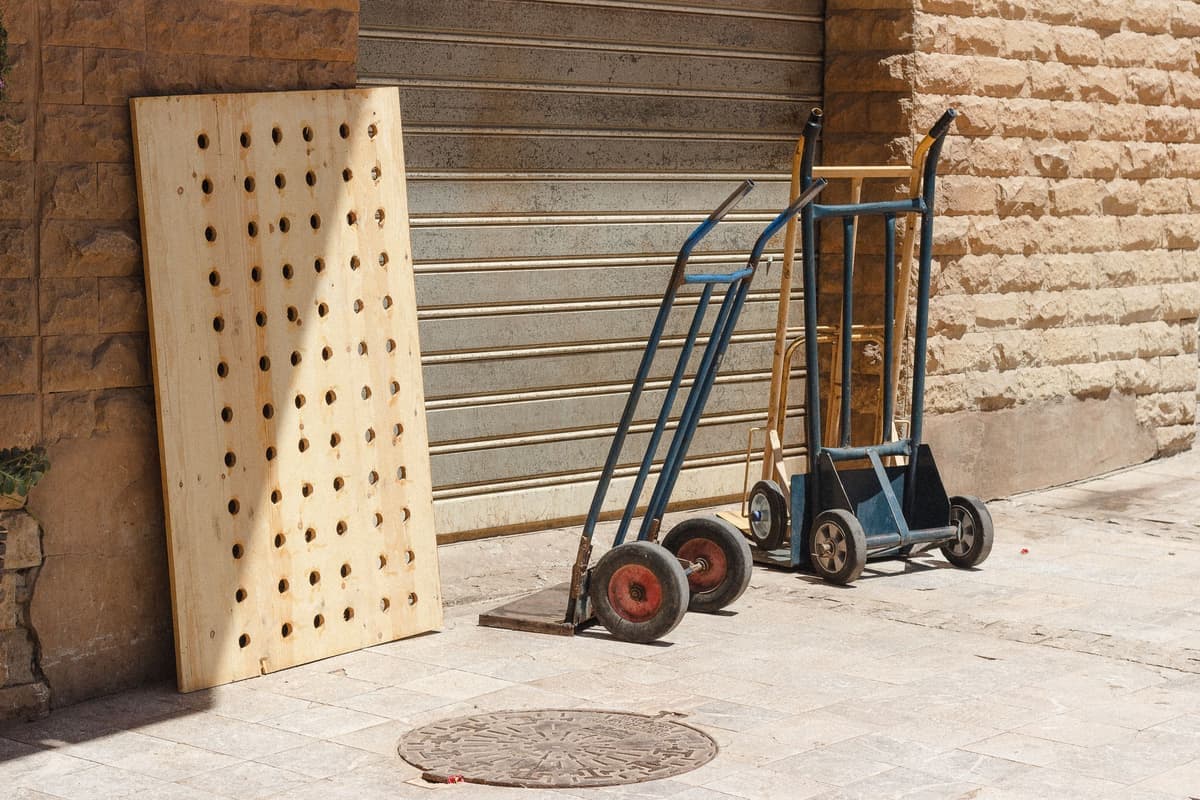
A moving dolly loaded for transporting heavy items

As an Amazon Associate, I Heart My Home earns from qualifying purchases. It never changes your price or our picks. Learn more.

“Heavy” is doing a lot of work in this search, and it hides two completely different problems. A 250 lb sofa is awkward — long, flexible, nothing to grab. A 300 lb refrigerator is heavy — compact, dense, and top-heavy enough to kill someone. Those need opposite tools, and buying for the wrong one is how people get hurt.

Before the picks, the rating math, because it is the part every listing obscures and it decides whether your tool is adequate:

  • Static is not dynamic. Hardwood dollies here list a 2,000 lb static load and a 1,320 lb dynamic load. Static is what it holds standing still. Dynamic is what it holds while rolling. Only the dynamic number matters to you.
  • Pair ratings are not per-dolly ratings. That 1,320 lb is for two dollies working together. One alone is half that, and only if the load sits evenly on it.
  • Convertibles have one rating per mode, and the box always prints the highest. A 1,000 lb platform cart may be rated 500 lb upright — and upright is the mode you use on stairs.

Every capacity and dimension below comes from the product’s own live listing, not from memory or a round number. I renovate homes for a living and these are the categories I load, but I have not personally stress-tested every unit here — where I am telling you what a listing claims rather than what I have seen, I say so. Prices move, so each card shows the live current price. See our editorial policy for how these picks get made.

Quick picks at a glance

#ProductBest forPrice
1
A moving dolly loaded for transporting heavy items
Harper Trucks 6781 Appliance Hand Truck, 800 lb

The highest single-unit rating here at 800 lb, with the strap and stair glides that make dense, top-heavy loads controllable.

genuinely heavy, dense loads
2
A renovation workshop with tools and a workbench
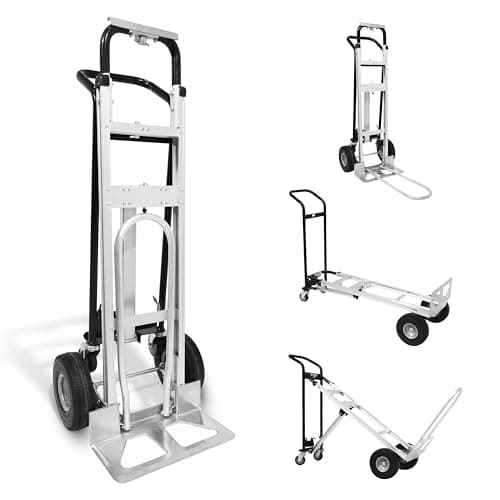
Olympia Tools 3-in-1 Aluminum Hand Truck & Platform Cart, 1,000 lb

Three tools in one aluminum frame: 500 lb upright, 800 lb on the 45-degree incline, 1,000 lb as a four-wheel platform cart.

the widest capacity range in one frame
3
A moving dolly loaded for transporting heavy items
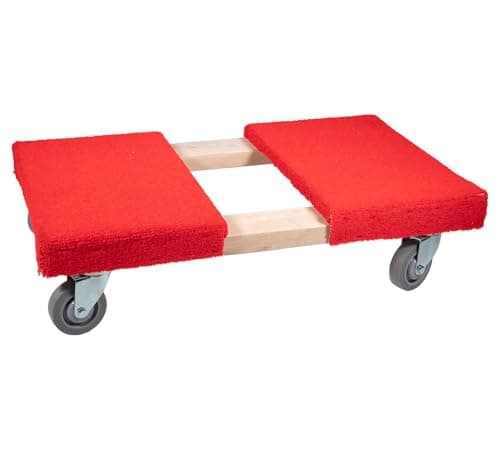
Mytee Products 19 x 32 in Carpeted Furniture Dolly, 1,000 lb

A 19 x 32 in hardwood-and-plywood dolly with a 1,000 lb working load limit and a carpeted top - the flat dolly whose own listing names piano moving.

finished furniture and pianos
4
A moving dolly loaded for transporting heavy items
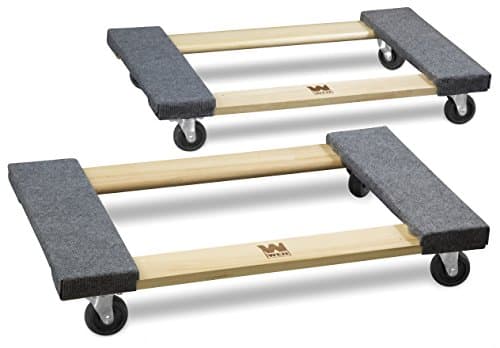
WEN 18 x 30 in Hardwood Furniture Moving Dolly, 1,320 lb (2-Pack)

Two 18 x 30 in birch decks rated at a 1,320 lb dynamic load for the pair - the cheapest correct way to move a sofa or a long case piece.

best value for long heavy pieces
5
A moving dolly loaded for transporting heavy items
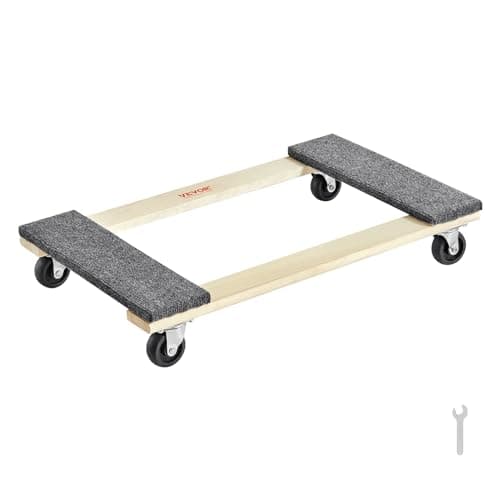
VEVOR Hardwood Furniture Dolly, 18 x 30 in, 1,000 lb (Single)

A single 18 x 30 in hardwood dolly rated to 1,000 lb, weighing 7.72 lb, with velvet non-slip pads - useful because almost everything else is sold in twos.

adding a third dolly, or buying just one
6
A renovation workshop with tools and a workbench
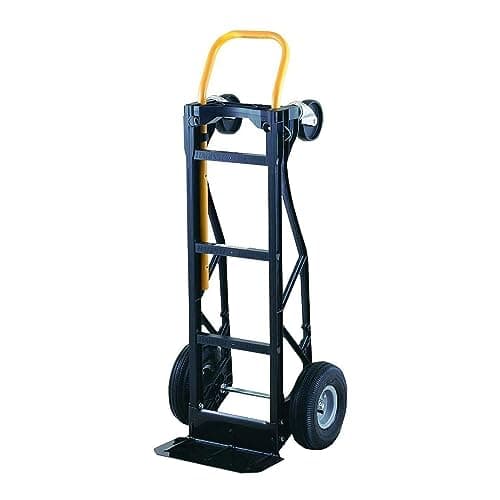
Harper Trucks Convertible Hand Truck and Dolly, 700 lb, 10 in Pneumatic Wheels

600 lb as a two-wheel dolly, 700 lb as a four-wheel cart, on 10 inch pneumatic wheels that roll over gravel and thresholds instead of stopping at them.

heavy loads over rough ground
7
A renovation workshop with tools and a workbench
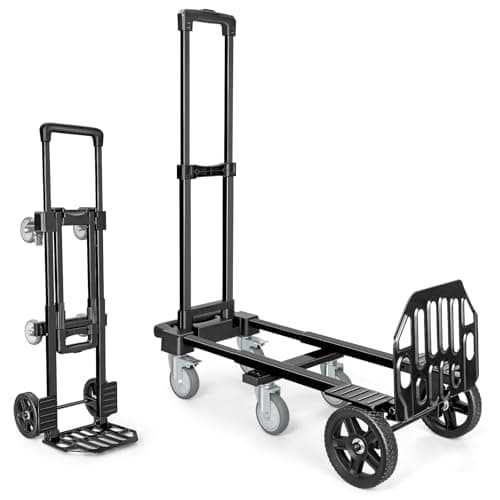
KEDSUM 3-in-1 Convertible Dolly Cart, 600 lb, 6 Wheels with Brakes

600 lb as a six-wheel cart, 330 lb upright, with brakes - the feature that stops a loaded cart from rolling off on a driveway that looked flat.

heavy loads on a slope

Tap any row to jump to the full write-up. Prices open on Amazon in a new tab.

How we chose these picks

Every pick here is chosen the way I’d choose it for a client’s home: real-world durability first, build quality and materials second, and value for the money third. Where I’ve installed or lived with a product on a job, I say so and tell you what I saw. Where a pick is based on research and verified buyer feedback rather than hands-on use, I say that too — I never claim to have tested something I haven’t.

Read our full editorial policy for how we evaluate and update these guides.

1

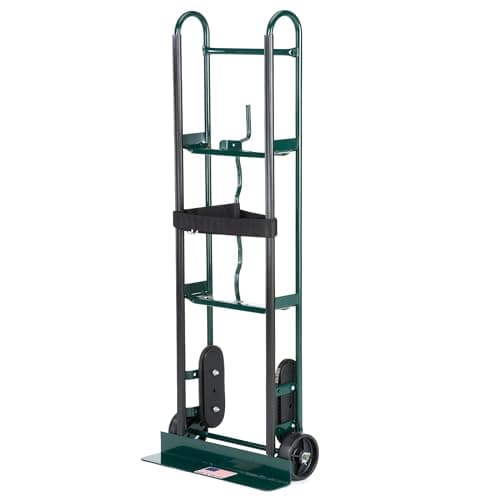
Harper Trucks 6781 Appliance Hand Truck, 800 lb

Harper · Best for genuinely heavy, dense loads
A moving dolly loaded for transporting heavy items

The highest single-unit rating here at 800 lb, with the strap and stair glides that make dense, top-heavy loads controllable.

If your load is dense and tall - a refrigerator, a washer, a safe - this is the answer and a flat dolly is not, because nothing on a flat deck holds the load in place. The strap is the feature you are buying; 800 lb is the reassurance.

$209.99 · View on Amazon

#ad · disclosure · Price as of September 27, 2026

Pros

  • 800 lb stated capacity as a single unit - the highest on this page
  • High-strength strap holds the load against the frame, which no flat dolly can do
  • Built-in stair glides let the frame slide down one riser at a time under control
  • Non-marking vinyl facing and soft rubber tread protect floors, walls and appliance finishes
  • Reinforced welded steel, built for repeated professional use

Cons

  • Roughly 60 in tall by 24 in wide - it needs real storage space
  • Badly over-specified for a dresser or a coffee table
  • Stair glides assist; they do not make stairs a one-person job
  • Costs more than a pair of flat dollies plus sliders plus straps combined
2

Olympia Tools 3-in-1 Aluminum Hand Truck & Platform Cart, 1,000 lb

Olympia Tools · Best for the widest capacity range in one frame

A renovation workshop with tools and a workbench

Three tools in one aluminum frame: 500 lb upright, 800 lb on the 45-degree incline, 1,000 lb as a four-wheel platform cart.

The best single answer if you want one tool and the load varies. The incline mode in particular solves a problem most convertibles ignore - getting a long heavy object onto two wheels at an angle you can actually steer.

$239.99 · View on Amazon

#ad · disclosure · Price as of September 27, 2026

Pros

  • 1,000 lb as a platform cart, 800 lb in incline mode, 500 lb upright
  • The 45-degree incline mode is the easiest way to control a long, heavy load
  • Aluminum keeps the frame manageable despite the capacity
  • Switches between all three modes with no tools
  • Ergonomic padded handle

Cons

  • Most expensive pick on this page
  • Three modes means three capacity numbers to confuse
  • Aluminum dents where steel would bend back
  • 500 lb upright is the real number for stairs, not the 1,000 lb headline
3

Mytee Products 19 x 32 in Carpeted Furniture Dolly, 1,000 lb

Mytee Products · Best for finished furniture and pianos

A moving dolly loaded for transporting heavy items

A 19 x 32 in hardwood-and-plywood dolly with a 1,000 lb working load limit and a carpeted top - the flat dolly whose own listing names piano moving.

When the piece is both heavy and finished - a lacquered sideboard, an upright piano case - the carpeted deck and the larger casters are worth paying for. This is the single dolly with a genuine 1,000 lb working load limit rather than a pair rating.

$106.89 · View on Amazon

#ad · disclosure · Price as of September 27, 2026

Pros

  • 1,000 lb working load limit for a single dolly, not a pair
  • Larger 19 x 32 in deck spans more of a long piece than the standard 18 x 30
  • Carpeted top on the short rails protects finished wood and lacquer
  • 3-1/2 x 4 in non-marring TPR swivel casters - larger than the 3 in casters on budget dollies
  • Hardwood and plywood frame at 8 in thick resists flexing under load

Cons

  • 8 in thick, so it adds far more height than a 5 in dolly - measure your doorways
  • Costs several times a hardwood pair, and you get one dolly
  • Carpet traps the grit that does the scratching; vacuum it every time
  • Still a flat dolly, so still never for stairs
4

WEN 18 x 30 in Hardwood Furniture Moving Dolly, 1,320 lb (2-Pack)

WEN · Best for best value for long heavy pieces

A moving dolly loaded for transporting heavy items

Two 18 x 30 in birch decks rated at a 1,320 lb dynamic load for the pair - the cheapest correct way to move a sofa or a long case piece.

For long heavy pieces this is the value answer and it is not close: a pair for roughly a third of what one premium dolly costs, at a higher combined dynamic rating. Buy this unless the piece is delicate enough to need a carpeted deck.

$33.40 · View on Amazon

#ad · disclosure · Price as of September 27, 2026

Pros

  • Ships as a pair, which is the only correct setup for long furniture
  • 1,320 lb dynamic and 2,000 lb static stated for the pair
  • 5 in deck height is the shallowest here, so it costs you the least doorway clearance
  • Carpeted ends keep wood legs off the bare deck
  • Four ball-bearing swivel casters per dolly

Cons

  • Only the ends are carpeted - the birch centre is bare
  • 3 in class casters stall at thresholds a larger caster would roll over
  • No anti-slip deck surface, so the load can walk on a bump
  • Never for stairs
5

VEVOR Hardwood Furniture Dolly, 18 x 30 in, 1,000 lb (Single)

VEVOR · Best for adding a third dolly, or buying just one

A moving dolly loaded for transporting heavy items

A single 18 x 30 in hardwood dolly rated to 1,000 lb, weighing 7.72 lb, with velvet non-slip pads - useful because almost everything else is sold in twos.

The awkward gap in this category is that dollies come in pairs, so if you already own two and need a third for a very long piece, you end up buying another pair. This solves that, and the velvet non-slip pads are a real advantage over a bare deck.

$28.90 · View on Amazon

#ad · disclosure · Price as of September 27, 2026

Pros

  • Sold singly, which is genuinely hard to find and exactly what you need as a third dolly
  • 1,000 lb stated capacity for one dolly
  • Polyester velvet non-slip pads, which the bare-birch pairs do not have
  • Only 7.72 lb, so it is easy to carry and reposition
  • 18 x 30 x 5.12 in matches the standard footprint, so it pairs with what you own

Cons

  • 3 in PP casters are the smallest here and stall on thresholds and carpet
  • Poplar and composite rather than solid birch
  • One dolly cannot move a sofa - you still need two
  • Never for stairs
A renovation workshop with tools and a workbench

600 lb as a two-wheel dolly, 700 lb as a four-wheel cart, on 10 inch pneumatic wheels that roll over gravel and thresholds instead of stopping at them.

Almost every dolly on the market is designed for smooth indoor floors, and then the actual move involves a driveway, a lawn, a gravel path and a truck ramp. The 10 inch pneumatic wheels are what make that survivable, and they are the reason to pick this over a higher-rated indoor tool.

$163.99 · View on Amazon

#ad · disclosure · Price as of September 27, 2026

Pros

  • 600 lb in 2-wheel mode and 700 lb in 4-wheel cart mode
  • 10 in pneumatic wheels plus 5 in swivel casters - the friendliest setup here on gravel, grass and tile lips
  • Built-in stair glides for controlled descents
  • Three-position telescoping aluminum handle adjusts to your height
  • Glass-filled nylon frame at 28 lb resists dents and corrosion

Cons

  • Pneumatic tires need occasional pressure checks - a flat one at the wrong moment is a real annoyance
  • 50 in tall and 19 in wide, so it wants real storage space
  • 600 lb upright is the number for stairs, not the 700 lb headline
  • Overkill if you never leave a finished indoor floor
A renovation workshop with tools and a workbench

600 lb as a six-wheel cart, 330 lb upright, with brakes - the feature that stops a loaded cart from rolling off on a driveway that looked flat.

Brakes are the reason this is here. Once you are moving genuinely heavy things, the moment you let go on any kind of slope is the moment something expensive happens, and almost no consumer dolly addresses it.

$128.99 · View on Amazon

#ad · disclosure · Price as of September 27, 2026

Pros

  • Brakes, which almost nothing in this price range has and which matter most under heavy loads
  • 600 lb as a six-wheel cart, 330 lb as a two-wheel upright
  • Base expands 27 to 48 in, so long pieces sit properly instead of overhanging
  • Handle adjusts 30 to 37 in
  • 19 lb and converts with no tools

Cons

  • 330 lb upright is the lowest two-wheel rating on this page
  • Six wheels means six things to catch on a threshold
  • Steel, so heavier to carry than an aluminum truck
  • Cart deck will not span a sofa - not a flat-dolly substitute

How to read a capacity rating without getting hurt

This is the part that decides whether your purchase is adequate, and product pages are structurally unhelpful about it because the biggest number sells best.

Static versus dynamic. A static rating is what the tool holds sitting still. A dynamic rating is what it holds while rolling, which involves shock loads every time a wheel crosses a threshold. The hardwood dollies here publish both: 2,000 lb static and 1,320 lb dynamic. If a listing gives you only one big number with no label, assume it is static and mentally cut it substantially.

Per-pair versus per-unit. Flat dollies are sold in twos and rated in twos. “1,320 lb” is the pair. A single dolly from that pair is good for roughly half, and only if the load sits evenly across its deck — which on real furniture it rarely does. Small tri-dollies are the same trap in reverse: a 250 lb rating is per unit, so four of them theoretically give 1,000 lb, but only if the weight is genuinely distributed across all four corners.

Per-mode on convertibles. Three ratings, three tools: the Olympia is 1,000 lb as a platform cart, 800 lb on the incline, 500 lb upright. The KEDSUM is 600 lb as a cart and 330 lb upright. The Harper convertible is 700 lb as a cart and 600 lb upright. Whichever mode you are in is the only rating that applies, and stairs always mean the upright number.

Build in a real margin. Ratings assume a centred, balanced load. Furniture is neither. My working rule is to pick a tool rated comfortably above the piece’s actual weight rather than at it, because the margin is what covers the moment a wheel catches and the load shifts. The CDC’s NIOSH publishes guidance on safe manual lifting limits, and the same conservatism applies to equipment: the cost of over-specifying is money, and the cost of under-specifying is a hospital visit.

Deck sizes and why the extra inches matter

Capacity gets all the attention and deck geometry causes more actual problems. The measurements from the picks above:

  • 18 x 30 in, 5 in tall — the standard. WEN and Simpli-Magic hardwood pairs; VEVOR single at 5.12 in. This is the footprint everything else is compared against.
  • 19 x 32 in, 8 in thick — Mytee carpeted. Two extra inches of span each way, and three extra inches of height.
  • 32.5 x 20.5 in, 5.9 in high — Rubbermaid Triple Trolley platform truck, with a handle rather than a bare deck.
  • Expanding 27 to 48 in — KEDSUM convertible cart base, which is the useful trick for long boxes.
  • Roughly 6-1/4 in per side — tri-dollies, which go under one corner rather than under a piece.

Three practical consequences. First, height is a doorway problem. Adding 5 inches under a tall piece is usually fine; adding 8 is where an 80 inch door frame becomes the binding constraint. Measure the piece, add the deck height, check every opening on the route.

Second, longer decks reduce sag. A 32 inch deck supports more of a long piece than a 30 inch one, which matters on anything with a flexible frame — a sofa left spanning two dollies set too far apart will sag in the middle and eventually complain about it.

Third, caster diameter beats capacity for real-world usability. The VEVOR runs 3 in casters, the Mytee 3-1/2 x 4 in, the Harper convertible 10 in pneumatic wheels. A small caster stops dead at a tile lip while the load keeps moving, which is precisely how a piece walks off a deck. If your route has thresholds, transitions or any outdoor section, wheel size is the spec to prioritise.

Which dolly for which heavy item

  • Refrigerator: appliance hand truck, strap tensioned, doors taped shut, kept upright. Never a flat dolly — nothing holds it to the deck.
  • Washer or dryer: appliance hand truck. Same reason: tall, dense, top-heavy.
  • Sofa or sectional section: two flat dollies, a third of the way in from each end. Three dollies if the piece is over about eight feet.
  • Solid-wood dresser or credenza: drawers out first, then one or two flat dollies depending on footprint. A carpeted deck if the finish is delicate.
  • Upright piano: honestly, hire movers. If you proceed: a carpeted flat dolly with a genuine 1,000 lb working load limit, minimum four people, and absolutely no stairs. Weigh the specific instrument first - a spinet and a full upright are very different loads.
  • Gun safe or anything over 600 lb: appliance truck for any stairs, flat dollies with margin for level ground, and check what your floor can take as a concentrated point load - that is a separate question from the dolly rating.
  • Loaded bookcase or shelving: empty it completely first. Empty, it is a hand-truck job on the narrow edge. Loaded, it should not be moved at all.
  • Treadmill or exercise equipment: most have transport wheels built in - use those. Where they do not, a hand truck on the frame, never on the console.
  • Heavy load over gravel, grass or a truck ramp: the pneumatic-wheel convertible. Small casters simply will not go.
  • Heavy load on any slope: something with brakes.
  • Anything heavy up or down stairs: two wheels with stair glides, two people, and nobody standing directly below the load.
  • Anything heavy that only needs to move a few feet: sliders and lifting straps, not a dolly. See our furniture moving tools roundup.

Who should not buy a heavy-duty dolly

Worth saying plainly, because the honest answer for a lot of people searching this is that a heavy-duty dolly is the wrong purchase.

  • If you are repositioning furniture within a room, buy sliders. Under $15, faster, no tipping and loading, no risk of a deck skating out. The dolly is strictly worse at this job.
  • If this is a one-time move of one very heavy thing, rent or hire. An appliance truck costs more than a day’s rental, and two movers for an hour costs less than a back injury or a refinished floor.
  • If the route is entirely stairs, no dolly on this page solves it well. That is a two-person carry with straps, or movers.
  • If you live in an apartment with no storage, a 60 inch appliance truck is a bad houseguest. A folding aluminum hand truck that collapses to 2 inches thick is the realistic option, and it caps out around 340 lb.
  • If the load is heavy because it is full, empty it. That is not a dolly problem.

Buy a heavy-duty dolly when you have repeated moves, genuinely dense loads, or a renovation in progress. For a single sofa across a house, a hardwood pair and a second person is the whole answer.

Frequently asked questions

What is the best dolly for moving heavy furniture?

It depends on whether your load is heavy or awkward, because those need opposite tools. For dense, tall loads — a refrigerator, a washer, a safe — an appliance hand truck with a strap and stair glides, rated around 800 lb. For long pieces like a sofa, a pair of hardwood flat dollies listed at a 1,320 lb dynamic load together. For one tool that covers both, a 3-in-1 convertible rated 1,000 lb as a platform cart, 800 lb on the incline and 500 lb upright.

How much weight can a furniture dolly hold?

Standard hardwood furniture dollies list a 1,320 lb dynamic load and a 2,000 lb static load — but those figures are for a pair working together, not one dolly. Sold singly, hardwood dollies are commonly rated 1,000 lb. Two things to read carefully: dynamic is the rolling rating and the only one that matters to you, and a pair rating is not a per-unit rating. Halve it if you are using one.

Can a dolly move a refrigerator?

Only an appliance hand truck with a securing strap — never a flat furniture dolly. A flat dolly holds its load with friction and gravity alone, so a tall, dense, top-heavy appliance will tip off it. Use an appliance truck rated around 800 lb, strap the fridge against the frame, tape the doors shut, keep it upright rather than laid down, and treat any staircase as a two-person job with nobody standing directly below the load.

What's the difference between static and dynamic load capacity?

Static capacity is what the dolly holds sitting still. Dynamic capacity is what it holds while rolling, which involves a shock load every time a wheel crosses a threshold or a tile lip. Dynamic is always the lower number and the only one that matters in use — hardwood dollies commonly list 2,000 lb static against 1,320 lb dynamic for the same pair. If a listing gives one big number with no label, assume it is static and discount it.

Do I need one dolly or two for heavy furniture?

Two for anything long — a sofa, a credenza, a sectional section — because one dolly under the middle makes the piece pivot like a see-saw and swing both ends into your walls. One is enough for a compact heavy piece like an emptied dresser whose footprint fits the deck. For anything over roughly eight feet, a third dolly stops the middle sagging between the other two, which is why a single-unit dolly is worth knowing about when everything else ships in pairs.

Are pneumatic wheels worth it on a dolly?

Yes, if any part of your route is outdoors or has thresholds. Ten-inch pneumatic wheels roll over gravel, grass, tile lips and truck ramps that stop a 3-inch caster dead — and a caster stopping dead while the load keeps going is exactly how a piece walks off a deck. The trade-off is maintenance: check the pressure before move day, because soft tires roll badly and steer worse under a heavy load.

Ready to make your space feel like home?

Browse the roundups I'd actually hand a client — honest picks, real trade-offs, and the one to buy first.