
Skip to content
IMy Home

Best Picks

The Best Desks to Build a Real Home Office

A desk is where you actually get work done - here is what I look for in one, and the ones worth the space.

By Catherine Vizcaino · Home-renovation pro & founder

Updated August 2026

A warm, well-organized home office

As an Amazon Associate, I Heart My Home earns from qualifying purchases. It never changes your price or our picks. Learn more.

A desk is core home-office furniture, which means it is not decor — it is a tool you sit at for hours, and the wrong one quietly wears on you every day. When I set up a workspace, the things I care about are the depth of the top, whether the frame stays rock-steady when you lean on it, and how the cables get from the gear to the outlet without becoming a nest around your feet. A pretty desk that wobbles or is too shallow for a monitor is a desk you will resent by month two.

The picks below cover the setups I build most: a simple writing desk, an L-shaped desk for a real command center, a height-adjustable standing desk, a narrow desk for a tight corner, a desk with drawers for built-in storage, and an industrial wood-and-metal build. Each is judged on how it works for real hours at a keyboard, not how it styles for a photo. Pair one with the best office chairs and you have the two pieces that decide whether a home office actually gets used.

For the whole room, my home office decor guide covers layout and lighting around the desk. Amazon pricing shifts constantly, so every pick shows a Check price on Amazon button instead of a number I cannot promise — see our affiliate disclosure for how that works.

Quick picks at a glance

#ProductBest forPrice
1
A home-office desk and chair in a warm workspace
Nathan James Writing Desk

A clean-lined writing desk with a wood-tone top that fits a laptop-and-notebook workflow without bulk.

a clean, simple everyday desk
2
A warm, well-organized home office
L-Shaped Corner Desk

An L-shaped desk that wraps a corner to give you two work zones - screens on one leg, spread-out space on the other.

a full command-center workspace
3
A home-office desk and chair in a warm workspace
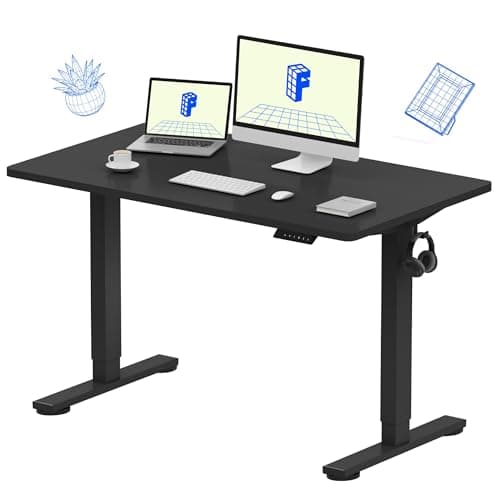
Electric Height-Adjustable Standing Desk

A motorized sit-stand desk that raises and lowers at the touch of a button so you are not stuck in a chair all day.

switching between sitting and standing
4
A warm, well-organized home office
Narrow Small-Space Desk

A slim, shallow desk that carves a workspace out of a hallway nook, a bedroom corner, or a studio wall.

tight corners, studios, and shared rooms
5
A home-office desk and chair in a warm workspace
Desk with Storage Drawers

A desk with built-in drawers so pens, cables, and paperwork have a home instead of piling on the surface.

a tidy desk with built-in storage
6
A warm, well-organized home office
Industrial Wood-and-Metal Desk

A wood-top desk on a welded metal frame that brings rugged industrial character and real stability.

a rugged industrial or loft office

Tap any row to jump to the full write-up. Prices open on Amazon in a new tab.

How we chose these picks

Every pick here is chosen the way I’d choose it for a client’s home: real-world durability first, build quality and materials second, and value for the money third. Where I’ve installed or lived with a product on a job, I say so and tell you what I saw. Where a pick is based on research and verified buyer feedback rather than hands-on use, I say that too — I never claim to have tested something I haven’t.

Read our full editorial policy for how we evaluate and update these guides.

1

Nathan James Writing Desk

Nathan James · Best for a clean, simple everyday desk
A home-office desk and chair in a warm workspace

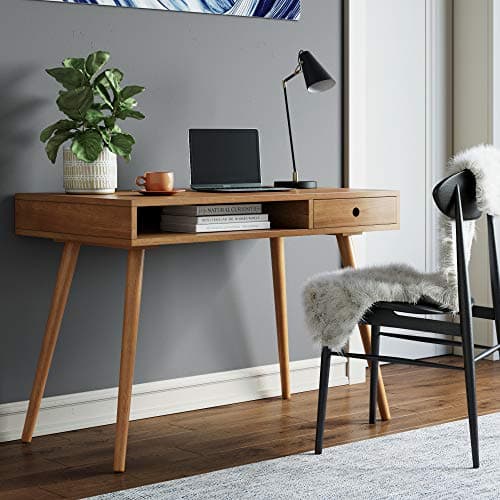
A clean-lined writing desk with a wood-tone top that fits a laptop-and-notebook workflow without bulk.

A writing desk is the right call for most people, most of the time - if you work on a laptop with a notebook and a coffee, you do not need a command center. Nathan James builds a clean version at a fair price, and the open, uncluttered design keeps a small room or a shared space from feeling crowded by a big work surface.

Pros

  • Simple footprint fits almost any room or corner
  • Wood-tone top warms up a workspace
  • Open design keeps a small room feeling open

Cons

  • Shallow tops suit a laptop better than a deep dual-monitor rig
  • Minimal storage - plan for drawers or shelving nearby
2

L-Shaped Corner Desk

WLIVE · Best for a full command-center workspace

A warm, well-organized home office

An L-shaped desk that wraps a corner to give you two work zones - screens on one leg, spread-out space on the other.

For anyone who works long hours or runs dual monitors, an L-shape is a genuine upgrade - one leg holds the screens and keyboard while the other stays clear for paperwork, a second device, or just room to think. It also puts a corner to work that a straight desk wastes, which is often the most efficient use of a small office.

Pros

  • Two surfaces separate your screens from your spread-out work
  • Uses a corner that a straight desk would leave dead
  • Big footprint suits dual monitors and multitasking

Cons

  • Takes real floor space - measure the corner carefully
  • More parts means longer, fiddlier assembly
3

Electric Height-Adjustable Standing Desk

FLEXISPOT · Best for switching between sitting and standing

A home-office desk and chair in a warm workspace

A motorized sit-stand desk that raises and lowers at the touch of a button so you are not stuck in a chair all day.

Sitting all day is hard on your back, and a sit-stand desk is the one piece of office furniture that changes how your body feels by the end of the day. A motorized version with height presets makes switching effortless, so you actually use it instead of leaving it in one position. It also dials in to your exact ergonomic height, which a fixed desk never can.

Pros

  • Switches between sitting and standing to ease long days
  • Motorized presets remember your heights
  • Adjustable base fits people of different heights properly

Cons

  • The heaviest, most involved build here - two people help
  • A powered base is the splurge of this group
4

Narrow Small-Space Desk

Furinno · Best for tight corners, studios, and shared rooms

A warm, well-organized home office

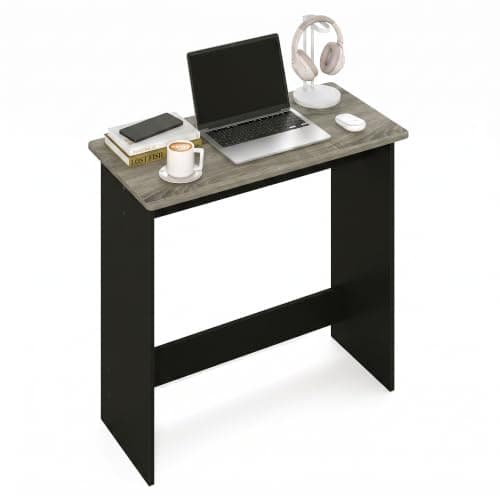
A slim, shallow desk that carves a workspace out of a hallway nook, a bedroom corner, or a studio wall.

Not every home has a spare room for an office, and a narrow desk is the honest answer for carving a workspace out of a corner of a bedroom, a hallway nook, or a studio. It gives you a real, dedicated surface to work at without dominating the space, which matters enormously when the desk shares a room with the rest of your life.

Pros

  • Slim depth fits where a full desk cannot
  • Tucks into a bedroom, hallway, or studio corner
  • Light and easy for one person to move

Cons

  • Shallow top is best for a laptop, not a big multi-screen rig
  • Light frame benefits from being anchored or wall-braced
5

Desk with Storage Drawers

Nathan James · Best for a tidy desk with built-in storage

A home-office desk and chair in a warm workspace

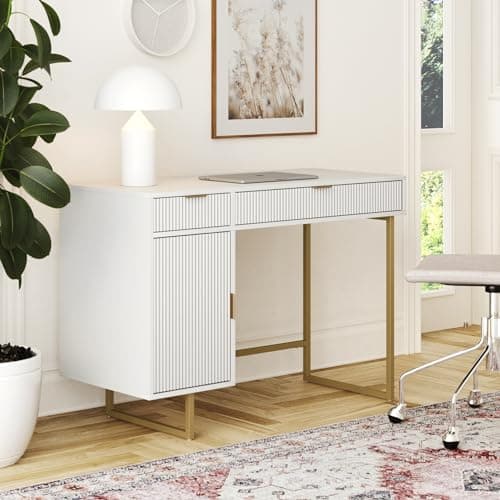
A desk with built-in drawers so pens, cables, and paperwork have a home instead of piling on the surface.

An open desk collects clutter fast, and built-in drawers are the fix - pens, chargers, notebooks, and paperwork get a home instead of migrating across the surface. It saves you buying a separate cabinet and keeps a home office that shares a room from looking like a permanent mess. Closed storage is what keeps a workspace calm.

Pros

  • Built-in drawers keep the surface clear and the room tidy
  • No need for a separate filing cabinet nearby
  • Closed storage hides the clutter that piles on open desks

Cons

  • Drawer boxes reduce legroom on one side - check the clearance
  • Heavier and more involved to assemble than a plain desk
6

Industrial Wood-and-Metal Desk

Walker Edison · Best for a rugged industrial or loft office

A warm, well-organized home office

A wood-top desk on a welded metal frame that brings rugged industrial character and real stability.

A welded or bolted steel frame is simply more stable than a lightweight particleboard leg, so an industrial desk stays planted when you lean on it - and the wood-and-metal look suits a loft or a masculine study without trying too hard. It is the pick when you want a desk that feels solid and a little raw rather than soft and minimal.

Pros

  • Steel frame is stable and does not wobble under a lean
  • Wood-and-metal mix suits industrial and loft rooms
  • Simple open form is quick to assemble

Cons

  • Open frame means no built-in storage
  • Metal frames can mark a hard floor without feet pads

Sizing a desk to your work, not just your room

People shop for a desk by how it looks and where it fits, and forget the measurement that actually matters day to day: the depth. Get these right and the desk works for your body:

  • Depth for your screen. A top under about 24 inches deep forces a monitor too close to your eyes. If the room forces a shallow desk, mount the screen on an arm to push it back.
  • Width for your workflow. A laptop-and-notebook setup needs far less than a dual-monitor command center. Match the surface to how you actually work.
  • Height for your body. A fixed desk suits a standard height; if you are tall or short, a height-adjustable base dials it in.
  • Knee clearance. Check the legroom under any desk with drawers before you buy.

Fit the desk to the work first and the room second, and you will still be comfortable at it a year later. My home office guide covers how the desk sits within the whole room.

Stability and cable management make or break a desk

The two things that quietly ruin a desk are wobble and cable chaos, and both are fixable if you plan for them:

  • Kill the wobble. A desk that shakes when you type is usually under-braced or unlevel. Tighten every bolt after it is standing, add cross-bracing or L-brackets to a stud if needed, and level the feet.
  • Route cables once. Run a power strip to a back leg, bundle cords along the back rail, and leave slack - especially on a standing desk where the cables have to travel as it rises.
  • Protect the floor. Felt or rubber feet stop metal and hard legs from scratching and rattling.

Ten minutes of bracing and cable routing at setup is the difference between a desk that feels solid and organized and one that annoys you daily. The same tighten-and-level discipline applies to every flat-pack piece in my furniture assembly tips.

Sit, stand, or both - matching the desk to how you work

The desk you choose should match how many hours you spend at it and how your body handles them:

  • Light or occasional use: a simple writing desk or a narrow desk is plenty, and keeps a shared room from feeling like an office.
  • Long hours, one setup: an L-shape or a desk with drawers gives you the surface and storage to work all day without the clutter creeping in.
  • All-day, back-conscious: a sit-stand desk is the one piece that changes how you feel by evening, letting you move between sitting and standing.

Be honest about your hours and your body, and buy the desk that fits them rather than the one that photographs best. Then pair it with a proper chair — the desk and the office chair are a team, and a great desk with a bad chair still wrecks your back.

Frequently asked questions

How deep should a desk be for a monitor?

Aim for a top at least about 24 inches deep so a monitor sits far enough from your eyes to be comfortable over a full day. A shallower desk pushes the screen too close and causes eye strain. If the room only allows a narrow desk, mount the monitor on an arm clamped to the back edge so you can push it back and reclaim the viewing distance.

Are standing desks worth it?

For anyone at a desk all day, yes — a sit-stand desk is the one piece of office furniture that changes how your body feels by evening. A motorized version with height presets makes switching effortless, so you actually use it. Just check the motor's rated lift capacity against everything you pile on top, and leave slack in the cables so they travel as the desk rises.

Is an L-shaped desk better than a straight one?

It depends on your work and your space. An L-shape gives two work zones — screens on one leg, clear space on the other — and puts a corner to use that a straight desk wastes, so it suits long hours or dual monitors. A straight writing desk is better for lighter laptop work and shared rooms where a big footprint would crowd the space.

How do I stop my desk from wobbling?

A wobble is almost always an under-braced or unlevel frame. After the desk is standing, go around and tighten every bolt, since these frames feel loose until the last connections are snug. Level the feet, and if it still rocks against a wall, add an L-bracket into a stud behind it or felt-tipped bumpers. Re-check the bolts after a week once it settles.

What desk works for a small space or a bedroom?

A narrow, shallow desk carves a workspace out of a corner without dominating the room, and tucks into a bedroom, hallway nook, or studio. Position it so the screen does not face the bed, so you can visually close the office at day's end. My small-space solutions guide has more on fitting a workspace into one shared room.

Ready to make your space feel like home?

Browse the roundups I'd actually hand a client — honest picks, real trade-offs, and the one to buy first.