Skip to content
IMH

Best Picks

The Best Furniture Moving Tools for Shifting Heavy Pieces on Your Own

A dolly is the wrong answer more often than people think. These are the sliders, straps and lifters I keep in the truck - what each one is genuinely for, and where each one lets you down.

By Catherine Vizcaino · Home-renovation pro & founder

Updated September 2026

A moving dolly loaded for transporting heavy items

As an Amazon Associate, I Heart My Home earns from qualifying purchases. It never changes your price or our picks. Learn more.

Most people buy a dolly because that is the word they know. Then they try to get a loaded dresser onto it single-handed, discover a flat dolly cannot go down a step, and end up dragging the piece across the floor anyway. A dolly is a genuinely good tool for one specific job: carrying a heavy object over a flat, clear, continuous run. Almost none of what happens on a real moving day is that job.

What actually moves furniture is a much cheaper category of tool. Sliders let a piece glide instead of drag. A lever lifter gets a corner off the floor without you lifting anything. Straps put the load on your legs and shoulders instead of your fingertips, and they are the only thing on this page that works on stairs. Blankets and wrap keep the piece from being destroyed on the way out. None of it is expensive, and collectively it makes more difference than any single wheeled thing you can buy.

Here is the order I would buy in, and the order this page is written in:

  • Are you sliding, carrying or rolling? Sliding across one room is a slider job. Carrying up or down anything is a strap job. Rolling a long, flat distance is the one case where a dolly wins.
  • What is under the piece? Hard floors want a soft, felt face. Carpet wants a hard plastic face. Buying the wrong one is the single most common mistake here, and it is why the two are sold separately.
  • How are you getting the corner off the floor? A slider is useless until something lifts the leg. A lever lifter costs almost nothing and removes the part of this job that hurts people.
  • Are there stairs, thresholds or a tight turn? If yes, plan around straps and a second person. Nothing rolls down stairs safely.
  • What protects the piece and the house? Blankets, wrap and a cleared path. Damage on moving day is nearly always cosmetic, avoidable, and more expensive to fix than the gear that would have prevented it.

Every pick below is a real, currently listed product with an honest set of drawbacks. You will see a Check price on Amazon button rather than a number I cannot stand behind — see the editorial policy for how these picks get chosen.

Quick picks at a glance

#ProductBest forPrice
1
A moving dolly loaded for transporting heavy items
Furniture Lifter Tool + 8-Pack of 3.5" Sliders

A lever lifter plus eight sliders - the cheapest way to stop lifting furniture at all.

the first moving tool to own
2
A decorated, cozy living room with a sofa
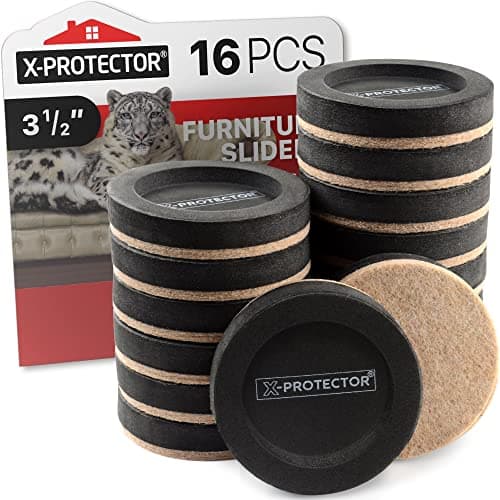
X-PROTECTOR Felt Furniture Sliders for Hardwood Floors

Felt-faced sliders in a 16-piece pack - the right face for any hard floor.

hardwood, laminate, tile and vinyl
3
A textured area rug anchoring a living room
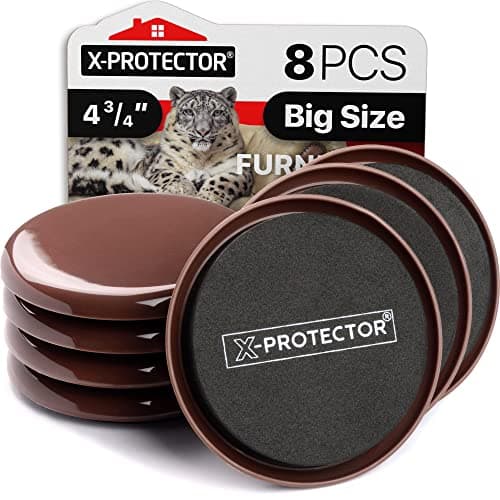
X-PROTECTOR Furniture Sliders for Carpet

Hard-faced pads sized for carpet, where felt sliders simply do not work.

carpet and rugs
4
A renovation workshop with tools and a workbench
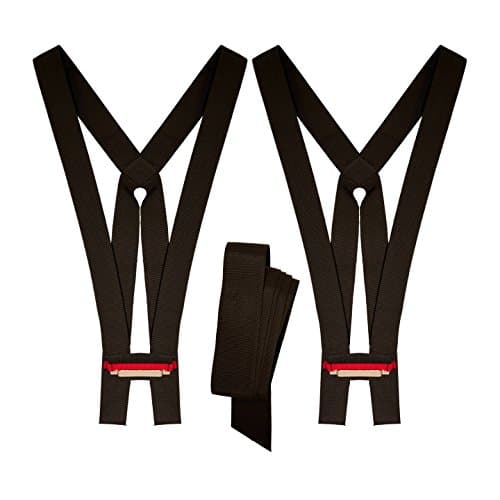
Ready Lifter Shoulder Moving Straps

Simple adjustable shoulder straps - the only thing here that helps on stairs.

stairs and awkward carries, on a budget
5
A moving dolly loaded for transporting heavy items
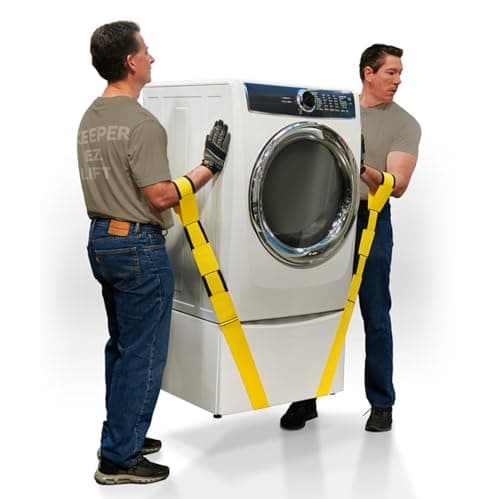
KEEPER Two Person Adjustable Lifting and Moving Straps

An 800 lb-rated two-person harness system from a name that makes straps for a living.

two-person lifts from an established strap brand
6
A wood dresser styled in a bedroom
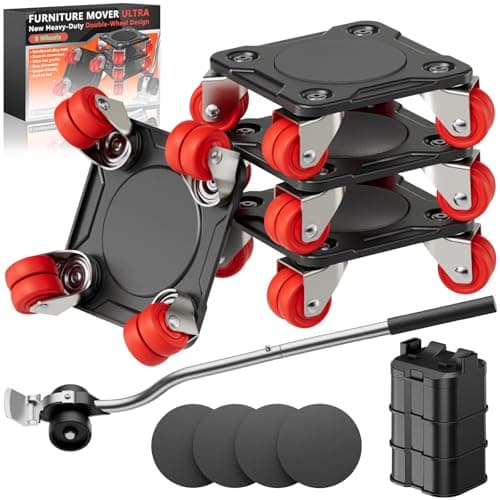
ONEON Heavy Duty Furniture Movers with Wheels & Lifter

Four wheeled roller pads plus a lifter - what to use when sliders bog down.

heavy solid wood and appliances on rough or soft surfaces
7
A modern sofa in a warm neutral living room
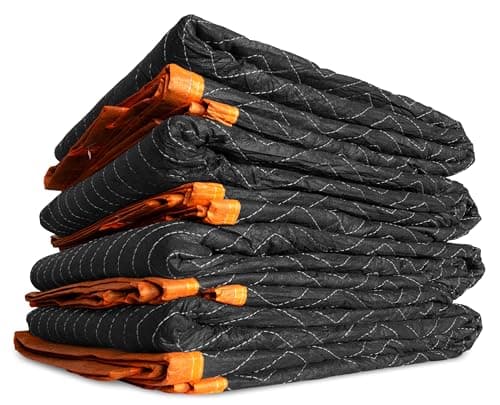
WEN Heavy Duty Padded Moving Blankets, 4-Pack (272804)

Full-size padded blankets in a four-pack - the household quantity, not the warehouse quantity.

protecting finishes, walls and door frames
8
An assortment of home goods and kitchenware
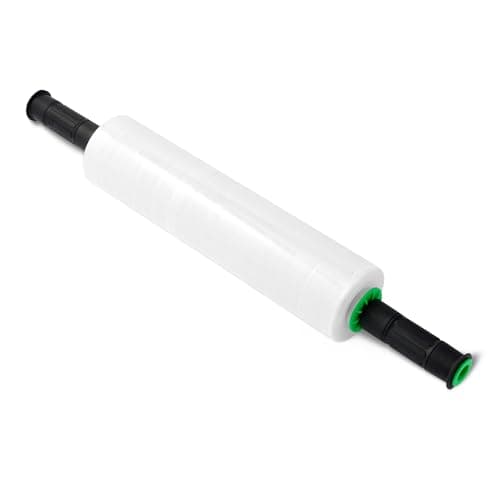
Amazon Basics Stretch Wrap Film Roll, 15 in x 1000 ft

A 1000-foot roll with built-in handles - what actually keeps a blanket on a dresser.

holding blankets, doors and drawers shut
9
A renovation workshop with tools and a workbench
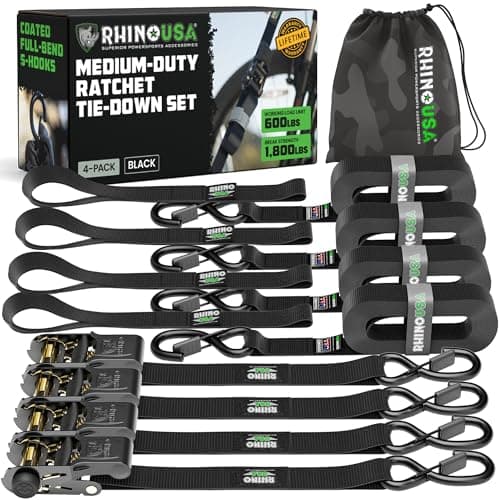
Rhino USA Ratchet Straps Tie Downs, 1 in x 15 ft, 4-Pack

Four 15-foot ratchet straps with S hooks - the last tool in the sequence, and the one people skip.

securing a load in a truck or trailer

Tap any row to jump to the full write-up. Prices open on Amazon in a new tab.

How we chose these picks

Every pick here is chosen the way I’d choose it for a client’s home: real-world durability first, build quality and materials second, and value for the money third. Where I’ve installed or lived with a product on a job, I say so and tell you what I saw. Where a pick is based on research and verified buyer feedback rather than hands-on use, I say that too — I never claim to have tested something I haven’t.

Read our full editorial policy for how we evaluate and update these guides.

1

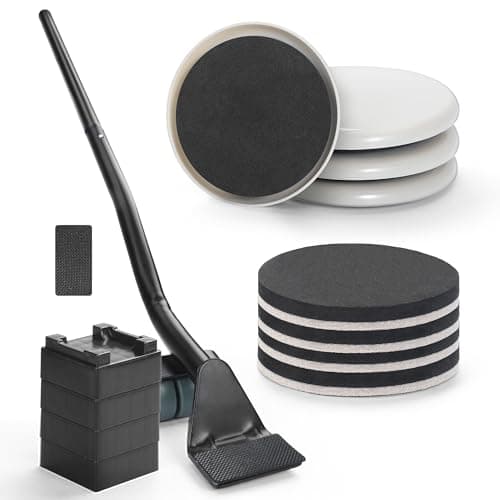
Furniture Lifter Tool + 8-Pack of 3.5" Sliders

Best for the first moving tool to own
A moving dolly loaded for transporting heavy items

A lever lifter plus eight sliders - the cheapest way to stop lifting furniture at all.

If you buy one thing off this page, buy a lifter-and-slider set. The reason people hurt themselves moving furniture is almost never the sliding part - it is the moment they crouch, grab a dresser by its underside, and heave it up two inches so somebody can shove a pad underneath. A lever lifter deletes that moment. You hook it under an edge, step on it, and the corner rises with almost no effort. Once all four contact points are on pads, a piece that felt immovable moves with a push. This particular set is the useful configuration: a lifter plus enough pads to do a whole piece and still have spares, at a price that is trivial next to a single gouged floorboard.

$21.99 · View on Amazon

#ad · disclosure · Price as of September 19, 2026

Pros

  • Solves both halves of the problem in one buy: the lifter gets the corner up, the sliders take the weight
  • Eight pads is enough for two pieces at once, or for a piece with more than four contact points
  • The lever does the lifting, so the job stops depending on your back and grip strength
  • Pads are reusable rather than the stick-on kind you throw away

Cons

  • The listing describes the included pads as floor protectors for carpet, so on bare hardwood you will want a felt set as well
  • A lever lifter needs somewhere solid to bear against - a thin veneered panel or a hollow leg is not it
  • Sliders only help in a straight-ish line; they do nothing for stairs, thresholds or lifting into a truck
  • Pad size is fixed at 3.5 inches, which is small under a very heavy point load on soft carpet
2

X-PROTECTOR Felt Furniture Sliders for Hardwood Floors

X-PROTECTOR · Best for hardwood, laminate, tile and vinyl

A decorated, cozy living room with a sofa

Felt-faced sliders in a 16-piece pack - the right face for any hard floor.

This is the pack I would keep in a drawer permanently. X-Protector is one of the few names in this category that sells the hard-floor and carpet versions as clearly separate products rather than pretending one pad does both, and the 16-piece count is the practical one - four pads is enough for exactly one piece of furniture and nothing else, which is how people end up dragging the second item. On hard floors felt is genuinely the correct face: it is softer than the finish, so wear happens to the pad rather than to the floor.

$15.916% off

$14.99 · View on Amazon

#ad · disclosure · Price as of September 19, 2026

Pros

  • Felt face glides on finished wood, laminate, tile and vinyl without abrading the surface
  • Sixteen pieces at 3.5 inches covers several pieces of furniture, so you are not shuffling four pads around a room
  • Reusable, and small enough to leave under a piece permanently if it gets moved often
  • Cheap enough that having the right type on hand costs almost nothing

Cons

  • Felt on carpet is the wrong pairing - it grips instead of glides, which is what the hard-faced carpet sliders are for
  • Grit trapped in the felt is what scratches floors, so they need checking and wiping between rooms
  • Felt compresses and eventually polishes smooth under heavy repeated use and needs replacing
  • Round pads can slip out from under a piece on a turn if the contact point is small
3

X-PROTECTOR Furniture Sliders for Carpet

X-PROTECTOR · Best for carpet and rugs

A textured area rug anchoring a living room

Hard-faced pads sized for carpet, where felt sliders simply do not work.

Carpet sliders are the pick people most often skip and most often need. Carpet feels soft, so it seems like the easy surface, but it is the one that actually stops furniture: the legs sink into the pile and every push turns into a drag that stretches the carpet and can pull it off the gripper rods at the edges of a room. A hard, smooth, wide face floats on top of the pile instead. The larger 4.75-inch size here is the reason to pick this pack over a generic one - on soft carpet, pad area is what keeps the piece up.

$12.99 · View on Amazon

#ad · disclosure · Price as of September 19, 2026

Pros

  • Hard plastic face rides on top of carpet pile instead of sinking into it
  • At 4.75 inches these are noticeably larger than the standard 3.5-inch pads, which spreads the load on soft carpet
  • Works on rugs as well as fitted carpet, including moving a piece off a rug without rucking it
  • Reusable and effectively indestructible compared with felt

Cons

  • Must never be used on hard floors - a hard face on wood or vinyl is exactly how you get a scratch
  • Eight pads is two pieces of furniture at a time, no more
  • On very thick or shag pile even a large pad can bog down under a concentrated load
  • Rectangular pads need to be oriented along the direction of travel or they tip
4

Ready Lifter Shoulder Moving Straps

Ready Lifter · Best for stairs and awkward carries, on a budget

A renovation workshop with tools and a workbench

Simple adjustable shoulder straps - the only thing here that helps on stairs.

Every search that ends up on a page like this eventually asks the same question: what dolly do I use to get furniture upstairs? The honest answer is that you do not. A flat dolly on stairs is dangerous, a two-wheel hand truck on stairs is a controlled slide at best, and the tool professional movers actually use for a staircase is a pair of straps and a partner. This is the plainest, least expensive version of that tool. It is worth owning before it is needed, because the moment you need it you are already standing at the bottom of a flight of stairs holding a sofa.

$15.00 · View on Amazon

#ad · disclosure · Price as of September 19, 2026

Pros

  • Puts the load on shoulders and legs rather than fingers and lower back
  • Listed for objects up to 600 lb and 12 feet long, so it covers long awkward items as well as heavy ones
  • Adjustable, which matters when two people are different heights on a staircase
  • The cheapest genuine fix on this page for the one job no wheeled tool can do

Cons

  • Straps take practice - the first carry with them feels worse than without, because the technique is different
  • They do not reduce weight, they redistribute it; a load too heavy for two people is still too heavy
  • No padding to speak of at this price, which is noticeable on a long carry
  • Useless on anything with no clear underside to pass a strap beneath
5

KEEPER Two Person Adjustable Lifting and Moving Straps

KEEPER · Best for two-person lifts from an established strap brand

A moving dolly loaded for transporting heavy items

An 800 lb-rated two-person harness system from a name that makes straps for a living.

If straps are going to be a permanent part of your kit rather than a one-move purchase, buy them from a company whose entire business is webbing and load ratings. The stated 800 lb capacity matters less as a target than as margin: you want the strap to be the least likely thing in the system to fail. This is the pick for the household that moves a piano-adjacent object once, helps friends move regularly, or simply wants a rated product rather than an unbranded kit.

$19.99 · View on Amazon

#ad · disclosure · Price as of September 19, 2026

Pros

  • Rated by the manufacturer at 800 lb capacity, which is more headroom than most household pieces need
  • Keeper is a tie-down and strap specialist rather than a generic moving-kit seller
  • Adjustable for different heights and for the height difference stairs create
  • Harness layout frees both hands to steady and steer the piece

Cons

  • Strictly a two-person tool - there is no useful single-person mode
  • Capacity is a strap rating, not permission; what two people can safely carry is far below 800 lb
  • More setup than the simple shoulder-strap version, which discourages using it for a quick shift
  • Harness-style straps get tangled in storage if they are not rolled properly
6

ONEON Heavy Duty Furniture Movers with Wheels & Lifter

ONEON · Best for heavy solid wood and appliances on rough or soft surfaces

A wood dresser styled in a bedroom

Four wheeled roller pads plus a lifter - what to use when sliders bog down.

There is a point where sliders stop being the right tool: a solid-oak wardrobe on deep carpet, a full fridge on a tiled kitchen floor, a workbench on rough concrete. Sliding needs a smooth continuous surface, and when the surface fights back the answer is wheels rather than more force. Roller pads plus a lifter cover that case without turning into a full dolly you then have to store. This set is the sensible configuration of it - four pads, dual wheels, and the lifter that makes them usable alone.

$49.9015% off

$42.41 · View on Amazon

#ad · disclosure · Price as of September 19, 2026

Pros

  • Wheels roll where a slider drags, which is the difference on carpet, tile grout lines and rough concrete
  • Dual-wheel pads spread the load better than single casters under a heavy point
  • Includes the lever lifter, so it is a complete system rather than pads alone
  • The set moves an appliance or a solid-wood piece in any direction, including sideways out of an alcove

Cons

  • The most expensive pick on this page, and overkill if you are only shifting a sofa to vacuum behind it
  • Wheels roll - on a sloped floor a piece on rollers can get away from you in a way it never does on sliders
  • Small hard wheels can mark a soft floor finish if grit gets under them
  • Four separate pads means four things to position and four to keep track of afterward
7

WEN Heavy Duty Padded Moving Blankets, 4-Pack (272804)

WEN · Best for protecting finishes, walls and door frames

A modern sofa in a warm neutral living room

Full-size padded blankets in a four-pack - the household quantity, not the warehouse quantity.

Blankets are the least interesting purchase on this page and the one that prevents the most expensive damage. The pieces that get wrecked on moving day are almost never dropped; they get scraped down a door frame, set on a gritty driveway, or stacked against something with a hard corner. WEN is a known name in workshop gear and this four-pack is the right household quantity - big enough blankets to actually go around a piece, without buying a dozen you will store for a decade.

$39.99 · View on Amazon

#ad · disclosure · Price as of September 19, 2026

Pros

  • At 72 by 80 inches each blanket wraps a full-height dresser or covers a sofa completely
  • Four is the realistic number for a house move; the twelve-packs are priced and sized for professional crews
  • Doubles as floor and door-frame protection, which is where most moving-day damage actually happens
  • Padded quilting protects corners and edges, the parts that get hit

Cons

  • Bulky to store - four blankets take a shelf, not a drawer
  • They need securing with wrap or tape; a blanket alone slides off a piece the moment it tilts
  • Not waterproof, so an outdoor leg of the move in bad weather needs something over the top
  • Overkill if you are only moving furniture within one room
8

Amazon Basics Stretch Wrap Film Roll, 15 in x 1000 ft

Amazon Basics · Best for holding blankets, doors and drawers shut

An assortment of home goods and kitchenware

A 1000-foot roll with built-in handles - what actually keeps a blanket on a dresser.

Wrap is the partner product to blankets and the reason blankets work at all. It is also the honest fix for the two problems that catch people out on moving day: drawers that slide open on a staircase, and cabinet doors that swing into a wall. Tape solves neither without touching a finish. This is the standard 15-inch by 1000-foot roll with handles, which is the version worth having, because wrapping a wardrobe by rotating a bare roll around it by hand is genuinely miserable.

$17.42 · View on Amazon

#ad · disclosure · Price as of September 19, 2026

Pros

  • Turns a loose blanket into a fixed wrap, which is the difference between protection and a blanket on the floor
  • Holds drawers, cabinet doors and recliner mechanisms closed without tape touching the finish
  • Two ergonomic handles on the roll make one-person wrapping realistic
  • A 1000-foot roll comfortably covers a whole-house move

Cons

  • Should not go directly against a delicate or freshly finished surface for long periods - wrap the blanket, not the wood
  • Single-use plastic; there is no reusing it once it comes off
  • Cling film of any kind is awkward in cold weather, where it gets stiff and tears
  • Easy to over-wrap, which wastes film and makes the piece harder to unwrap at the other end
9

Rhino USA Ratchet Straps Tie Downs, 1 in x 15 ft, 4-Pack

Rhino USA · Best for securing a load in a truck or trailer

A renovation workshop with tools and a workbench

Four 15-foot ratchet straps with S hooks - the last tool in the sequence, and the one people skip.

Everything else on this page gets a piece to the vehicle. This is what stops it being destroyed inside it. Furniture that shifts during a drive does more damage in one corner than the entire carry did, because there is nobody holding it and nothing padding the impact. Rhino USA is a widely used tie-down brand and this four-pack of 1-inch by 15-foot straps with S hooks is the standard household configuration - enough to cross-strap a load rather than run one hopeful strap over the top.

$39.80 · View on Amazon

#ad · disclosure · Price as of September 19, 2026

Pros

  • Ratchet tensioning holds a load genuinely still, unlike cam buckles or rope
  • Four straps is the practical minimum for a load that has to stay upright in a moving vehicle
  • Fifteen feet reaches across a pickup bed or around a piece inside a box truck
  • The same straps handle appliances, lumber and anything else that has to travel afterward

Cons

  • Ratchets can be over-tightened, and a strap pulled hard across an unpadded edge will dent it
  • S hooks need a solid anchor point - they are not for hooking onto trim or a fabric loop
  • Webbing frays and should be retired rather than knotted around damage
  • More strap than you need if the move is one room to another

Sliders, straps or a dolly: which one this job actually needs

These three tools are not competing versions of each other. They solve different geometry, and picking the wrong one is why moving day goes badly with the right gear sitting in the hall.

  • Sliders are for moving a piece across a continuous floor in the same room, or from one room to the next on the same level. They are the highest-leverage tool per dollar by a wide margin, and they are the only one of the three a single person can use without any technique at all.
  • Straps are for anything that has to leave the floor: stairs, thresholds, a step down to a garage, a lift into a truck bed. Nothing else on this page addresses stairs, and nothing else safely should.
  • A dolly is for carrying a heavy object a long, flat, clear distance — down a driveway, across a parking lot, along a corridor. It is the right tool far less often than people expect inside a house, and the wrong one the moment a step appears. The furniture dolly roundup covers flat dollies, hand trucks and appliance trucks in detail if that is genuinely your job, and furniture dolly vs utility dolly settles which of the two styles you actually need.

The practical version: sliders and a lifter handle the ninety percent of furniture moving that happens inside one home. Straps handle the ten percent that involves height. A dolly is a moving day and job-site tool, not a rearranging tool.

Match the slider to the floor, not to the furniture

This is the one technical decision in the whole category and it is backwards from what most people assume. The slider face is chosen by the floor underneath, not by the weight or type of the piece on top.

  • Hard floors want a soft face. On finished wood, laminate, tile or vinyl, use felt. Felt is softer than the floor finish, so wear happens to the pad. A hard plastic pad on wood is a scratch waiting for a grain of grit.
  • Carpet wants a hard face. On carpet or a rug, use smooth plastic. Felt grips carpet pile and stops the piece dead; a hard, wide pad floats on top of it. This is why the two types are sold as separate products rather than as a single do-everything pad.
  • Pad area matters more on soft surfaces. On thick carpet, a larger pad is what keeps the piece from sinking. On hard floors a small pad is fine, because the floor is doing none of the deforming.
  • Put the pad under the load path. Under legs, under the corners of a plinth base, under the frame — not under the middle of an unsupported panel. The wrong position either does nothing or flexes something that should not flex.
  • Check the pad face every time. Grit embedded in felt is the actual cause of most slider scratches. Wipe the pads, and do not carry pads from a dusty garage onto a finished floor.

If a room is being rearranged rather than emptied, sliders plus a lifter are the entire toolkit. Our guide to arranging living room furniture is far more useful when trying three layouts costs you nothing but a push.

Stairs, doorways and the turn at the top

Search demand for moving furniture upstairs is enormous and the honest answer disappoints people: there is no consumer dolly that makes a staircase safe. Stair-climbing hand trucks exist and are real tools, but they are heavy, expensive, and still require the person below to take the load on every step. For a household move, stairs are a straps-and-technique problem.

  • The person below carries; the person above steers. Trying to split the weight evenly pulls the top person forward on every step. Decide this before you pick the piece up, not halfway up the flight.
  • Empty it and secure it first. Drawers, doors and shelves all move at exactly the wrong moment. A pass of stretch wrap around the carcass costs ten seconds.
  • Measure the turn, not the staircase. Almost nothing gets stuck on a straight run; things get stuck at the half-landing, the newel post, and the doorway at the top. The room measuring guide walks through checking a delivery path properly — door widths, hall turns and stairwells — before a piece is even bought.
  • Take the door off. Two screws on the hinges buys an extra inch and a half of doorway and has saved more sofas than any tool on this page.
  • Protect the pivot points. Lay a blanket at the bottom of the stairs and in the doorway. That is where a corner gets set down hard.

Protect the piece and the house before anything moves

Moving damage is overwhelmingly cosmetic and overwhelmingly avoidable. It happens in predictable places, and ten minutes of preparation removes most of it.

  • Wrap the piece, then wrap the wrap. A blanket alone slides off the moment the piece tilts. Stretch film over the blanket is what holds it in place — and keeps film off the finish itself.
  • Protect edges and corners specifically. Flat faces rarely get hit. Corners, feet, and the front edge of a tabletop take almost all of it.
  • Clear the whole path first. Rugs rolled, doors open and wedged, cables moved, shoes out of the hall. Deciding where to put your foot while holding a wardrobe is how walls get dented.
  • Take the mirror off the dresser. Anything glass, anything that unbolts, anything with a hinge — separate it and move it on its own.
  • Reassemble and re-secure at the other end. A tall piece that was anchored to a wall before the move needs anchoring again in the new room. Our furniture anchor picks cover what actually holds in drywall versus a stud.

Loading and strapping: the part that causes the most damage

The single worst thing you can do to a piece of furniture is put it in a vehicle loose. During the carry there is always a person holding it. In a van there is nobody, and a moving load has both time and momentum.

  • Load heavy and low against the front bulkhead. Weight forward and low keeps the vehicle stable and stops a stack from walking backward at every stop.
  • Cross-strap low rather than one strap high. A single strap over the top of a tall piece lets it rock and gradually loosens the ratchet. Two straps crossed low hold it.
  • Always strap over padding. A ratchet applies far more force than you can feel, and a bare strap over a finished edge leaves a compression line that does not buff out.
  • Anchor to anchor points. S hooks belong on rated tie-down points, never on trim, a seat frame, or a fabric loop.
  • Stop and re-check after ten minutes. Every load settles. The second tightening is the one that matters.

When the right answer is not to move it yourself

An honest roundup has to include the cases where its own products are the wrong call. No pad or strap changes any of the following.

  • Pianos, safes, and full-size appliances down stairs. These are specialist jobs with specialist gear and real injury risk. Two people and a strap is not the answer.
  • Antiques with loose joints. Sliding a piece with a racked or failing frame can pull it apart. Support it as a whole, or take it apart deliberately, rather than dragging it.
  • Anything you cannot get a hand under safely. If positioning a strap or a pad requires putting fingers where a slip would trap them, stop and get more people.
  • Flat-pack furniture assembled in place. Cam-lock and dowel construction is not designed to be carried assembled. Taking it apart is usually faster than repairing it, and our furniture assembly guide covers keeping the hardware straight so it goes back together.
  • Any load where the honest answer is a third person. Gear reduces effort. It does not add a person.

Frequently asked questions

What is the best tool for moving heavy furniture by yourself?

A lever-style furniture lifter used together with sliders. The lifter gets a corner off the floor without you crouching and hauling; the sliders let the piece glide instead of drag. Between them they cover almost every single-person move on a flat, continuous floor. What they do not cover is height — stairs, thresholds and lifting into a vehicle need straps and a second person, because nothing that rolls or slides is safe on a staircase.

Do furniture sliders work on carpet?

Yes — but only the hard-faced kind. Carpet sliders have a smooth plastic face that rides on top of the pile, while felt sliders grip carpet and stop the piece dead. Pad size matters more here too: a larger pad spreads the load so the piece does not sink into the pile. The reverse rule matters just as much — never put hard-faced carpet sliders on wood, laminate or vinyl.

Can I use a dolly to move furniture upstairs?

No, not safely. A flat dolly should never go on stairs, and a two-wheel hand truck on a staircase is a controlled slide that depends entirely on the person below. Stair-climbing trucks exist, but they are heavy, expensive, and still need someone carrying on every step. For a household move, stairs are a straps-and-technique job: two people, the one below carrying and the one above steering, with drawers emptied and the piece wrapped first.

Do furniture sliders scratch hardwood floors?

The pad should not, if it is the right type. Felt is softer than a floor finish, so wear happens to the pad rather than the wood. Nearly every slider scratch comes from one of two mistakes: using hard plastic carpet sliders on a hard floor, or letting grit embed in the felt so the pad turns into a sanding block. Wipe the faces before each move, and keep garage pads out of finished rooms.

Are moving straps actually worth buying?

For stairs and awkward carries, yes — they are the only tool that helps, and they cost less than one visit from a mover. They move the load off your fingers and lower back onto your shoulders and legs, and free your hands to steer. What they do not do is reduce weight: a load too heavy for two people is still too heavy with straps on, and a rating on the webbing describes the strap, not what people should attempt.

Should I empty a dresser before moving it?

Almost always. Full drawers can double the weight, shift the center of gravity mid-carry, and on a staircase a drawer that slides open turns a manageable load into an uncontrolled one. Emptying also protects the piece — case furniture is built to hold its contents standing still, not to be carried with them, and the racking force is what pulls joints loose. If a loaded piece has to move across one flat room on sliders, wrap the carcass to keep the drawers shut and stay on the level.

Ready to make your space feel like home?

Browse the roundups I'd actually hand a client — honest picks, real trade-offs, and the one to buy first.