Skip to content
IMH

Compare

Furniture Dolly vs Hand Truck: Which Do You Need?

Four wheels flat under the load, or two wheels tipped back against your chest. One of them must never go near a staircase.

By Catherine Vizcaino · Home-renovation pro & founder

Updated September 2026

A moving dolly loaded for transporting heavy items

As an Amazon Associate, I Heart My Home earns from qualifying purchases. It never changes your price or our picks. Learn more.

A hand truck and a furniture dolly are not competing products. They are two different machines that fail at each other’s jobs, and the only reason anyone compares them is that English gives them the same nickname.

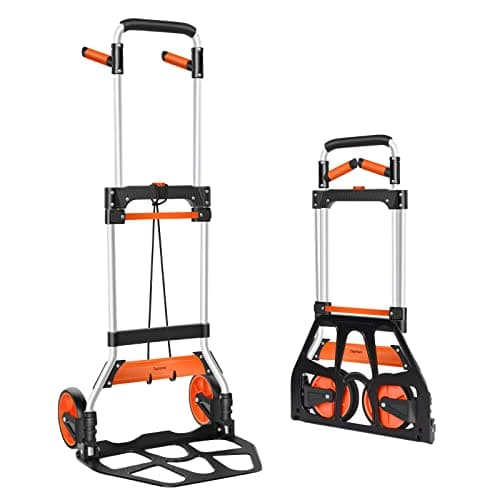
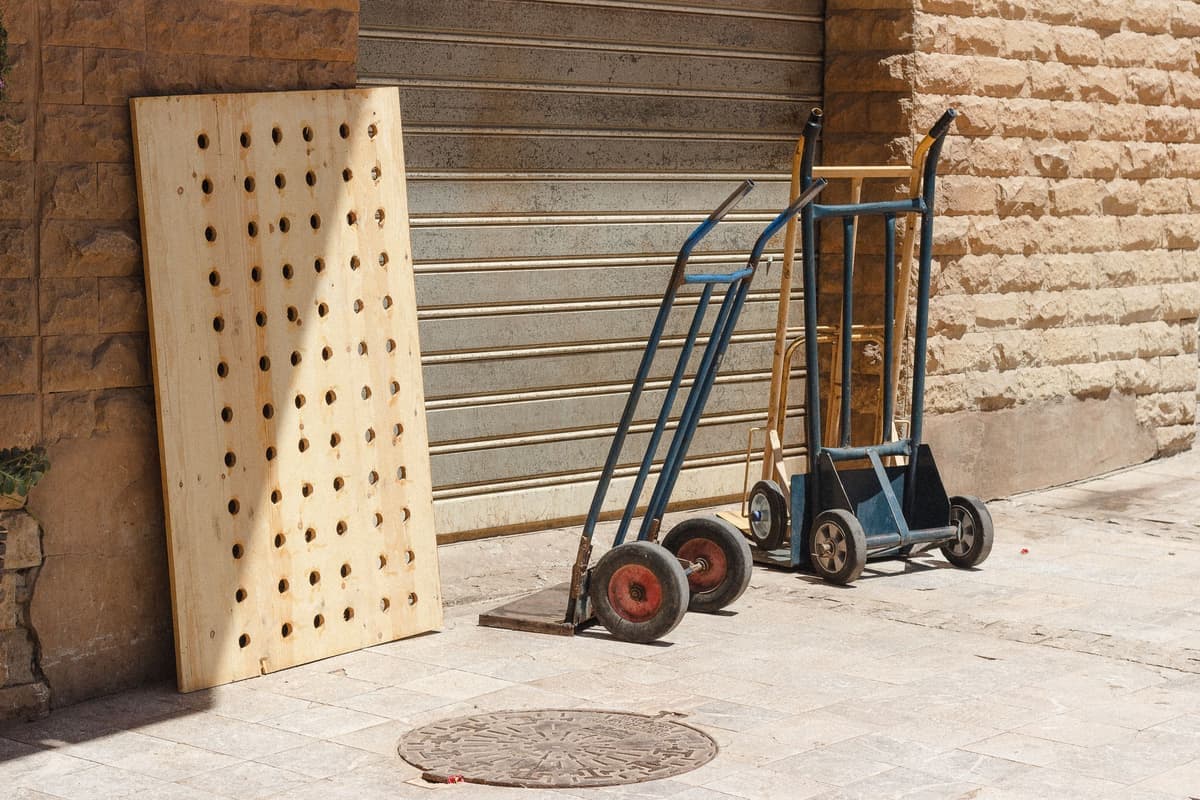
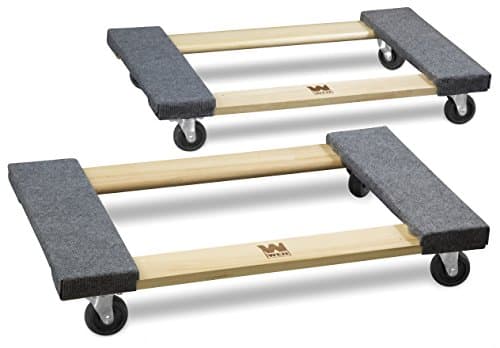
A furniture dolly is a low four-wheel deck — typically 18 by 30 inches and about 5 inches tall. The load sits flat on top and stays level the whole way. A hand truck is an upright two-wheel frame with a nose plate that slides under the load, which then tips back onto an axle so the weight rides against the frame while you hold the balance.

Flat and level, or tipped and balanced. That single difference decides what each can carry, how many people you need, whether it can go near a staircase, and what it will do to your floors. Below: the real numbers from real listings, a per-item lookup, and the one rule I do not bend. I renovate homes for a living, so both live in my truck. For the closely related question, see furniture dolly vs utility dolly, and our editorial policy for how these picks get made.

Shop the look

 Furniture dolly (4-wheel)Hand truck (2-wheel)
How the load travelsFlat and level on a deckTipped back against the frame, you hold the balance
Typical deck / plate18 x 30 in deck, about 5 in tallNose plate roughly 8-14 in deep
Typical capacity1,000-1,320 lb dynamic, usually rated per pair330-800 lb, single unit
People neededTwo, and usually two dolliesOne, for most loads
StairsNever. Not once. Not carefully.Yes, with care; stair glides help a lot
Best loadsSofas, long case goods, anything flat-bottomedBoxes, bins, appliances, tall narrow things
Worst loadsAnything tall and top-heavyAnything wide with no lip to get a plate under
StorageTwo flat decks, easy to slide against a wallUpright frame; folding models go to 2 in thick

Bottom line: if the piece is long, low and flat-bottomed — a sofa, a credenza, a chest — you want two furniture dollies and a second person. If it is boxy, tall, narrow, or has to go up or down stairs, you want a hand truck, and if it is an appliance you want one with a strap. Most households that buy one of the two should have bought a hand truck, because it handles more of the jobs that actually come up. Most people moving house need both.

The real numbers, from real listings

Round numbers are how people end up under a load that is heavier than their tool. These are the published specifications from the products we recommend, so you can compare like with like.

Furniture dollies (4-wheel, flat):

  • WEN hardwood pair — 18 x 30 in deck, 5 in tall, birch with carpeted ends. Listed at a 1,320 lb dynamic and 2,000 lb static load for the pair. Four ball-bearing swivel casters.
  • Simpli-Magic hardwood pair — 30 x 18 in, 5 in tall, same 1,320 lb dynamic / 2,000 lb static pair rating, carpeted ends.
  • VEVOR hardwood single — 18 x 30 in, 5.12 in tall, 1,000 lb, 7.72 lb, 3 in PP swivel casters, polyester velvet non-slip pads. Sold singly, which is unusual and useful if you already own one.
  • Mytee carpeted — 19 x 32 in, 8 in thick, hardwood and plywood, carpeted top on short rails, 1,000 lb working load limit, 3-1/2 x 4 in non-marring TPR swivel casters. The premium option, and the one whose own listing names piano moving.

Hand trucks (2-wheel and convertible):

  • Teprovo aluminum folding — 340 lb, weighs 13 lb, folds to 36 in H x 19 in W x 2 in D, 7 in rubber wheels, handle at 47.24 in. The apartment answer.
  • KEDSUM 3-in-1 — 330 lb upright, 600 lb as a six-wheel cart, with brakes. Base expands 27 to 48 in, handle 30 to 37 in, 19 lb.
  • Olympia 3-in-1 aluminum — 500 lb upright, 800 lb on the 45-degree incline, 1,000 lb as a platform cart.
  • Harper convertible — 600 lb as a 2-wheel dolly, 700 lb as a 4-wheel cart. 10 in pneumatic wheels plus 5 in swivel casters, three-position telescoping aluminum handle, built-in stair glides, 28 lb.
  • Harper 6781 appliance truck — 800 lb, steel, stair glides, high-strength strap, non-marking vinyl facing and soft rubber tread. Roughly 60 in tall.

Two things jump out of those lists, and both cost people money. First, flat dolly ratings are usually per pair. That 1,320 lb is two dollies working together; one alone is half that at best. Second, convertibles have a different rating per mode, and the number printed on the box is always the highest one. The Olympia is 1,000 lb — as a platform cart. Upright, where you would use it on a staircase, it is 500.

The stairs rule, which I will not soften

A four-wheel furniture dolly must never go on a staircase. Not slowly, not with three people, not for one step. There is no technique that makes it acceptable.

The reason is mechanical rather than a matter of caution. A flat dolly works because the load sits level on a deck with nothing holding it there — friction and gravity alone. The moment the deck tilts, the load has somewhere to go and no way to be stopped, and it is already moving before anyone below has a chance to react. A hand truck is the opposite: the load is leaned into the frame, so tilting the frame is the normal operating condition, and stair glides let the frame slide down one riser at a time under control.

So for stairs, in order of preference: an appliance truck with a strap and stair glides, a convertible with stair glides in its 2-wheel mode, a plain hand truck, or the piece carried by two people with sensible lifting technique and lifting straps. Never a flat dolly.

A related rule that matters almost as much: nobody stands directly below the load. The person at the bottom of a staircase stands to the side, off the fall line. That applies with any tool, on any staircase, regardless of how heavy the thing is.

What each one does to your floors

This is where the money quietly goes. Refinishing a hardwood floor costs far more than either tool, so the wheel and contact details matter more than the capacity most of the time.

Furniture dollies concentrate weight onto four small casters. A 400 lb dresser on four 3-inch wheels is a lot of pressure per square inch, and any grit trapped in a caster becomes a cutting tool dragged across your finish. Two defenses: buy non-marking wheels — the Mytee specifies non-marring TPR, the Rubbermaid specifies non-marking casters — and wipe or vacuum the wheels before the first indoor trip. Carpeted decks help the furniture, not the floor; they also trap the grit that does the scratching, so vacuum the deck too.

Hand trucks put everything on two larger wheels plus the nose plate. Bigger wheels spread the load better and roll over thresholds instead of stopping dead at them — the Harper convertible’s 10 inch pneumatic wheels are the friendliest thing here on rough ground or a tile lip. The risk moves to the nose plate, which is a steel edge that drops onto your floor every time you set the load down. The Harper appliance truck specifies non-marking vinyl facing for exactly this reason.

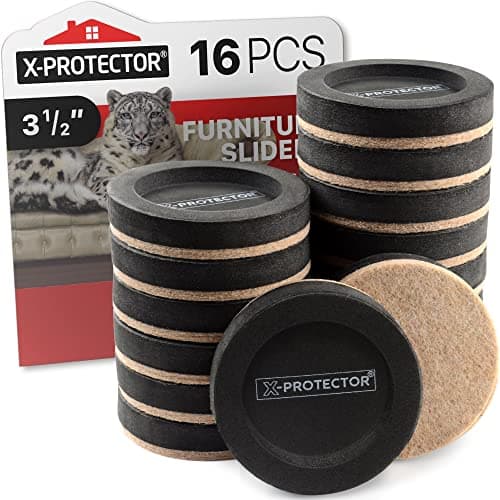
On carpet, both struggle, and sliders win. Small casters sink into pile and steer badly. This is the case for the third option: X-PROTECTOR’s carpet sliders are 4-3/4 in across specifically because the larger diameter spreads the load so it does not sink. Their hardwood set is 3-1/2 in external with a 2-3/4 in internal face, felt over rubber foam, reusable with no adhesive.

Which leads to the honest recommendation most dolly articles will not make: if you are moving something within a room or across one floor of a house, sliders are frequently the right tool and cost under $15. A dolly is for transport, not for repositioning.
Which one for which item

  • Sofa or loveseat: two furniture dollies, one under each end. A hand truck has nothing to get a plate under, and one dolly under the middle lets both ends swing into your walls.
  • Refrigerator, washer, dryer: appliance hand truck, strap tensioned. A flat dolly cannot hold a tall top-heavy load and will let it go.
  • Boxes, bins, totes: hand truck. Stack them, tip back, one person, done.
  • Dresser, chest of drawers: remove the drawers, then a furniture dolly. Empty it first regardless of the tool.
  • Bookcase or tall shelving: empty it, then a hand truck on the narrow edge. Tall and light empty; a flat dolly makes it a tipping hazard.
  • Upright piano: hire movers. If you insist: carpeted flat dolly with a 1,000 lb-plus working load, four people, no stairs.
  • Dining table: legs off, top moved on edge by two people. Neither tool is really right.
  • Mattress: neither. A mattress bag and two people.
  • Anything up or down stairs: hand truck, ideally with stair glides. Never a flat dolly.
  • Moving something three feet to clean behind it: sliders. Leave both in the garage.
  • Loading a truck up a ramp: hand truck for boxes; for furniture, roll it to the ramp on dollies and then carry it up. A loaded flat dolly on an incline is the same failure mode as stairs.

For a full per-item breakdown including capacities, see our best furniture dollies roundup, and for the couch specifically there is a step-by-step guide.

What to buy for each job

Three picks that cover the two categories and the option most people actually need. A hardwood pair for flat transport, a folding hand truck for the upright jobs and stairs, and the sliders that make a dolly unnecessary for anything inside one room. Prices move, so each card shows the live current price rather than a number I typed once and let go stale.

Frequently asked questions

What is the difference between a furniture dolly and a hand truck?

A furniture dolly is a low four-wheel deck — typically 18 by 30 inches and about 5 inches tall — that carries the load flat and level. A hand truck is an upright two-wheel frame with a nose plate that slides under the load, which then tips back against the frame while you hold the balance. Flat and level versus tipped and balanced is the whole difference, and it decides what each can carry, how many people you need, and whether the tool can go near a staircase.

Is a hand truck the same as a dolly?

Not quite, and the naming is genuinely the problem. “Dolly” gets used loosely for both, but in the trade a dolly is the four-wheel flat platform and a hand truck is the two-wheel upright. Confusingly, the two-wheel upright is also widely sold as a “utility dolly,” which is exactly why so many people order the wrong thing. Ignore the name on the listing and count the wheels.

Can you use a furniture dolly on stairs?

No, never — not slowly, not with three people, not for one step. A flat dolly holds the load with nothing but friction and gravity, so the instant the deck tilts the load has somewhere to go and no way to be stopped, and it is already moving before anyone below can react. Use a hand truck with stair glides, an appliance truck with a strap, or two people with lifting straps. And whatever the tool, nobody stands directly below the load — the person at the bottom stands off to the side.

How much weight can a hand truck hold compared to a furniture dolly?

Hand trucks typically run 330 to 800 lb as single units — 340 lb for a folding aluminum model, 500 lb upright on a 3-in-1, 600 lb for a heavy-duty convertible, 800 lb for a dedicated appliance truck. Flat furniture dollies list higher headline numbers, commonly 1,000 to 1,320 lb, but read carefully: those are usually pair ratings, not per-dolly. And on convertibles, the capacity changes per mode — a 1,000 lb platform cart may be rated 500 lb upright.

Do I need a dolly or a hand truck to move a couch?

Two furniture dollies, one under each end, plus a second person. A hand truck is the wrong tool for a couch because there is usually nothing for the nose plate to get under, and one dolly under the middle turns the sofa into a see-saw that swings both ends into your walls and door frames. We have a full step-by-step guide to moving a couch with a dolly.

Which should I buy if I can only buy one?

A hand truck, for most households. It covers the jobs that actually come up regularly — boxes, bins, cases of water, an emptied bookcase — it works on stairs, and a folding aluminum model stores in a closet rather than taking a garage bay. Buy furniture dollies when you have a specific long, low, heavy piece to move, and buy them in pairs because one is not useful on its own. If the piece is only moving within a room, buy neither and get sliders.

Ready to make your space feel like home?

Browse the roundups I'd actually hand a client — honest picks, real trade-offs, and the one to buy first.