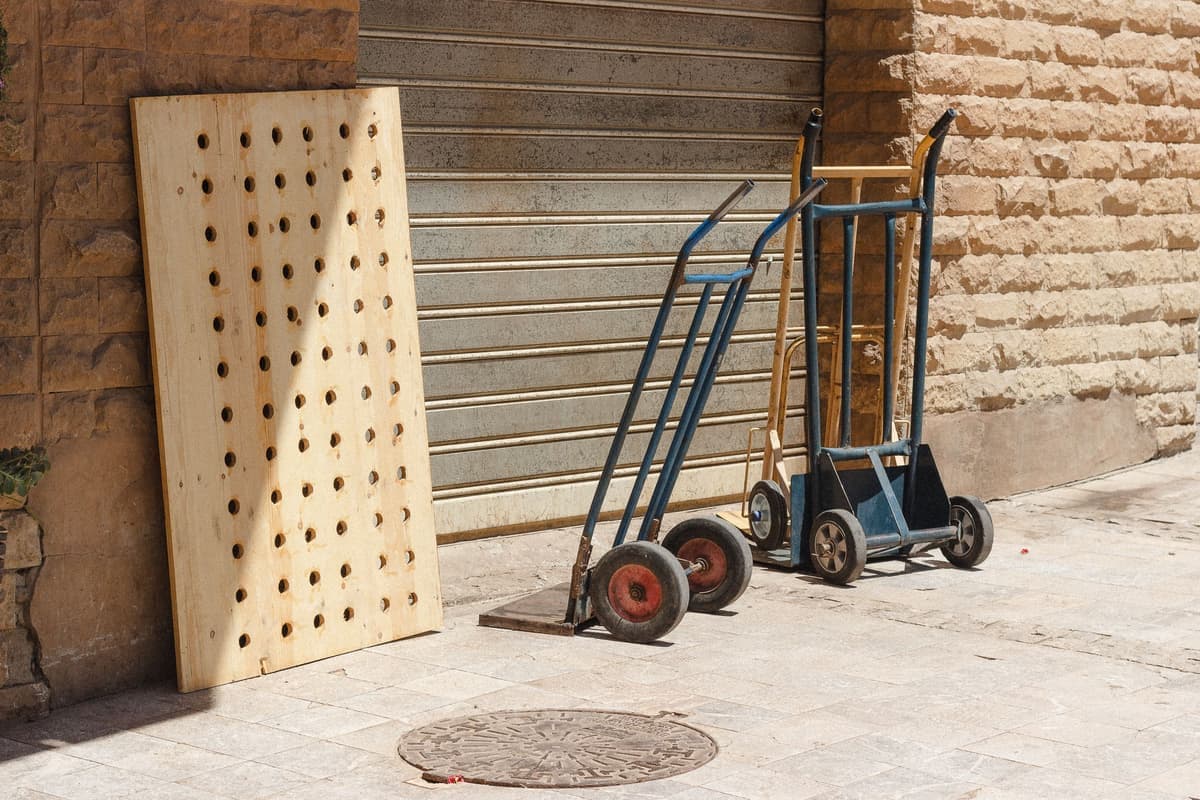
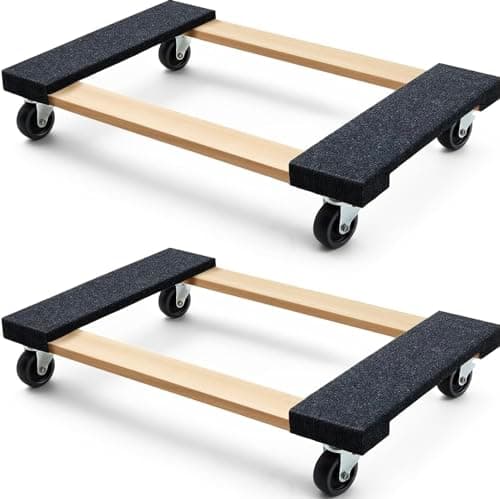
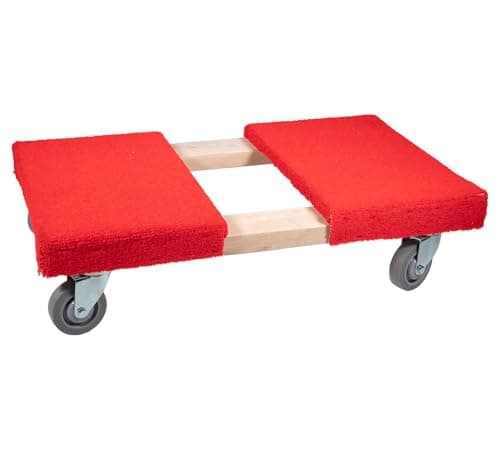
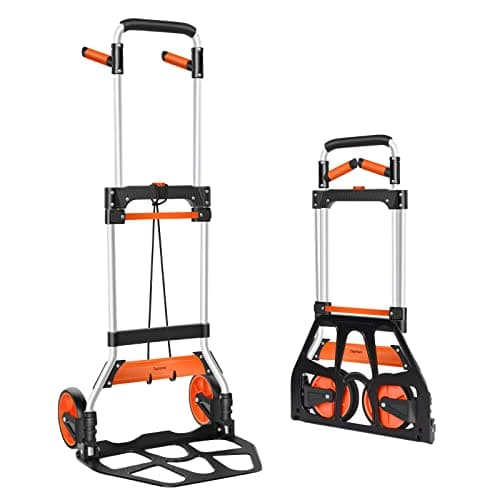
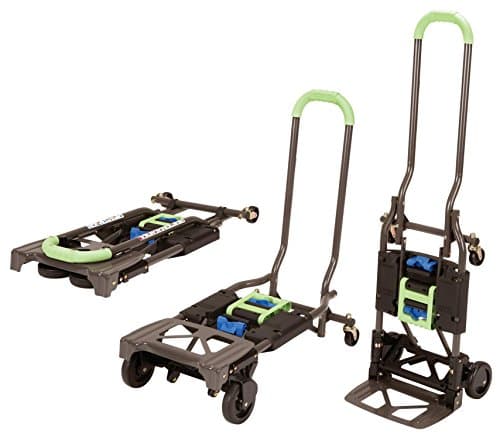
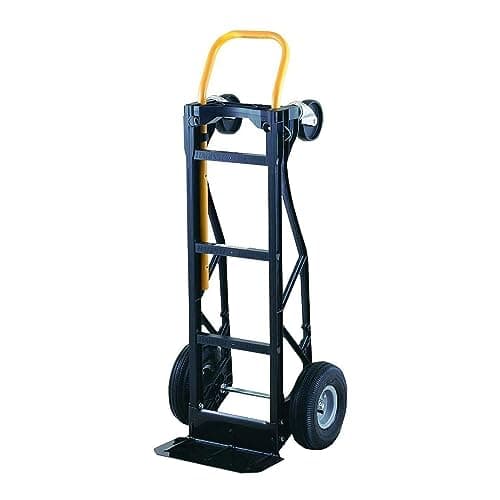
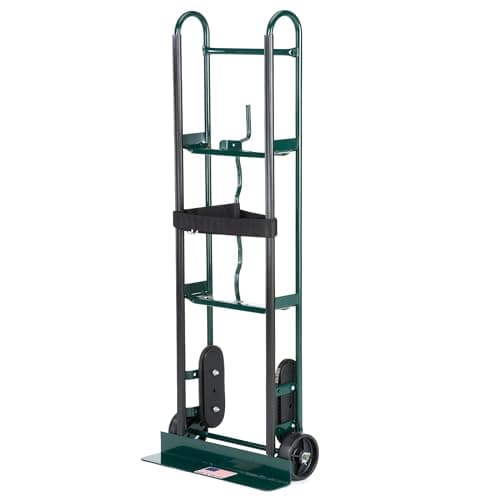
The capacity gap between the two is bigger than most people expect, and it runs the opposite way to intuition. The full-size hardwood furniture dollies in this comparison list at 1,000 lb and 1,320 lb. The folding utility dollies list at 300 lb and 340 lb, and the heavy-duty convertible tops out at 700 lb. The flimsy-looking wooden rectangle carries three or four times what the big steel-and-nylon hand truck does.
That makes sense once you look at where the load goes. On a flat dolly the weight is spread across four casters and a rigid deck, straight down. On a hand truck the load hangs off a cantilevered nose plate and puts a bending force through the frame, so the rating has to account for leverage, not just weight. It is the same reason a shelf holds more than the bracket under it.
In practice, treat the printed number as a ceiling you never approach. I plan for roughly half the listed capacity on any wheeled tool, because the rating assumes an even, centered, static load on a smooth surface, and real moves involve door thresholds, driveway seams, and a piece that is heavier on one end than the other. A dresser that hits one caster at an angle on a threshold puts a shock load through that single wheel, not through all four.
One more capacity note people miss: on a furniture dolly the rating is per dolly, and you are usually using two. Two 1,000 lb dollies do not hand you a 2,000 lb allowance, though — the weight rarely splits evenly, and the end with the motor, the drawers, or the stone top is carrying most of it.