Skip to content
IMH

Best Picks

The Best Under-Bed Storage - and How to Measure So It Actually Slides In

The space under a bed is the biggest empty cabinet in most homes. It only works if you buy for the clearance you have, the floor you have, and the things you will actually put there.

By Catherine Vizcaino · Home-renovation pro & founder

Updated September 2026

A warm, decorated bedroom

As an Amazon Associate, I Heart My Home earns from qualifying purchases. It never changes your price or our picks. Learn more.

When I walk a client through a bedroom that has run out of storage, I get down on the floor before I open a single closet. Under a queen bed there is more flat, dark, out-of-the-way space than in most dressers, and in nearly every house it is holding one lost sock and a lot of dust. Filling it well is the cheapest storage upgrade a bedroom can get: no new furniture, no wall to open up, nothing to assemble beyond a lid.

It is also the storage purchase most likely to arrive and not fit. Bins are sold by capacity and installed against a bed frame whose lowest rail sits a fixed distance off the floor, and that distance does not move. A generous seven-inch bin is useless under a low platform bed, a bin with no handles is miserable on carpet, and a bag that is perfect for blankets will crush a down comforter if you leave it there all summer. Every one of those problems is a two-minute check before you order and a return afterward.

So here are the five things that decide this purchase, in the order they matter. One, the clearance: measure from the floor to the lowest part of the frame, then subtract an inch - that is the tallest bin you should buy. Two, the pull-out path: how far the bin can slide before it hits a wall, a nightstand or a rug edge, which decides whether a long bin or two short ones fits your room. Three, the floor: hard floors reward wheels and punish bare plastic; carpet rewards handles and punishes small casters. Four, what goes in: hard bins with latches for things you want sealed, breathable fabric for natural fibers, and vacuum bags only for bulk that can take being squashed. Five, access: a lid you have to lift is fine for seasonal things and a nuisance for weekly ones, which is where drawers and sliding fronts earn their money. Then nine picks, one for each common situation: the standard clear bin, a gasket-sealed bin for keepsakes, a sliding drawer for things you reach for often, the cheapest honest fabric bags, a four-inch bin for low platform beds, a shoe organizer, vacuum bags for synthetic bulk, rolling drawers for hard floors, and risers for when there is no clearance to begin with. If the whole room needs a rethink, the storage and organization roundup covers closets and shelves, and the bedding guide explains what you will be storing in the first place.

One honesty note before you shop. I have emptied, measured and re-filled the space under a great many beds, but I have not run these specific products head to head in a lab and I will not pretend otherwise - every dimension and capacity below comes from the manufacturer’s own listing, every storage rule comes from a source I have linked, and where a listing does not state something, this page tells you to check rather than guessing on your behalf. Amazon pricing also moves all day, so where a live price is not available you will see a Check price on Amazon button rather than a number I cannot stand behind. As an Amazon Associate we earn from qualifying purchases at no cost to you - our editorial policy and affiliate disclosure spell out exactly how that works.

Quick picks at a glance

#ProductBest forPrice
1
An organized closet with storage bins and baskets
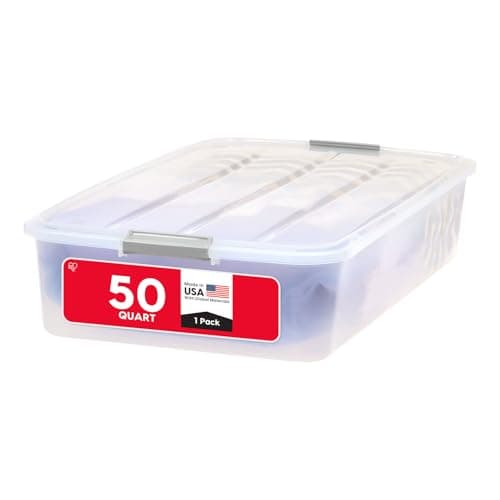
IRIS USA 50 Qt. Long Under Bed Storage Bin with Lids, Clear

A long, clear, latching bin from a mainstream storage brand, at 6.5 inches tall - the default hard box that fits under most box-spring and mid-height frames.

the standard hard-sided bin for most beds
2
Woven storage baskets on an organized shelf
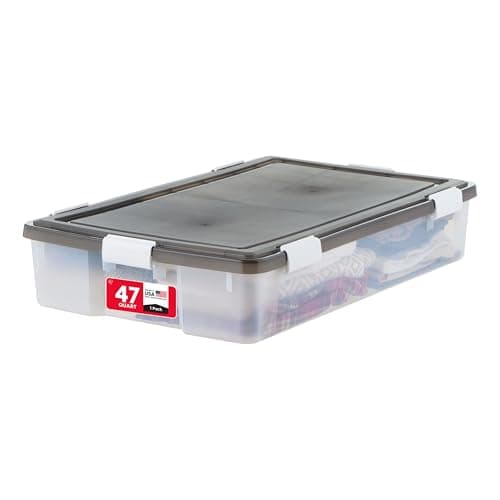
IRIS USA 47 Qt Underbed Storage Bins with Gasket Lids, Gray/Clear

The same under-bed footprint with a gasket in the lid - IRIS says the seal locks out moisture and dust, which is what you want for photos, papers and the things you cannot replace.

keepsakes, documents and damp climates
3
A wood dresser styled in a bedroom
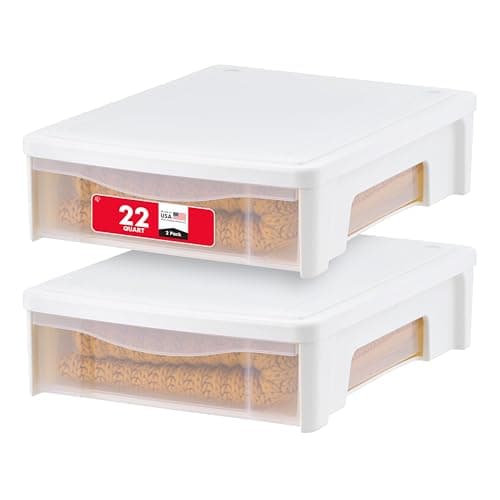
IRIS USA 2-Pack, 22 Qt. Under Bed Storage Bin with Sliding Drawer, White

A drawer that slides out of a fixed shell, so you get at the contents without pulling the whole bin out or lifting a lid under the bed - the right format for anything used weekly.

things you reach for every week
4
An affordable, cozy living room styled on a budget
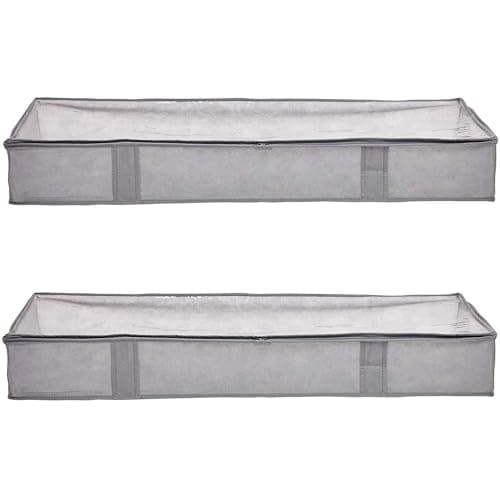
Amazon Basics Under Bed Storage Bags for Clothes and Blankets, Foldable Fabric Zipper Container with Clear Window and Reinforced Handles, 18 x 42 x 6 inches, Gray, 2-Pack

The lowest-cost pick on this page - two soft-sided zippered bags with clear tops and handles that fold flat when empty, for the blankets and sweaters that just need to be out of the way.

spare blankets and off-season clothes on a budget
5
A made bed with layered linens in a cozy bedroom
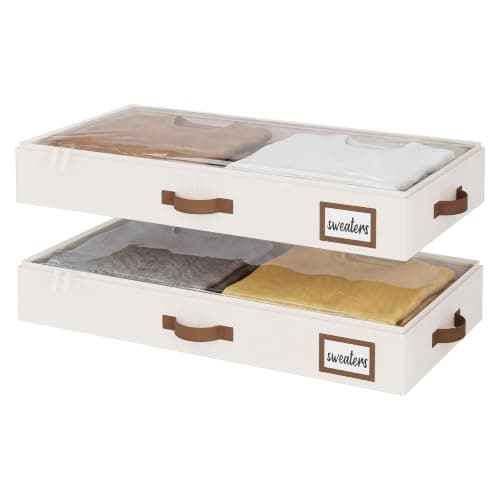
StorageWorks 4 Inch Low Profile Under Bed Storage Containers with Clear Lid

Four inches tall, with reinforced sides and a fiberboard base so it keeps its shape - the bin for the platform beds that every standard six-inch box refuses to fit under.

low platform beds
6
A welcoming entryway with a console and mirror
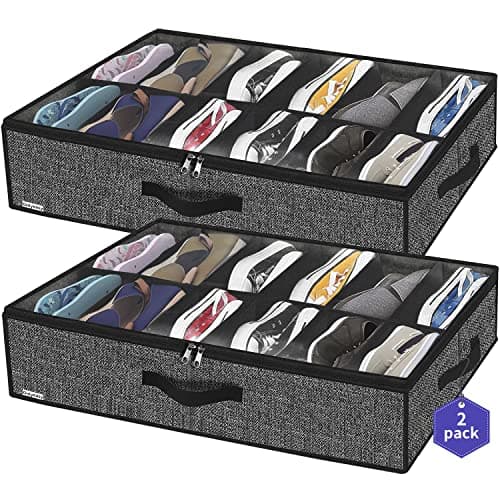
Onlyeasy Sturdy Under Bed Shoe Storage Organizer, Set of 2, Fit 12 to 24 Pairs, Clear Window, L29.3 x W23.6 x H5.9, Linen-like Black

Twelve fabric cells per organizer under a clear zip-top cover, so shoes stay in pairs, upright and dust-free instead of loose in a bin.

shoes
7
Woven storage baskets on an organized shelf
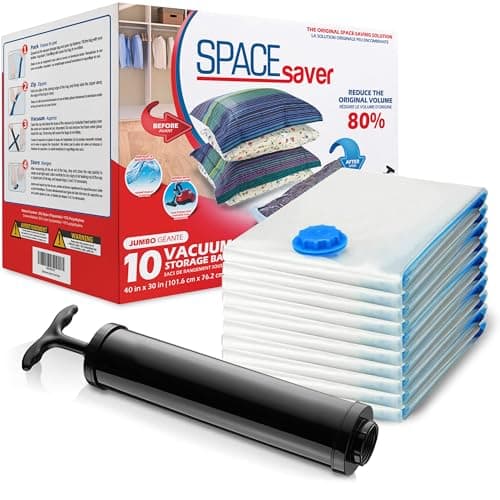
Spacesaver Vacuum Storage Bags with Hand Pump, Jumbo, 10 Pack

Ten jumbo compression bags and a hand pump - the way to get a polyester-fill comforter and a winter's worth of fleece flat enough to slide under a bed, as long as you keep them away from down.

synthetic-fill comforters and bulky seasonal clothes
8
A nightstand with a bedside lamp and decor
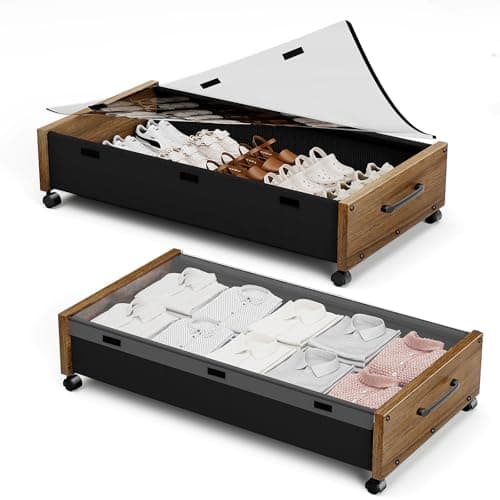
KITHELP Wooden Under Bed Storage with Wheels, Rolling Under the Bed Storage Bins with Removable Lid, Walnut Brown, 2-Pack

Fabric-sided bins on a metal frame with wood-look end panels, metal handles and four swivel wheels - the pick for a wood floor and a bed on legs, where the storage is going to be seen.

hard floors and beds without a skirt
9
A warm, decorated bedroom
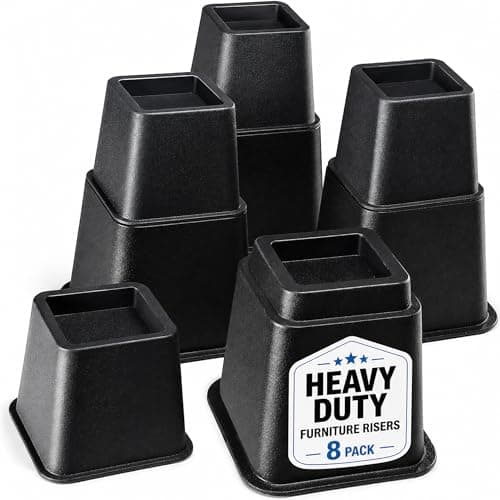
Home It Adjustable Bed Risers - Elevation in 3, 5 or 8 Inch - 4 Pack, Black

Stackable risers that lift the bed 3, 5 or 8 inches - the way to create under-bed clearance where a frame has almost none, before you buy a single bin.

when there is no clearance to begin with

Tap any row to jump to the full write-up. Prices open on Amazon in a new tab.

How we chose these picks

Every pick here is chosen the way I’d choose it for a client’s home: real-world durability first, build quality and materials second, and value for the money third. Where I’ve installed or lived with a product on a job, I say so and tell you what I saw. Where a pick is based on research and verified buyer feedback rather than hands-on use, I say that too — I never claim to have tested something I haven’t.

Read our full editorial policy for how we evaluate and update these guides.

1

IRIS USA 50 Qt. Long Under Bed Storage Bin with Lids, Clear

IRIS USA · Best for the standard hard-sided bin for most beds

An organized closet with storage bins and baskets

A long, clear, latching bin from a mainstream storage brand, at 6.5 inches tall - the default hard box that fits under most box-spring and mid-height frames.

If you asked me to put storage under a bed I had never seen, this is the shape I would bet on: long, shallow, clear, latched, and from a brand that has been making the same footprint for years. The two things that make an under-bed bin useful are that you can tell what is in it without dragging it out, and that the lid stays on when you do - and this one covers both. IRIS also lists the inside dimensions rather than just the outside ones, which sounds minor until you try to lay a folded duvet flat and discover the walls slope. The 6.5-inch height is the deciding number: fine under most frames with a box spring, and the reason the four-inch pick further down exists.

$35.9910% off

$32.39 · View on Amazon

#ad · disclosure · Price as of September 21, 2026

Pros

  • Listed outer size of 32.5 x 17.88 x 6.5 in, with the inner size (28.25 x 14.25 x 5.75 in) stated separately, so you can check both the clearance and what actually fits inside
  • Clear all the way round, so you can see the contents without pulling the bin out
  • Buckle-up latches keep the lid on and, per the listing, keep dust and debris out
  • Long, narrow footprint suits the space between a frame's side rail and center support

Cons

  • 6.5 in tall - too tall for many low platform beds, so measure before you order
  • Sold as a single bin, so outfitting a whole bed means buying several
  • No wheels and no handles are mentioned in the listing, so on carpet you are dragging it by the rim
  • A rigid lid has to be lifted or slid off, which is awkward while the bin is still under the bed
2

IRIS USA 47 Qt Underbed Storage Bins with Gasket Lids, Gray/Clear

IRIS USA · Best for keepsakes, documents and damp climates

Woven storage baskets on an organized shelf

The same under-bed footprint with a gasket in the lid - IRIS says the seal locks out moisture and dust, which is what you want for photos, papers and the things you cannot replace.

Not everything under a bed is a spare blanket. Tax papers, the children's school art, photographs that never made it into albums, a wedding dress in its box - the things people shove under beds because they have nowhere else are often the things they would be most upset to lose. A plain latching bin keeps dust off those; it does not keep out the humidity that creeps up through a slab floor or the water from a burst radiator hose upstairs. This IRIS is the pick for that job because the gasket does what the buckle latches alone cannot, and because it still fits under the same beds as its cheaper sibling. Put the irreplaceable things in this one and the sweaters in the other.

$34.99 · View on Amazon

#ad · disclosure · Price as of September 21, 2026

Pros

  • WeatherPro gasket seal in the lid, which IRIS says locks out moisture and dust - the closest an under-bed bin gets to weathertight
  • Multi-buckle latching system pulls the lid down tight onto the gasket
  • Listed at 31.88 x 19.88 x 6.38 in, so it fits the same clearance as the standard bin above
  • Made in the USA, per the listing

Cons

  • 6.38 in tall, so it has the same low-platform-bed problem as the standard bin
  • Sold as a single bin, and it costs more than the plain latching version for the same clearance
  • A tight seal is exactly wrong for a down comforter or anything put away slightly damp - textile guidance below explains why
  • Gray lid means you see the contents from the side but not from above
3

IRIS USA 2-Pack, 22 Qt. Under Bed Storage Bin with Sliding Drawer, White

IRIS USA · Best for things you reach for every week

A wood dresser styled in a bedroom

A drawer that slides out of a fixed shell, so you get at the contents without pulling the whole bin out or lifting a lid under the bed - the right format for anything used weekly.

The reason under-bed storage falls into disuse is friction: if getting at something means kneeling, dragging a bin out, unlatching a lid and reversing the whole process, you stop doing it and the bin becomes a place things go to be forgotten. A drawer changes that. You pull, take, push. That is why I would put the weekly things here - workout clothes, spare towels, the children's second set of sheets - and save the lidded bins for what only comes out twice a year. IRIS makes it in the same clear-numbers way as its other bins, and two in the pack is the right count for one side of a bed.

$49.99 · View on Amazon

#ad · disclosure · Price as of September 21, 2026

Pros

  • Sliding drawer opens from the front, so you never have to drag the bin out or lift a lid in a six-inch gap
  • Listed outer size 23.75 x 17.81 x 6 in with a 21 x 14.6 x 4.12 in inside, so the numbers to check are stated
  • Two in the pack, and the grooved lids lock units together when stacked in a closet later, per the listing
  • Made in the USA, per the listing

Cons

  • The drawer format costs you inside height - 4.12 in of usable depth in a 6-in-tall bin, so it is for sweaters and linens rather than a comforter
  • Opaque white, so you cannot see the contents without opening the drawer
  • Shorter than the long bins, which means more units to fill the length of a bed
  • The shell has to stay put for the drawer to slide, so on a slick floor it may need a rug or a hand on top
An affordable, cozy living room styled on a budget

The lowest-cost pick on this page - two soft-sided zippered bags with clear tops and handles that fold flat when empty, for the blankets and sweaters that just need to be out of the way.

Most of what ends up under a bed is soft, seasonal and not precious: the flannel sheets in summer, the light quilt in winter, the sweaters between April and October. Spending real money on hard bins for that is spending money on the wrong problem. These bags do the job for very little, they are long enough to use the length of the bed, and because they fold flat you are not left storing empty bins when the season flips. That is what a budget pick should be - cheap to buy, and no burden when it is not in use.

$12.5910% off

$11.33 · View on Amazon

#ad · disclosure · Price as of September 21, 2026

Pros

  • Lowest cost of anything on this page, and you get two
  • Listed at 18 x 42 x 6 in, so each bag runs most of the way under one side of a bed
  • Clear vinyl top shows the contents; the zipper keeps dust off, per the listing
  • Flat loop handles for pulling it out, and the bag folds flat when it is empty

Cons

  • Soft sides mean it holds its shape only as well as what is inside it - fine for folded blankets, floppy with loose items
  • Six inches tall when full, so it needs the same clearance as a hard bin, and it will not fit under a low platform bed
  • Fabric and vinyl offer no protection from moisture, pests or a spill on the floor
  • The vinyl top is the part that ages first; treat it as a few-seasons purchase rather than a forever one
A made bed with layered linens in a cozy bedroom

Four inches tall, with reinforced sides and a fiberboard base so it keeps its shape - the bin for the platform beds that every standard six-inch box refuses to fit under.

The most common complaint I hear about under-bed storage is that nothing fits, and it almost always comes from someone with a platform bed. Once the frame sits low, the standard bin market simply disappears - the height that makes a platform bed look right is the height that leaves a four- or five-inch gap. This StorageWorks bin is the pick because it is built for exactly that gap without giving up the things that make a bin usable: it keeps its shape, it opens from the top, you can see in, and it has handles on three sides so it comes out from whichever side you can reach. StorageWorks also publishes a plain guide to measuring clearance, which is the sort of thing a brand does when it expects its bins to fit.

$26.99 · View on Amazon

#ad · disclosure · Price as of September 21, 2026

Pros

  • Listed at just 4 in high, which is the height most low platform beds can take when a 6-in bin cannot
  • Reinforced side panels and a fiberboard base, per the listing, so the bin holds a rectangle instead of slumping like a plain bag
  • Dual-zipper top with a clear window, plus a built-in label holder and three handles for pulling it out
  • Two in the pack, listed at 30 x 15.75 x 4 in each

Cons

  • Four inches is shallow - a full-size comforter will not go in flat, so this is for sheets, sweaters and thinner blankets
  • Fabric and fiberboard, so it will not shrug off a wet floor the way a plastic bin does
  • The listing does not state a weight limit, so do not load it with books and expect the base to stay flat
  • Ivory white shows marks from being slid across a floor
A welcoming entryway with a console and mirror

Twelve fabric cells per organizer under a clear zip-top cover, so shoes stay in pairs, upright and dust-free instead of loose in a bin.

Shoes are the thing people most often lose under a bed, because a loose pile in a bin turns into a jumble the first time the bin is pulled out and shoved back. Cells fix that. Each pair has a slot, the pair stays a pair, and the clear cover means you find the black flats without unpacking the black boots. This Onlyeasy set is the pick because it is honest about its own limits - the listing tells you the cell size and who it suits - and because it is inexpensive enough to buy for the season's shoes rather than trying to fit a whole closet's worth under one bed.

$17.9916% off

$15.19 · View on Amazon

#ad · disclosure · Price as of September 21, 2026

Pros

  • Twelve cells per organizer, two in the set - the listing puts capacity at 12 pairs of sneakers or up to 24 pairs of flats across the pair
  • Clear cover, so you find the right pair without opening every bin
  • Listed at 29.3 x 23.6 x 5.9 in per organizer, with each cell 11.8 x 4.9 x 5.9 in - so you can check your shoes against the cell, not just the box
  • Non-woven polypropylene over 2 mm cardboard stiffeners, per the listing, with two handles for pulling it out

Cons

  • The listing itself says the cell size suits women's and girls' shoes; a men's size 12 boot will not go in a 4.9-in-wide cell
  • Cardboard stiffeners mean it does not like a damp floor or a spilled water glass
  • 5.9 in tall, so it needs the same clearance as a standard bin
  • Fixed cells cannot be removed for a taller pair the way an open bin can
7

Spacesaver Vacuum Storage Bags with Hand Pump, Jumbo, 10 Pack

Spacesaver · Best for synthetic-fill comforters and bulky seasonal clothes

Woven storage baskets on an organized shelf

Ten jumbo compression bags and a hand pump - the way to get a polyester-fill comforter and a winter's worth of fleece flat enough to slide under a bed, as long as you keep them away from down.

There is a category of soft bulk - the polyester-fill spare comforter, the fleece throws, the ski layers - that takes up an absurd amount of room for what it is and is not harmed by being squashed. For that, and only that, vacuum bags are the best tool there is, and Spacesaver is the name most people already know. The pick is the jumbo ten-pack with the pump because the pump is what makes the system usable in a bedroom with no vacuum to hand, and because ten bags covers a whole household's winter kit in one order. The honest part is the boundary: read the textile section below before you put anything with feathers in one.

$32.99 · View on Amazon

#ad · disclosure · Price as of September 21, 2026

Pros

  • Ten jumbo bags plus a hand pump in the box, so you are not hunting for the vacuum hose adapter
  • Double zip seal and a triple-seal valve, per the listing, which is what keeps a bag flat for months rather than days
  • Made from PA+PE film that Spacesaver describes as rip-resistant and reusable
  • Compressed bags slide under beds that nothing else fits under, because you control the finished thickness

Cons

  • Not for down or feather fill - the down makers say compression can permanently damage the clusters' ability to loft, and sealed plastic traps moisture
  • Spacesaver's 'up to 80% space' figure is a manufacturer claim and depends entirely on what you compress
  • A compressed bag is a slab with no handles; it still wants a bin or a bag around it to slide cleanly
  • Zip seals and valves are the wear parts, and a bag that slowly re-inflates under the bed is doing nothing for you
A nightstand with a bedside lamp and decor

Fabric-sided bins on a metal frame with wood-look end panels, metal handles and four swivel wheels - the pick for a wood floor and a bed on legs, where the storage is going to be seen.

Plenty of bedrooms have a bed on legs with nothing below the rail but air and floor, and in those rooms every plastic bin on this page looks like what it is. For that bed the storage has to be presentable, and it has to move without scraping a finished floor. This KITHELP set is the pick because it does both for a reasonable price: wood-trim ends and a metal handle facing the room, wheels underneath so it rolls out on hardwood, and a lid to stop the contents becoming part of the decor. It is a no-name brand and I say so plainly in the cons. On the right bed it is still the best-looking answer here.

$44.79 · View on Amazon

#ad · disclosure · Price as of September 21, 2026

Pros

  • Four 360-degree swivel wheels, two of them locking, per the listing - so it rolls out on hardwood with one hand instead of being dragged
  • Metal frame with wood-trim end panels and a metal pull handle, which reads as furniture rather than a bin when the bed has no skirt
  • Listed at 31 x 16.5 x 7.1 in with a stated 70 lb capacity, and a removable clear cover to keep dust off
  • Two in the pack, and the listing puts assembly at about ten minutes

Cons

  • 7.1 in tall - the listing itself tells you to confirm clearance above 7.1 in, which rules out low frames outright
  • KITHELP is not an established storage or furniture brand, so treat the one-year warranty as the extent of the backing
  • Fabric sides on a frame: the wood look is trim on the ends, not a solid wood drawer, so judge it as a smart bin rather than cabinetry
  • Small casters can dig into a deep-pile carpet and a full 70 lb drawer will not roll well on one
9

Home It Adjustable Bed Risers - Elevation in 3, 5 or 8 Inch - 4 Pack, Black

HOME IT · Best for when there is no clearance to begin with

A warm, decorated bedroom

Stackable risers that lift the bed 3, 5 or 8 inches - the way to create under-bed clearance where a frame has almost none, before you buy a single bin.

Sometimes the honest answer to 'what fits under my bed' is nothing, and the fix is not a cleverer bin but a taller bed. Risers are the cheapest piece of furniture you will ever buy, and on a plain metal or wood frame that nobody looks at closely they turn a useless slot into a real cabinet's worth of space. This Home It set is the pick because it gives you a choice of heights in one box - three inches is often all a low frame is missing, five if you want the drawers, eight if you are a student with a whole term's belongings - and because the broad base spreads the load on the floor. Measure, decide the height you actually need, and buy the bins after the risers arrive, not before.

$25.9915% off

$21.99 · View on Amazon

#ad · disclosure · Price as of September 21, 2026

Pros

  • Adjustable: the set is four 3-in and four 5-in risers, per the listing, used alone or stacked for up to 8 in of lift
  • Polypropylene with a broad base that Home It says will not scratch or dent floors, and a stated 1,300 lb total capacity
  • Adds the inches a low frame is missing so the standard bins above can fit
  • Stackable and light, so the pieces you are not using store in a drawer

Cons

  • Lifting a bed changes how it looks and how you get in and out of it; five inches is a lot on a bed that was already tall
  • The listing does not state the size of the cavity the leg sits in, so check it against wide, square or splayed legs before you order
  • A set lifts four legs - a frame with a center support leg needs that raised too, or the middle sags
  • Plastic risers under a bed that is visible from the door look like exactly what they are

How to buy under-bed storage that actually fits

Work through these before you fall for a photo. Each one is a quick check that prevents a return, and it is the same list I run before I order for a client:

  • Measure the clearance, then subtract an inch. StorageWorks’ own buying guide puts it plainly: check the distance from the floor to the bottom of your bed frame, then subtract one inch, so the bin does not scrape the slats or frame every time it comes out (StorageWorks). Measure at the lowest point you can find - the side rail, a center support, a low slat - not at the foot of the bed where the frame is often highest. The same guide notes the range you are dealing with: platform beds can offer as little as 6 inches, while older box-spring setups may give 12 inches or more. That one number sorts this page: under about 5 inches of clearance you are choosing between the 4-inch StorageWorks bin, vacuum bags and risers; above 7 inches everything here fits.
  • Measure the pull-out path. A bin has to come out as well as go in. Measure from the edge of the mattress to the nearest obstacle on each side - wall, nightstand, dresser, the edge of a thick rug - and make sure the side of the bin that faces out is shorter than that. A bed pushed against a wall stores from one side only.
  • Decide by floor. On hardwood, tile or vinyl, wheels are a genuine convenience and bare plastic dragged across grit is a genuine risk to the finish. On carpet the opposite is true: small casters sink in, and a wide handle you can pull with is what you want.
  • Match the container to the contents. Hard, latching bins for anything you want dust and moisture kept off. Breathable fabric for wool, cotton and especially down. Vacuum bags for synthetic bulk only. A gasket seal for the irreplaceable. The textile section below explains why the sealed-versus-breathable question is not a matter of taste.
  • Be honest about how often you will open it. StorageWorks’ guide is right that under the bed suits things you need occasionally - seasonal clothing, spare bedding, shoes you are not wearing - and not daily-use items. If something is going to come out weekly, buy a drawer format or a rolling bin, not a lidded box.

Hard bins, fabric bags, drawers or wheels

Under-bed storage comes in four formats, and each solves a different problem. Knowing which problem you have is most of the decision.

Hard plastic bins with lids are the default for a reason: they hold their shape, they stack when they are not under the bed, a latched lid keeps dust off, and a clear one lets you see in. Their weakness is height - the common sizes sit around 6 to 7 inches tall, which is why they vanish from the shortlist under a low platform bed - and access, because a lid has to be lifted and there is nowhere to lift it to under a bed. The 50-quart IRIS bin is the standard version; the gasket-lid one is the sealed version.

Fabric bags and structured fabric bins cost less, fold flat when empty, breathe, and are the only sensible container for natural-fiber textiles you care about. Plain bags slump; the structured kind with reinforced sides and a stiff base - the StorageWorks 4-inch bin here - behave almost like a hard bin while fitting where one cannot. The price is that they offer nothing against moisture on the floor or pests.

Drawers - a shell that stays put with a front that pulls - solve the access problem. You do not lift, you do not drag, so you actually use them. The cost is usable height, because the shell and the drawer both take some of it; the IRIS sliding drawer gives about four inches of inside depth from a six-inch footprint. Put weekly things in drawers.

Wheeled bins and rolling drawers are for hard floors and beds on legs, where the storage will be seen and has to move without scraping. The KITHELP set is the version here that is built to be looked at. On carpet the wheels are a liability, not a feature.

Two products on this page are not containers at all. Vacuum bags make soft bulk thinner so it fits where nothing else will; risers make the bed taller so the standard bins fit after all. Both are tools for changing the clearance problem rather than living with it.

What belongs under the bed - and what should never be sealed in plastic

The best candidates are the ones StorageWorks names: seasonal clothing, extra bedding and shoes you are not currently wearing. Under a bed is dark, which textiles like, and it is in a heated room, which is a real advantage over the alternatives - the George Washington University Textile Museum’s storage guidance says to avoid attics and basements, because those spaces usually lack climate control and suffer the largest swings of temperature and relative humidity (GWU Textile Museum). A bedroom floor is neither of those.

The container matters more than most people think. Down and feather fill should not go in sealed plastic at all. Puredown, a down bedding maker, says the best way to store a down comforter is in a large linen or cotton storage bag, and to avoid a plastic bag, plastic storage container or vacuum-sealed bag, because plastic tends to trap moisture and humidity, which can cause the down to turn yellow and develop a musty odor - and that compression or vacuum bags can crush the down clusters, permanently damaging their ability to loft and insulate (Puredown). The same guide says the comforter must be completely clean and 100% dry before it is stored, because a damp one can develop permanent stains and mold or mildew, and that the ideal storage environment is cool, dry and dark with good air circulation. That is the case for the breathable fabric bags on this page over the hard bins for anything with feathers in it.

For heirloom textiles - a christening gown, a quilt somebody made - the museum standard is worth knowing even if you will not hit it. The Smithsonian’s Museum Conservation Institute says its museums try to hold collections at 45% relative humidity plus or minus 8%, and 70°F plus or minus 4°, and recommends washable cotton sheeting as the dust barrier around antique textiles, in preference to plastic or paper, which transfer dust to the fabric (Smithsonian MCI). The same page warns that cockroaches find the corrugations in cardboard attractive and that silverfish and booklice eat the starchy components of paper, so excess paper and cardboard should be avoided. The practical translation for a bedroom: wrap the precious thing in a clean cotton sheet, put it in a bin rather than a cardboard box, and if the bin is a sealed one, make sure everything went in bone dry. The GWU guide adds that wooden drawers should be lined with acid-free tissue or barrier paper to keep wood acids off the fabric, which applies if your under-bed storage is a wooden drawer.

What I would not put under a bed, from experience rather than a source: anything heavy you will lift often, because you lift it from a kneel; paint, solvents or anything that smells, because you sleep two feet above it; and anything you would be upset to find wet, unless it is in the gasket bin. Sleep is the room’s job; storage is the lodger.

Vacuum bags: when they help and when they hurt

Vacuum bags are the most misused product in this category, so here is the boundary in one paragraph. They are excellent for synthetic-fill comforters, fleece, polyester throws and bulky clothes that are not harmed by being squashed - they can take a pile that would never fit under a bed and make it fit. They are wrong for down, feather and anything whose value is in its loft or its natural fiber, for the reasons the down maker above gives: compression can permanently damage the fill’s ability to loft, and sealed plastic traps moisture.

Used correctly, a few habits make them work better. Compress in the bedroom, not a cold garage, so the air sealed inside is warm-room air. Stop short of fully flat; a bag with a little give slides more easily and stresses the seams less. Open, air and re-fold on a schedule - Puredown’s advice to store down in a breathable bag is the extreme case, but even synthetics benefit from a seasonal airing - and put the compressed slab inside a fabric bag or a bin so it has handles and a straight edge to slide on. A bag that has quietly re-inflated by March has failed at its only job; check the valve and the zip when you buy, and replace a bag that will not hold.

Carpet, hardwood and the wheels question

The floor under the bed decides more about this purchase than the bed does. On a finished wood floor, the enemy is grit: a plastic bin dragged across a single piece of sand leaves a line, and a loaded fabric bag with a rough base does the same more slowly. Wheels solve the dragging, which is why the rolling KITHELP set is the hard-floor pick, but wheels also concentrate the load onto four small points, so a caster that picks up grit is a scratch on rails. Sweep the strip under the bed before the first roll and every few months after, and consider a thin felt pad under any handled bin that lives on hardwood.

On carpet the calculation flips. Small casters sink into the pile and a full drawer will not roll; a wide, flat base and a handle you can pull with two fingers is what works. That is the structured-fabric StorageWorks bin, the Amazon Basics bags and the handled IRIS bins. Pile also eats clearance - a thick rug under the bed can take an inch off your measurement - so measure with the rug in place.

Whatever the floor, put the storage on the side of the bed you get out of, and the least-used things on the far side. A bin against the wall behind a bed that cannot be pulled out from the other side is furniture, not storage.

Risers, and the trade-offs of raising the bed

If your measurement comes back at three or four inches, you have two choices: the shallow-bin route, or lifting the bed. Risers are cheap and quick, and on a plain frame that is hidden by a skirt or a duvet drop, nobody will ever know. But a raised bed is a different bed. Three inches is barely noticeable; five changes how a short person gets in and how a tall headboard reads against the wall; eight is a student solution. Decide the lift by the bin you want, not the maximum on the box.

Count the legs before you buy. Most queen and king frames have a center rail with its own support foot, and raising the four corners while the middle stays on the floor leaves the frame unsupported where the weight is. A four-pack lifts four legs; a frame with five or six contact points needs more risers or a different plan. Check that your leg fits the riser’s cup - the Home It listing does not state the cavity size, so measure a wide or splayed leg against it - and once the bed is up, push it sideways to check it does not walk on a hard floor. If it does, a small rubber pad under each riser, or moving the bed to a wall, settles it.

A lifted bed also shows more under itself, which is the moment the plastic bins start to look like plastic bins. A bed skirt solves that for a few dollars, and if you would rather not, the wood-trim rolling drawers are the presentable option.

Where the money matters, and where it does not

This is a category where spending more rarely buys more storage, so spend where it changes the outcome. Pay for a gasket seal on the one bin that holds things you cannot replace. Pay for a drawer format for the things you touch weekly, because access is what decides whether storage gets used. Pay for wheels if, and only if, you have a hard floor and a bed that shows what is under it.

Do not pay for capacity you cannot open. A huge bin that has to come all the way out to be opened will be opened twice a year, and its size becomes a reason not to. Two shorter bins beat one long one whenever the pull-out path is tight. Do not pay for hard plastic for spare blankets and sweaters, which is what the cheap fabric bags exist for. And do not buy a set of bins to match a bed you are planning to replace - a new frame is a new clearance, and the bins that fit today may not fit next year. Measure the bed you have, buy for that, and keep the receipt until the first bin is in and out twice.

If under the bed is full and the room is still tight, the next layers are the closet and the walls - the storage and organization picks and the small-space solutions guide pick up where this page stops.

Frequently asked questions

How much clearance do I need for under-bed storage?

Measure from the floor to the lowest point of the bed frame - usually the side rail, a center support or a low slat - and subtract one inch; that is the tallest container you should buy, so it slides without scraping. Most standard hard under-bed bins are about 6 to 7 inches tall, so they suit beds with 7 inches or more of clearance. Platform beds can offer as little as 6 inches, in which case look for a 4-inch low-profile bin, vacuum bags, or bed risers.

Are plastic bins or fabric bags better for under-bed storage?

It depends on what goes in them. Hard plastic bins with latching lids hold their shape, stack, and keep dust off, and a gasket-sealed bin also keeps moisture out - the right choice for papers, keepsakes and anything you want protected. Fabric bags and structured fabric bins cost less, fold flat when empty and breathe, which makes them the right choice for wool, cotton and especially down bedding, which should not be stored in sealed plastic. Many people use both: a sealed bin for the irreplaceable and fabric for the seasonal soft goods.

Can I store a down comforter under the bed?

Yes, but not in plastic. Down bedding maker Puredown recommends storing a down comforter in a large linen or cotton storage bag and avoiding plastic bags, plastic storage containers and vacuum-sealed bags, because plastic traps moisture and humidity that can yellow the down and cause a musty odor. Make sure the comforter is completely clean and fully dry before it goes away, and keep it somewhere cool, dry and dark with some air circulation - a breathable fabric bag under a bed in a heated bedroom fits that description.

Is it OK to vacuum seal comforters and blankets?

For synthetic-fill comforters, fleece, polyester throws and bulky clothing, yes - vacuum bags are the easiest way to make them thin enough to slide under a bed. For down and feather fill, no: compression bags can crush the down clusters and permanently damage their ability to loft and insulate, according to down maker Puredown, and the sealed plastic traps moisture. If you do use vacuum bags, compress in a warm dry room, stop short of fully flat, and open and air the contents at least once a season.

How do I keep under-bed storage from getting dusty or smelling musty?

Use lidded or zippered containers rather than open trays, and vacuum the floor under the bed before the bins go in and every few months after. Put only clean, completely dry items away - a slightly damp blanket in a closed container is what produces the musty smell. Give natural fibers a breathable fabric container so moisture can escape, reserve sealed bins for paper and keepsakes that went in dry, and air out anything stored for more than a season.

Do under-bed storage bins with wheels work on carpet?

Usually not well. Small casters sink into carpet pile, and a fully loaded rolling drawer becomes hard to move. Wheels are a genuine advantage on hardwood, tile and vinyl, where they stop a bin being dragged across the finish. On carpet, choose a bin with a wide flat base and sturdy pull handles instead, and remember that a thick rug under the bed also reduces your clearance - measure with the rug in place.

Do bed risers work with any bed frame?

Most, but check three things. The bed’s legs have to fit inside the riser’s cup, so measure a wide, square or splayed leg against the riser’s stated cavity if the listing gives one. Every contact point has to be raised, not just the four corners - many queen and king frames have a center support foot that also needs a riser, or the frame sags in the middle. And a raised bed sits higher off the floor, so think about how it changes getting in and out and how the headboard reads against the wall. Adjustable sets that offer 3, 5 or 8 inches let you choose the smallest lift that clears the bins you want.

Ready to make your space feel like home?

Browse the roundups I'd actually hand a client — honest picks, real trade-offs, and the one to buy first.