Skip to content
IMH

Best Picks

The Best Bedding - Built in Layers, and Why Thread Count Misleads You

A made bed is the cheapest way to make a bedroom look finished. Getting there costs less than people think, if you buy the right layer first.

By Catherine Vizcaino · Home-renovation pro & founder

Updated September 2026

A made bed with layered linens in a cozy bedroom

As an Amazon Associate, I Heart My Home earns from qualifying purchases. It never changes your price or our picks. Learn more.

When I stage a bedroom, the bed does about eighty percent of the work. Not the paint, not the nightstands - the bed. And the reason most bedrooms look unfinished is not that the bedding was cheap. It is that it was bought as one boxed set, in one go, with no thought about which layer actually touches you and which one is just there to look like something.

Bedding is a stack, and the layers have completely different jobs. The sheets are the only part against your skin all night, so that is where money is genuinely worth spending. The insert supplies warmth. The cover supplies the look and takes the washing. A quilt at the foot adds the weight and texture that makes a bed read as styled rather than merely made. Buy them as a stack and you can upgrade one layer at a time forever.

One thing to get out of the way first, because it drives more wasted money in this category than anything else: thread count is a poor guide to quality. Past roughly 400 the number is frequently inflated by counting the individual plies twisted into each thread, so an “1800 thread count” microfiber set is not describing the same thing a 300-count cotton percale is. Fiber and weave tell you far more than the number on the package.

Here is what I actually check before buying any bedding:

  • Fiber, then weave, then the number. 100 percent cotton or linen versus polyester microfiber is the first fork; percale versus sateen is the second. Thread count is a distant third.
  • How hot you sleep. Percale and linen breathe. Sateen is warmer and silkier. Microfiber traps heat, full stop.
  • Duvet-and-cover or all-in-one comforter. This is a laundry decision far more than a style one.
  • Depth and size. Mattress depth decides whether a fitted sheet stays on, and insert-to-cover sizing decides whether your duvet looks full or limp.
  • What actually gets washed, and how often. The layer you launder weekly needs to survive that; the layer you wash twice a year does not.

Every pick below was confirmed in stock and buyable before it went on this page, and each card shows the live current price rather than a number I typed once and let go stale. See our editorial policy for how these get chosen.

Quick picks at a glance

#ProductBest forPrice
1
A made bed with layered linens in a cozy bedroom
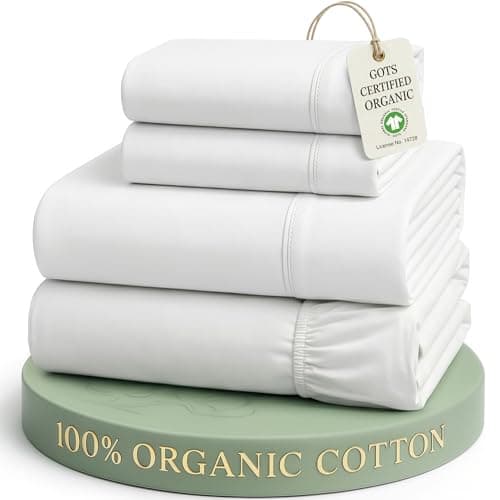
LANE LINEN Queen Sheets, 100% Organic Cotton 4-Piece Percale, White

Organic cotton in a percale weave - crisp, breathable, and the single layer where paying more changes how you actually sleep.

The layer worth spending on
2
A warm, decorated bedroom
Amazon Basics Brushed Microfiber 4-Piece Bed Sheet Set, 14-Inch Deep Pockets, Queen

The honest budget option: polyester microfiber, wrinkle resistant, 14-inch deep pockets, for about a third of what cotton costs.

Guest rooms and spare sets
3
A made bed with layered linens in a cozy bedroom
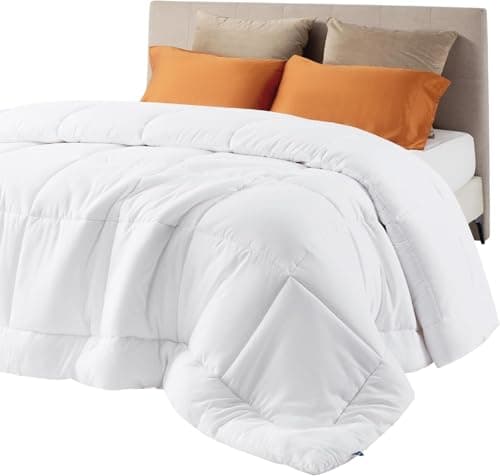
Bedsure Comforter Duvet Insert, Quilted, Oeko-TEX

A quilted down-alternative insert that lives inside a cover - the layer that supplies warmth and then never needs washing.

The warmth layer
4
A warm, decorated bedroom
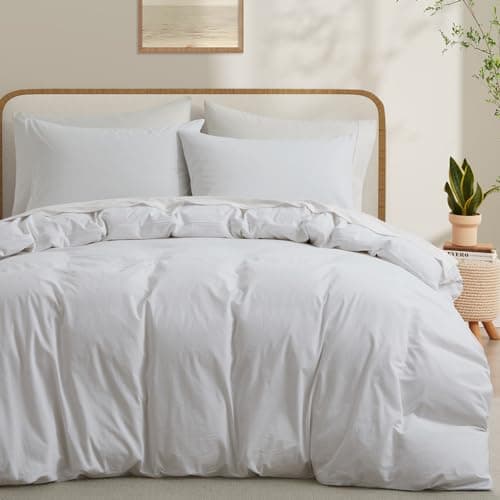
LOVQUE 100% Washed Cotton Duvet Cover, White, Queen, 90 x 90 in

Washed cotton at 90 by 90 inches - soft from the first night, and deliberately relaxed rather than crisp.

A relaxed, lived-in look
5
A made bed with layered linens in a cozy bedroom
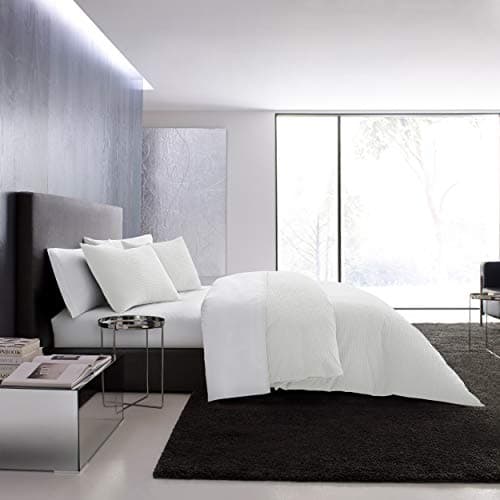
Vera Wang Queen Duvet Cover Set with Shams, Cotton, Button Closure

Cotton cover plus matching shams with a button closure - the one purchase that makes a bed look designed rather than assembled.

Finishing the whole bed at once
6
A cozy reading corner with a chair, lamp, and plants
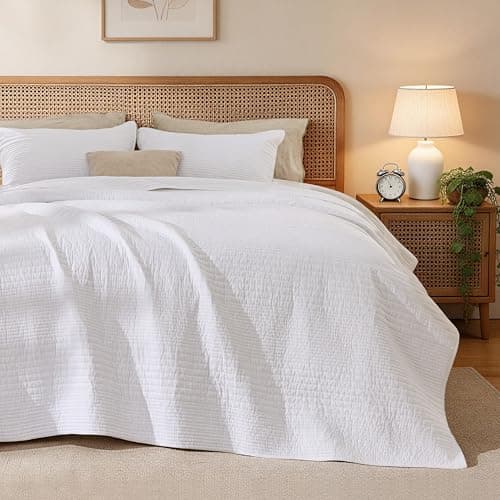
Love's Cabin Queen Cotton Quilt Set, Striped Textured Coverlet with 2 Shams, White

A lightweight 100% cotton coverlet with a crinkled texture and two shams - the foot-of-bed layer that makes a bed read as styled.

The layer everyone skips
7
A warm, decorated bedroom
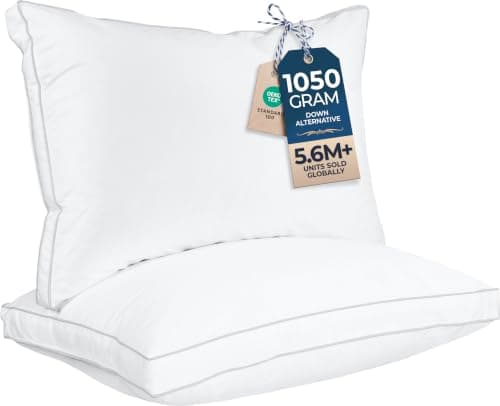
Utopia Bedding Gusset Bed Pillows, Queen, Set of 2, White

A gusseted pair - the side panel is why hotel pillows stay lofted instead of flattening into a pancake by month three.

Pillows that hold their shape
8
A made bed with layered linens in a cozy bedroom
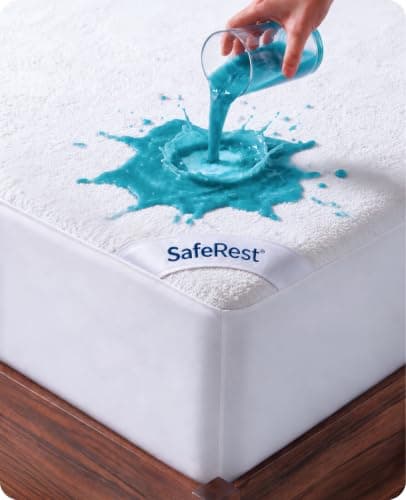
SafeRest Waterproof Queen Size Mattress Protector

The unglamorous layer that makes every other layer worth buying - and the one that keeps a mattress warranty intact.

Protecting what you actually paid for

Tap any row to jump to the full write-up. Prices open on Amazon in a new tab.

How we chose these picks

Every pick here is chosen the way I’d choose it for a client’s home: real-world durability first, build quality and materials second, and value for the money third. Where I’ve installed or lived with a product on a job, I say so and tell you what I saw. Where a pick is based on research and verified buyer feedback rather than hands-on use, I say that too — I never claim to have tested something I haven’t.

Read our full editorial policy for how we evaluate and update these guides.

1

LANE LINEN Queen Sheets, 100% Organic Cotton 4-Piece Percale, White

LANE LINEN · Best for The layer worth spending on

A made bed with layered linens in a cozy bedroom

Organic cotton in a percale weave - crisp, breathable, and the single layer where paying more changes how you actually sleep.

If you only upgrade one thing in this whole article, make it the sheets. They are the only layer in contact with you for eight hours, and cotton percale is the most reliably comfortable weave for the widest range of sleepers.

$44.9911% off

$39.99 · View on Amazon

#ad · disclosure · Price as of September 19, 2026

Pros

  • 100% organic cotton, so no polyester in the layer against your skin
  • Percale weave is the breathable one - the right call if you sleep hot
  • Four-piece set covers fitted, flat, and two cases in one order
  • Crisp white works with any duvet cover you buy later

Cons

  • Percale feels cool and crisp rather than silky - some people want sateen instead
  • Cotton percale wrinkles, and it shows most on white
  • Listing does not state a pocket depth, so check yours against a thick mattress
  • Costs noticeably more than a microfiber set of the same size
A warm, decorated bedroom

The honest budget option: polyester microfiber, wrinkle resistant, 14-inch deep pockets, for about a third of what cotton costs.

There is a real place for this: a guest room used six nights a year, a kid's bed that gets stripped constantly, or a second set so you are never without sheets on laundry day. Paying cotton prices for a bed nobody sleeps in is not thrift.

$14.97 · View on Amazon

#ad · disclosure · Price as of September 19, 2026

Pros

  • Wrinkle resistant in a way cotton simply is not - straight from the dryer to the bed
  • 14 in deep pockets stated, which fits most modern mattresses
  • Cheap enough to keep two sets for a guest room without thinking about it
  • Survives frequent hot washing better than fine cotton does

Cons

  • Microfiber is polyester - it traps heat, and hot sleepers will notice
  • It does not breathe, so it can feel clammy in summer
  • Brushed polyester pills over time, especially where you move most
  • Feels soft immediately and then never gets better; cotton improves with washing
3

Bedsure Comforter Duvet Insert, Quilted, Oeko-TEX

Bedsure · Best for The warmth layer

A made bed with layered linens in a cozy bedroom

A quilted down-alternative insert that lives inside a cover - the layer that supplies warmth and then never needs washing.

The insert is the layer to be pragmatic about. Nobody sees it, it does not touch your skin, and inside a cover it stays clean almost indefinitely. Spend here only if you have a specific warmth problem.

$51.9935% off

$33.99 · View on Amazon

#ad · disclosure · Price as of September 19, 2026

Pros

  • Quilted construction stops the fill migrating into one corner
  • Listing states Oeko-TEX certification on the textile
  • Down alternative is washable and does not trigger feather allergies
  • Inside a cover it stays clean for months, so laundry is the cover's problem

Cons

  • Listing does not state a fill weight or warmth rating - you cannot compare it on warmth numbers
  • Down alternative is bulkier than real down for the same warmth
  • Synthetic fill compresses over years and does not fully recover
  • Check the size against your cover before ordering; the title does not name one
4

LOVQUE 100% Washed Cotton Duvet Cover, White, Queen, 90 x 90 in

LOVQUE · Best for A relaxed, lived-in look

A warm, decorated bedroom

Washed cotton at 90 by 90 inches - soft from the first night, and deliberately relaxed rather than crisp.

A duvet cover is the cheapest way to change a bedroom completely, because it is the largest piece of fabric in the room. Washed cotton is the most forgiving version - it looks correct unmade, which matters on real mornings.

$37.99 · View on Amazon

#ad · disclosure · Price as of September 19, 2026

Pros

  • 100% washed cotton, so it arrives soft instead of needing breaking in
  • 90 x 90 in stated, which lets you size an insert against it properly
  • The slightly crumpled look means it never needs to be ironed
  • White works with any sheet and quilt you already own

Cons

  • Washed cotton looks intentionally rumpled - wrong if you want crisp hotel lines
  • Cover only; no shams, and no insert included
  • Listing does not state the closure type, so check before buying if you care
  • White shows everything, and a duvet cover is the layer that catches it
5

Vera Wang Queen Duvet Cover Set with Shams, Cotton, Button Closure

Vera Wang · Best for Finishing the whole bed at once

A made bed with layered linens in a cozy bedroom

Cotton cover plus matching shams with a button closure - the one purchase that makes a bed look designed rather than assembled.

Matching shams are the thing people skip and then cannot work out why their bed looks unfinished next to the catalog photo. A set solves it in one order, and a button closure is a genuine durability upgrade over ties.

$71.99 · View on Amazon

#ad · disclosure · Price as of September 19, 2026

Pros

  • Includes matching shams, which is what actually finishes the top of a bed
  • Button closure is more durable and lies flatter than ties or a zipper
  • Cotton rather than a poly blend at a designer label's price point
  • Buying cover and shams together guarantees they match exactly

Cons

  • The most expensive item on this page by a clear margin
  • Buttons take longer to close than a zipper on laundry day
  • Shams need pillow inserts to look right, which is another purchase
  • A designer name carries a premium that the fabric alone may not justify
A cozy reading corner with a chair, lamp, and plants

A lightweight 100% cotton coverlet with a crinkled texture and two shams - the foot-of-bed layer that makes a bed read as styled.

This is the layer that separates a made bed from a styled one, and almost nobody buys it. Folded in thirds across the bottom third of the bed, it adds depth and texture that no amount of extra pillows will fake.

$57.9914% off

$49.99 · View on Amazon

#ad · disclosure · Price as of September 19, 2026

Pros

  • 100% cotton and lightweight, so it works as a summer-only cover too
  • Crinkled texture adds the visual weight a flat duvet cannot
  • Includes two pillow shams, so it layers as a complete look
  • Folded across the foot it is the single most styling-per-dollar item here

Cons

  • Strictly a layer, not a warmth source - it will not replace a duvet in winter
  • A textured crinkle finish is harder to press flat if you want crisp
  • White on the foot of the bed is exactly where pets and shoes land
  • Costs more than a plain blanket doing the same thermal job
7

Utopia Bedding Gusset Bed Pillows, Queen, Set of 2, White

Utopia Bedding · Best for Pillows that hold their shape

A warm, decorated bedroom

A gusseted pair - the side panel is why hotel pillows stay lofted instead of flattening into a pancake by month three.

Gusseted is the spec worth knowing in pillows and the one almost no listing explains. The side panel gives the pillow a constant height rather than letting it squash to its sewn edges, which is precisely why hotel pillows feel the way they do.

$29.495% off

$27.89 · View on Amazon

#ad · disclosure · Price as of September 19, 2026

Pros

  • Gusset construction (a side panel rather than a sewn edge) holds loft far better
  • Sold as a pair, which is how pillows are actually needed
  • Queen size fills a standard case properly instead of leaving it slack
  • Affordable enough to replace on a sane schedule

Cons

  • Listing does not state fill weight or firmness, so you cannot match it to your sleep position
  • Synthetic fill flattens eventually no matter the construction
  • One firmness cannot suit side, back, and stomach sleepers equally
  • Not a substitute for a proper pillow if you have neck problems
8

SafeRest Waterproof Queen Size Mattress Protector

SafeRest · Best for Protecting what you actually paid for

A made bed with layered linens in a cozy bedroom

The unglamorous layer that makes every other layer worth buying - and the one that keeps a mattress warranty intact.

I put this last because nobody is excited by it and first in importance. A mattress is the costliest thing in a bedroom and the only one people routinely leave unprotected, and staining is a standard warranty exclusion.

$42.997% off

$39.99 · View on Amazon

#ad · disclosure · Price as of September 19, 2026

Pros

  • Waterproof barrier protects the single most expensive item in the room
  • Most mattress warranties are voided by staining, and this is the fix
  • Washes with the sheets rather than being a separate chore
  • Costs a fraction of what replacing a mattress early costs

Cons

  • Some waterproof membranes trap heat - a real consideration if you sleep hot
  • Cheaper protectors crinkle audibly; check reviews on noise before committing
  • Adds a laundry item that has to be dried thoroughly or it smells
  • Does nothing for comfort - this is insurance, not an upgrade

Build the bed in layers, in this order

If you are starting from nothing, buy in this order. It front-loads the things you feel and defers the things you only look at, which means the bed is comfortable long before it is finished.

  • Mattress protector. First, always. It is protecting the most expensive thing in the room and it takes thirty seconds to fit.
  • Sheets. The only layer touching you all night. This is where the money goes.
  • Pillows. Second-most contact, and the layer people replace least often despite it being the cheapest to fix.
  • Duvet insert. Warmth. Pragmatic purchase - nobody sees it.
  • Duvet cover. The largest piece of fabric in the room, so it sets the whole color scheme. This is the layer to change when you want a different bedroom.
  • Quilt or coverlet, and shams. Pure styling, and the step almost everyone omits. It is what makes a bed look designed.

The useful consequence of buying this way is that every layer is independently replaceable. A new duvet cover changes the room for the price of a takeout dinner, without touching anything underneath it. Boxed bed-in-a-bag sets take that flexibility away in exchange for a small discount.

Thread count is mostly marketing

Thread count is threads per square inch, and as a rough guide it works up to a point - somewhere around 200 to 400 for cotton, more threads does mean a denser, smoother fabric. Past that it mostly stops meaning anything useful, because a manufacturer can twist several thin plies into one thread and count each ply separately. That is how a set advertises 1800 when the honest single-ply equivalent is a fraction of it.

Notice which sets carry the enormous numbers. It is almost always polyester microfiber, where thread count is not a meaningful measure in the first place. A 300-count 100 percent cotton percale will outperform an “1800 count” microfiber on breathability every night of the year.

The two things that genuinely predict how sheets feel:

  • Fiber. Cotton breathes and improves with washing. Linen breathes best and softens for years. Polyester microfiber is warm, cheap, wrinkle resistant, and does not breathe.
  • Weave. Percale is a plain one-over-one weave - matte, crisp, cool, the hotel-sheet feel. Sateen floats more threads on the surface - silkier, with a slight sheen, and warmer. Neither is better; they suit different sleepers. Hot sleepers should take percale nearly every time.

Duvet and cover, or an all-in-one comforter?

This is the structural decision in bedding, and it is far more about laundry than about looks. A duvet is an insert that lives inside a removable cover - like a pillow in a case. A comforter is a single quilted piece with the fill sewn in permanently, used on top of a flat sheet.

The duvet system wins on maintenance, and it is not close. You pull the cover off and wash it with the sheets; the insert stays clean inside for months or longer. Changing your entire color scheme means buying one cover. The catch is the reinsertion, which everyone hates until they learn the roll method, and that inserts shift inside covers without corner ties.

A comforter wins on simplicity: it is one item, it is on the bed, done. But washing it means fitting a bulky quilted mass into a home machine, which most standard machines cannot really do, so it gets washed far less often than it should. That is the honest trade-off nobody mentions.

My recommendation for almost everyone is the duvet system, for one reason that has nothing to do with bedding: it is the cheapest way to redecorate a bedroom you will ever have. Our bedroom decor ideas lean on that constantly.

Sizing: deep pockets, and why your duvet looks limp

Two sizing mistakes account for most bedding disappointment, and both are avoidable with a tape measure before you order.

Fitted sheet depth. Mattresses have grown. A pillow-top or a mattress with a topper can easily exceed what an older-style fitted sheet was cut for, and the symptom is a corner that pops off at 3am. Measure your mattress from the top surface down to where it meets the frame, and buy a pocket depth greater than that number. The microfiber set above states 14-inch pockets; many cotton sets do not state a depth at all, which is worth checking before you buy.

Insert-to-cover sizing. This is why duvets look limp. If the insert is the same size as the cover, or smaller, the filling has nowhere to loft and the whole thing hangs flat. Match the insert to the cover or go one size larger - a king insert in a king cover on a queen bed is a deliberate, common trick for generous drape over both sides. The cover above states 90 by 90 inches, which is the kind of number you want stated so you can actually do this arithmetic.

And if the insert slides around inside the cover, the fix is corner ties. Most covers have loops in the corners and most inserts have tabs; if yours does not, a few stitches of thread in each corner solves it permanently in about ten minutes.

What to wash, and how often

Each layer has a different laundry life, and knowing which is which is what makes the stack practical rather than a chore.

  • Sheets and pillowcases: weekly. This is the layer collecting skin, oils, and sweat every night, and it is the one non-negotiable in the stack.
  • Duvet cover: every couple of weeks is plenty if you use a flat sheet, less often if the cover is not against you directly.
  • Mattress protector: roughly monthly, and it can go in with the sheets.
  • Pillows: a few times a year - actual pillows, not just the cases. Most synthetic pillows are machine washable; dry them thoroughly, because a pillow that is damp in the middle will smell within days.
  • Duvet insert: once or twice a year, which is the whole point of keeping it inside a cover.

Two habits that extend the life of everything here: wash cotton warm rather than hot, because hot water is what breaks fibers down over years; and skip fabric softener on anything you want to stay absorbent - it coats the fibers and progressively kills the exact property that makes cotton comfortable.

A renovator's take: making a bed look styled

The gap between a made bed and a magazine bed is a handful of small moves, none of which cost much. What I actually do when staging:

  • Oversize the insert. One size up from the bed. This is the biggest single lever and it costs nothing extra to choose correctly at purchase.
  • Two pillow depths. Shams with firm inserts standing at the back, sleeping pillows in plain cases in front. The back row gives height; the front row gives softness.
  • A folded layer across the foot. Quilt or coverlet, folded to a third of the bed length. This is the step that reads as “designed” more than any other.
  • Texture over pattern. A crinkled cotton, a waffle weave, a quilted stitch - three white textures layered look far more expensive than three coordinated patterns.
  • Stop at one accent. A single throw pillow with color or pattern, not five. Bedding piled with decorative cushions reads as a showroom, and every one of them ends up on the floor at night anyway.

For the final layer - the throw over the corner of the bed - our throw blanket picks cover the weights and textures that work, and the same layering logic runs through our styling guides more generally.

Where not to spend

Buyer-first means telling you where the money is wasted, and in bedding there are several reliable places.

  • High thread counts on microfiber. The number is not measuring what you think it is. Judge polyester on price and wrinkle resistance alone.
  • The duvet insert, mostly. Nobody sees it, it does not touch you, and it lives inside a cover. Buy an appropriate warmth and stop.
  • Bed-in-a-bag sets. The discount is real but you lose independent replaceability, and the sheets in these sets are usually the weakest component - which is exactly the component that matters most.
  • Decorative cushions beyond one or two. They cost real money, they live on the floor overnight, and they make the bed a chore to use.
  • Matching everything to one collection. A bed where every layer is the same fabric in the same color reads flat. Mixing textures costs nothing and looks better.

Spend on sheets and pillows. Be pragmatic about inserts and protectors. Treat covers and quilts as the decorating budget, because that is genuinely what they are - and see our decorating on a budget guide for the same logic applied to the rest of the house.

Frequently asked questions

Does thread count actually matter?

Only up to a point. For cotton it is a rough guide to around 200 to 400, and past that the number is frequently inflated by counting each ply twisted into a thread separately - which is how sets advertise figures like 1800. Fiber and weave tell you much more: cotton or linen versus polyester microfiber first, then percale versus sateen. The huge numbers are almost always on microfiber, where thread count is not a meaningful measure at all.

Percale or sateen - which should I buy?

Percale is a plain one-over-one weave: matte, crisp, and cool - the hotel-sheet feel, and the right answer if you sleep hot. Sateen floats more threads on the surface for a silkier hand with a slight sheen, and sleeps warmer. Neither is better quality; they suit different people. If you cannot decide and you run warm at night, take percale.

What is the difference between a duvet and a comforter?

A duvet is an insert that lives inside a removable cover, like a pillow in a case. A comforter is one quilted piece with the fill sewn in permanently, used over a flat sheet. The duvet system is much easier to live with: the cover washes with the sheets, the insert stays clean inside for months, and a new cover redecorates the room. A comforter is simpler day to day but genuinely awkward to wash in a home machine.

What size duvet insert do I need for my cover?

Match it to the cover’s stated dimensions, or go one size larger. An insert smaller than its cover is the usual reason a duvet hangs flat - the fill has nowhere to loft. Deliberately using a king insert on a queen bed is a standard trick for generous drape over both sides. If the insert shifts inside the cover, corner ties are the permanent fix, and a few stitches will do it if yours lacks them.

How often should I wash sheets and other bedding?

Sheets and pillowcases weekly - that is the non-negotiable one. Duvet cover every couple of weeks. Mattress protector roughly monthly, in with the sheets. The pillows themselves a few times a year, dried all the way through or they will smell. The duvet insert only once or twice a year, which is precisely the advantage of keeping it inside a cover.

Do I really need a mattress protector?

If you want the mattress warranty to survive, yes. Staining is a standard exclusion in most mattress warranties, and a waterproof protector is cheap insurance on the costliest thing in the room. Put it on the day the mattress arrives, not after the first accident - and read your own warranty document, because the wording varies even though the exclusion is close to universal.

Why does my duvet bunch up inside the cover?

Because the insert is not tied to the cover. Most covers have loops in the corners and most inserts have tabs - connecting them stops the migration entirely. If your insert has no tabs, a few stitches of thread in each corner is a permanent ten-minute fix. An insert that is too small for its cover shifts more, so sizing up helps here too.

Ready to make your space feel like home?

Browse the roundups I'd actually hand a client — honest picks, real trade-offs, and the one to buy first.