Skip to content
IMy Home

Best Picks

The Best Floating Shelves to Style a Wall

Floating shelves live or die on how they are mounted - here is what I hang, and how to anchor it so it holds.

By Catherine Vizcaino · Home-renovation pro & founder

Updated August 2026

A styled shelf with vases, books, and ceramics

As an Amazon Associate, I Heart My Home earns from qualifying purchases. It never changes your price or our picks. Learn more.

Floating shelves are the most useful wall upgrade there is, because they add both storage and styling surface to a wall that was doing nothing before. But they are also the piece people most often mount badly, and a shelf that sags, pulls out of the wall, or tips its whole display onto the floor is worse than no shelf at all. The shelf itself matters less than what holds it up, so this roundup is as much about the mounting as the wood — get the anchor right and almost any decent shelf performs.

The picks below cover the jobs I hang shelves for most: a solid-wood set for a styled display, a truly hidden-bracket shelf for a clean floating look, a corner shelf that uses dead space, a picture ledge for leaning art, an industrial pipe shelf, and a shelf-with-hooks combo for an entryway. These are distinct from full bookshelves — a floating shelf is about display and light storage, not holding a whole library. Once yours are up, my guide to styling shelves covers making them look intentional.

For more wall storage across the house, see the best storage and organization picks. Amazon pricing moves all day, so each pick shows a Check price on Amazon button rather than a number, and our affiliate disclosure covers how we earn at no cost to you.

Quick picks at a glance

#ProductBest forPrice
1
A styled shelf with vases, books, and ceramics
Solid Wood Floating Shelf Set

A set of solid-wood shelves with real grain and heft, sized to build a styled display up a wall.

a warm, styled display wall
2
A styled shelf with vases, books, and ceramics
Hidden-Bracket Floating Shelf

A shelf that slides over a concealed metal bracket so nothing shows underneath - the true floating look.

the cleanest true-floating look
3
Woven storage baskets on an organized shelf
Corner Floating Shelf

A shelf shaped to wrap an inside corner and turn a bit of dead wall into display or storage.

putting dead corner space to work
4
A styled shelf with vases, books, and ceramics
Picture Ledge Shelf

A shallow ledge with a front lip that lets you lean and layer framed art and swap it without new holes.

leaning and swapping art easily
5
A styled bookshelf with books and decor
Industrial Pipe Bracket Shelf

A wood shelf on exposed black pipe brackets that carries real weight and a rugged industrial look.

a rugged industrial or rustic wall
6
Woven storage baskets on an organized shelf
Floating Shelf with Hooks (Entryway)

A shelf with hooks underneath that turns a bit of wall into a full entryway drop zone for keys, bags, and coats.

an entryway drop zone

Tap any row to jump to the full write-up. Prices open on Amazon in a new tab.

How we chose these picks

Every pick here is chosen the way I’d choose it for a client’s home: real-world durability first, build quality and materials second, and value for the money third. Where I’ve installed or lived with a product on a job, I say so and tell you what I saw. Where a pick is based on research and verified buyer feedback rather than hands-on use, I say that too — I never claim to have tested something I haven’t.

Read our full editorial policy for how we evaluate and update these guides.

1

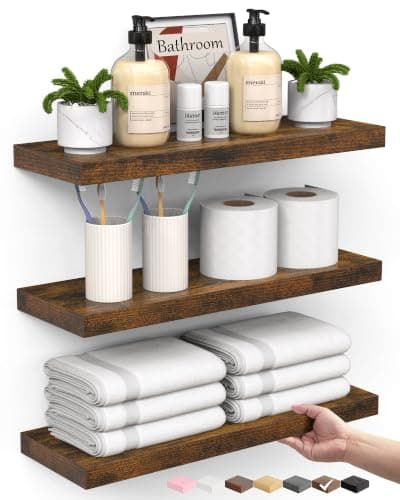
Solid Wood Floating Shelf Set

WELLAND · Best for a warm, styled display wall
A styled shelf with vases, books, and ceramics

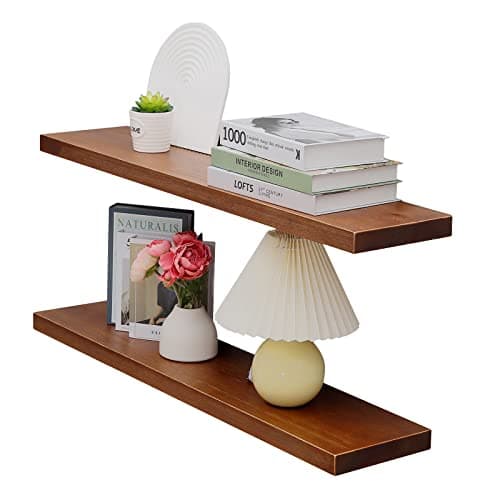
A set of solid-wood shelves with real grain and heft, sized to build a styled display up a wall.

A set of solid-wood shelves is the workhorse of wall display - real wood has the grain, weight, and warmth that a hollow or laminate shelf cannot fake, and buying a coordinated set lets you build a whole styled wall in one go instead of matching pieces later. This is the pick when the shelves themselves are meant to be part of the decor.

Pros

  • Solid wood shows real grain and holds more weight
  • A set of three builds a full styled wall at once
  • Warm wood tone suits almost any room

Cons

  • Solid wood is heavier, so the anchors have to be right
  • Grain and tone vary piece to piece, which is natural
2

Hidden-Bracket Floating Shelf

BAYKA · Best for the cleanest true-floating look

A styled shelf with vases, books, and ceramics

A shelf that slides over a concealed metal bracket so nothing shows underneath - the true floating look.

The hidden-bracket design is what people picture when they think floating shelf - a clean plank that appears to grow out of the wall with no visible hardware. The concealed steel rod system that makes that possible is genuinely strong when it lands in studs, and the shelf slides right off the bracket for painting or cleaning, which is a nice practical bonus.

Pros

  • Concealed bracket gives a clean, hardware-free look
  • The metal rod system is strong when anchored to studs
  • Slides on and off for painting or cleaning behind it

Cons

  • The hidden rod design is fussier to mount dead level
  • Weight limit is lower if you cannot reach studs
3

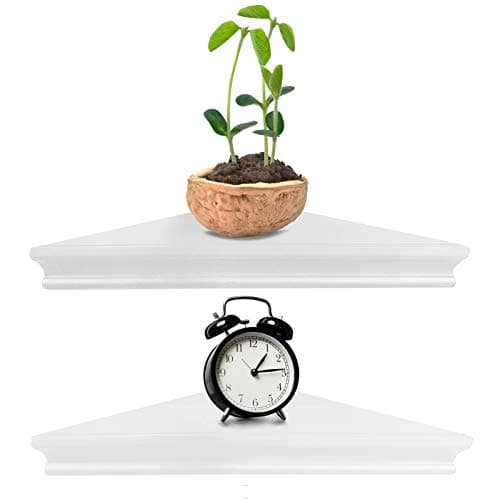
Corner Floating Shelf

Greenco · Best for putting dead corner space to work

Woven storage baskets on an organized shelf

A shelf shaped to wrap an inside corner and turn a bit of dead wall into display or storage.

Corners are the most wasted space in most rooms, and a corner floating shelf turns that dead diagonal into useful display or storage. It is especially valuable in a small room where every bit of flat wall is already spoken for. Stack a few up a corner and you get a vertical run of display where there was nothing before.

Pros

  • Uses an inside corner that usually sits empty
  • Great for small rooms with little flat wall to spare
  • Set of several builds a vertical corner display

Cons

  • Corner shape holds less than a straight shelf
  • Needs anchors in both walls of the corner for strength
4

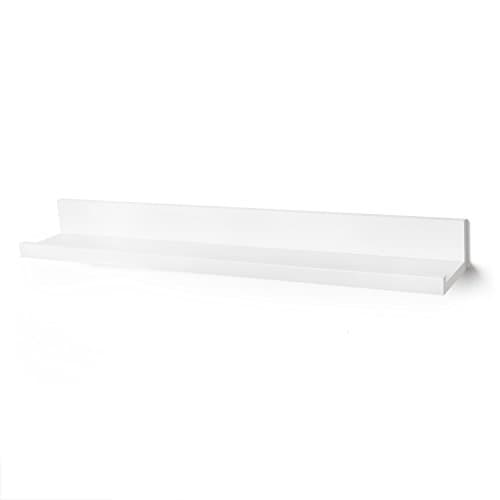
Picture Ledge Shelf

Americanflat · Best for leaning and swapping art easily

A styled shelf with vases, books, and ceramics

A shallow ledge with a front lip that lets you lean and layer framed art and swap it without new holes.

A picture ledge is the smartest way to hang art if you like to change things, because you drill once for the ledge and then lean and layer as many frames as you like without another hole in the wall. It lets you overlap pieces for depth and rearrange a whole display in seconds, which a wall of fixed nails never allows.

Pros

  • Lean and layer art without drilling for each piece
  • Swap the display anytime with zero new holes
  • Front lip keeps leaning frames from sliding off

Cons

  • Shallow depth is for leaning, not deep storage
  • Frames can slip if the ledge lip is too shallow
5

Industrial Pipe Bracket Shelf

Love-KANKEI · Best for a rugged industrial or rustic wall

A styled bookshelf with books and decor

A wood shelf on exposed black pipe brackets that carries real weight and a rugged industrial look.

When a shelf needs to hold real weight - a row of hardback books, heavy crockery, a stack of cast iron - exposed pipe brackets carry far more than a hidden rod, and the industrial look is a feature rather than a compromise. The visible brackets are also easier to mount level than a concealed system, since you can see and adjust exactly where each one lands.

Pros

  • Exposed pipe brackets hold serious weight
  • Industrial wood-and-metal look is a design feature itself
  • Visible brackets are simpler to mount level than hidden rods

Cons

  • The brackets are part of the look, so not a clean float
  • Metal brackets need solid anchoring for their weight rating
6

Floating Shelf with Hooks (Entryway)

WELLAND · Best for an entryway drop zone

Woven storage baskets on an organized shelf

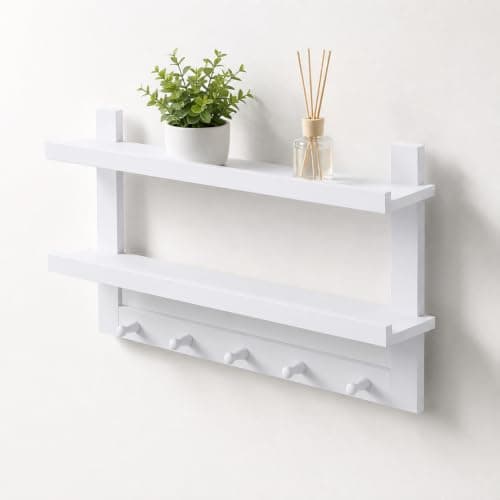
A shelf with hooks underneath that turns a bit of wall into a full entryway drop zone for keys, bags, and coats.

A shelf-with-hooks is the single most useful piece for an entryway, because it does two jobs at once - the shelf catches keys, mail, and a plant while the hooks below take coats, bags, and leashes. It turns a blank stretch of wall by the door into a functional drop zone, which is exactly what stops an entry from becoming a pile on the floor.

Pros

  • Combines a display shelf and coat hooks in one piece
  • Turns a blank entry wall into a real drop zone
  • Hooks handle bags and coats, shelf handles keys and mail

Cons

  • Hooks loaded with heavy coats add real pull on the anchors
  • Fixed hook spacing may not suit every household

The mounting is more important than the shelf

A floating shelf is only as good as what holds it to the wall, and this is where most shelf failures happen. The rules are simple and they are not optional:

  • Find the studs. A screw into framing is worth far more than any anchor. Use a stud finder and hit at least one stud per shelf wherever the layout allows.
  • Use the right anchor where you cannot. Between studs, step up to a rated toggle or molly bolt - never the little push-in plastic plugs for a shelf you will load.
  • Respect the weight rating. Every shelf and anchor has a limit. A shelf full of books weighs more than you think.
  • Load near the bracket. Weight is strongest directly over the support and weakest out at the ends.

Get the anchoring right and a modest shelf holds beautifully; get it wrong and the nicest shelf money can buy comes down with your things on it. The same anchoring logic runs through all my furniture assembly tips.

Getting a floating shelf dead level

Nothing gives a shelf away as amateur faster than a visible tilt, and on a long floating shelf even a small slope is obvious. Level it properly:

  • Level the bracket, not just the shelf. On a hidden-bracket shelf, put the level on the mounting rods before the shelf slides on - once it is on, you cannot adjust it.
  • Mark through the holes. Use the bracket itself as a template, level it, then mark and drill so the shelf lands right the first time.
  • Check across the front edge. Rest the level on the finished shelf front, not the wall, since that front line is what the eye reads.
  • Sight it against a reference. Step back and compare the shelf to a nearby window or ceiling line - the eye catches a slope a level can miss.

Five extra minutes with a level is the difference between a shelf that looks built-in and one that looks stuck on. Once it is level and loaded, the styling takes over — my shelf styling guide covers arranging what goes on it.

Matching the shelf to the job

Floating shelves are not one thing - the right style depends entirely on what you are asking it to do:

  • Styled display: a solid-wood set or a hidden-bracket shelf gives the clean, warm look for ceramics, plants, and a few books.
  • Heavy loads: an industrial pipe shelf carries the most weight, so it is the one for hardbacks or heavy crockery.
  • Changing art: a picture ledge lets you lean and swap a display without new holes.
  • Function by the door: a shelf with hooks builds an entryway drop zone; a corner shelf reclaims dead space.

Buy the shelf for the job, not just the look, and it earns its place on the wall. For heavier, full-height storage that a floating shelf cannot handle, step up to the best bookshelves or the broader storage and organization picks.

Frequently asked questions

How much weight can a floating shelf hold?

It depends almost entirely on the mounting, not the shelf. A shelf screwed into wall studs holds far more than the same shelf on drywall anchors. Respect the shelf's rated limit, hit at least one stud per shelf where you can, use rated toggle bolts between studs, and load the weight near the brackets rather than out at the ends where the support is weakest.

How do I hang a floating shelf without hitting a stud?

If you cannot land a stud, step up to a rated toggle or molly bolt sized for the load — never the small push-in plastic plugs, which pull out under weight. Spread the anchors across the bracket, keep the load light and centered, and stay well within the anchor's rated capacity. For anything heavy, it is worth relocating the shelf to reach a stud instead.

How do I get a floating shelf perfectly level?

Level the bracket, not just the shelf. On a hidden-bracket shelf, rest the level on the mounting rods before you slide the shelf on, since you cannot adjust it afterward. Use the bracket as its own template, level it, then mark and drill. Finally, sight the finished shelf against a nearby window or ceiling line, because the eye catches a slope a short level can miss.

What is the difference between a floating shelf and a bookshelf?

A floating shelf mounts to the wall for display and light storage, keeping the floor clear and the look airy, while a bookshelf is freestanding furniture built to hold a heavy full-height load like a library. Use floating shelves for styling and a few books; use a bookshelf when you need real capacity that would overload anything mounted to drywall.

Where should I put floating shelves in a small room?

Floating shelves are ideal in a small room because they add storage and display without taking any floor space. Put them in the dead spots — above a desk, over a toilet, flanking a TV, or wrapping an empty corner. Going vertical up a wall with a set of shelves adds a lot of usable surface where a piece of furniture would never fit. My small-space guide has more.

Ready to make your space feel like home?

Browse the roundups I'd actually hand a client — honest picks, real trade-offs, and the one to buy first.