Skip to content
IMH

Best Picks

The Best Ceiling Light Fixtures - and the Spec Nobody Checks

Swapping the fixture is the cheapest room-level upgrade there is. Buying the wrong kind is how you end up replacing it again in four years.

By Catherine Vizcaino · Home-renovation pro & founder

Updated September 2026

A decorated, cozy living room with a sofa

As an Amazon Associate, I Heart My Home earns from qualifying purchases. It never changes your price or our picks. Learn more.

Changing a ceiling fixture is the highest-value hour of work in this entire category. A builder-grade dome light is the single clearest signal that a room has never been touched, and swapping it changes the room from the top down for less than the cost of a decent throw blanket. I do it on almost every job, often before anything else.

It is also the category where buyers get quietly burned, and by one spec that almost nobody checks: whether the fixture takes a replaceable bulb or has the LEDs built into the housing. Integrated-LED fixtures are cheap, thin, bright, and completely disposable - when the diodes finally dim or fail, there is no bulb to change. You buy the fixture again. That is a legitimate trade-off, but it should be a choice, and right now most people make it by accident.

Here is what I check before buying any ceiling fixture:

  • Ceiling height. Under about eight feet you want flush or semi-flush. Anything that hangs needs headroom, and the clearance rules below are not suggestions.
  • Bulb or no bulb. Does the listing name a bulb base such as E26, or does it quote fixed wattage and lumens? That single distinction decides what happens in year five.
  • Diameter against the room. An undersized fixture on a big ceiling is the most common mistake I correct, and it is free to avoid with one piece of arithmetic.
  • Lumens and color temperature, not watts. Watts stopped describing brightness the day LEDs took over.
  • Dimming, and whether your switch agrees. “Dimmable” on the box does not mean compatible with the dimmer already on your wall.

Every pick below was confirmed in stock and buyable before it went on this page, and each card shows the live current price rather than a number I typed once and let go stale. See our editorial policy for how these get chosen, and pair this with our home lighting guide for the layering strategy behind it.

Quick picks at a glance

#ProductBest forPrice
1
A welcoming entryway with a console and mirror
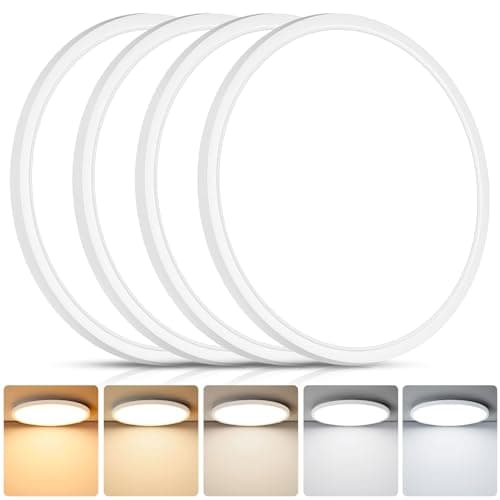
Brightever 12 Inch LED Flush Mount Ceiling Light Fixture, Dimmable, 3200LM

A slim 12-inch dimmable disc rated at 3200 lumens - the straightforward replacement for a builder-grade dome in a hall, landing, or small bedroom.

Low ceilings and hallways
2
A decorated, cozy living room with a sofa
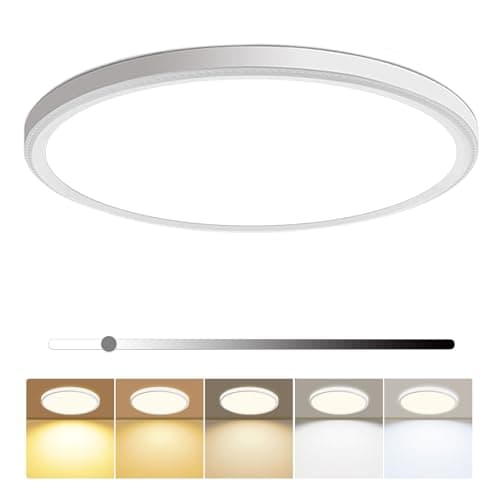
hunhun 16 Inch Dimmable LED Flush Mount Ceiling Light, 4800LM, 5 Color Temperatures

Sixteen inches and 4800 lumens with five selectable color temperatures - the flush mount that can actually carry a full-size room.

A larger living or dining room
3
A warm, decorated bedroom
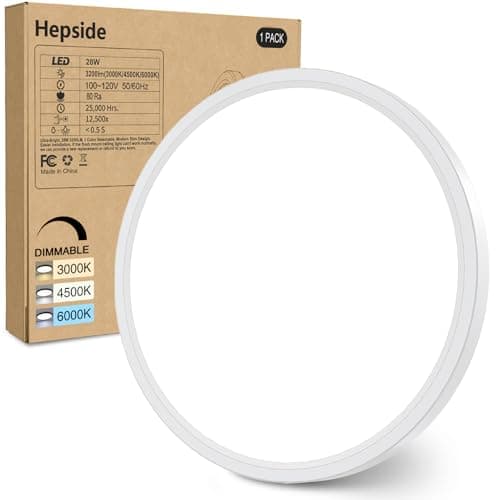
hepside 12 Inch Flush Mount Light Fixture, 28W, 3200LM, White

The cheapest honest fixture here: 28 watts, 3200 lumens, three color temperatures, for about the price of a takeout lunch.

Doing several rooms at once
4
A maximalist room layered with bold color and pattern
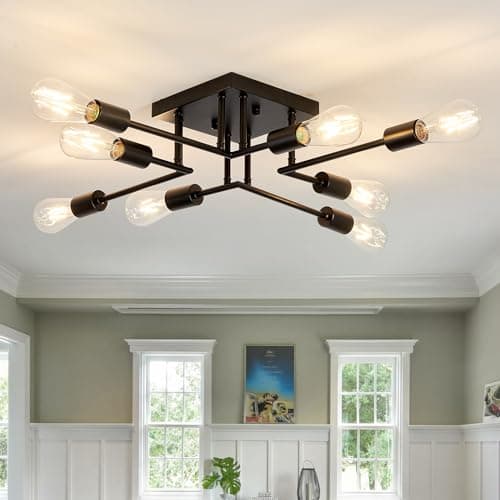
ASGYISA 8-Light Semi Flush Mount Sputnik Ceiling Light, Black, E26 Bulb Base

A black sputnik that stays close to the ceiling and takes eight standard E26 bulbs - decorative and repairable, which is a rarer combination than it should be.

Style with a replaceable bulb
5
A warm kitchen with wood counters and decor
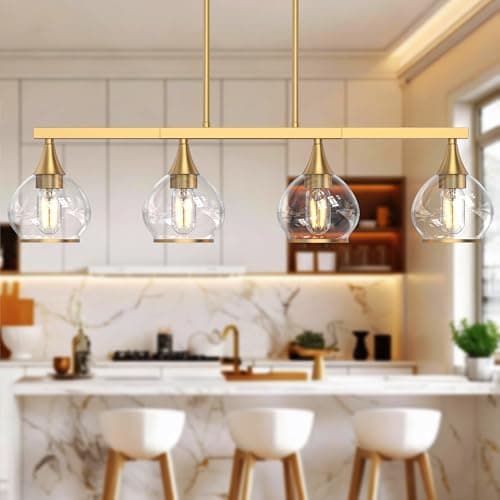
Phaosio Brushed Gold Kitchen Island Linear Pendant Light, 4-Light, E26 Base

A four-light linear bar in brushed gold on an E26 base - one fixture, one junction box, and even light down the length of an island.

Over a kitchen island
6
A dining table and chairs in a warm interior
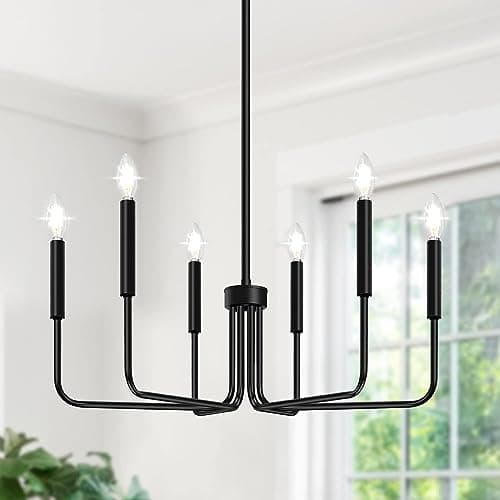
6-Light Farmhouse Chandelier for Dining Room, Black, No Assembly Required

A six-light black industrial-farmhouse chandelier that arrives assembled - the dining fixture that does the most for the least money here.

Over a dining table
7
A welcoming entryway with a console and mirror
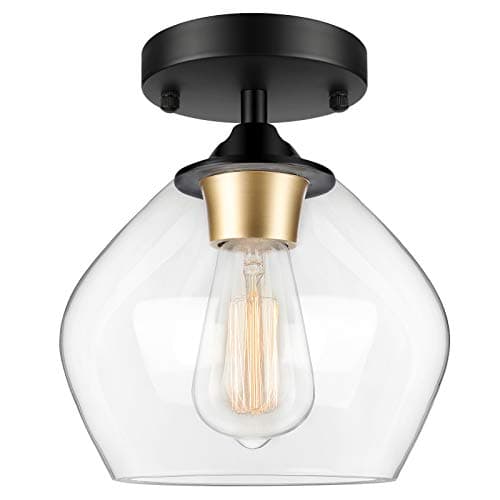
BesLowe Modern Semi Flush Mount Ceiling Light with Clear Glass Shade, Black

A single clear-glass globe on a black fitting - the small, cheap, quietly correct fixture for an entry, closet, or powder room.

Entryways and small rooms
8
A warm bathroom styled with towels and plants
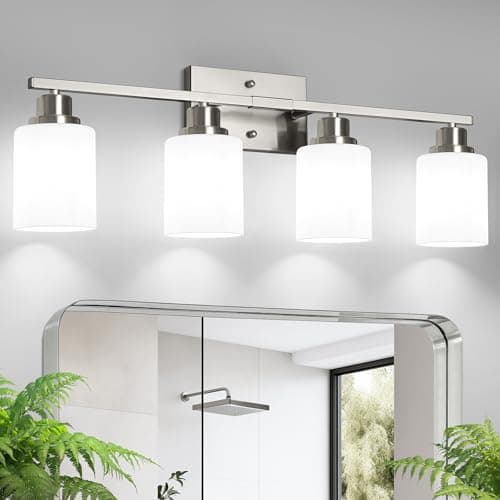
Ascher 4-Light Vanity Light Over Mirror, Brushed Nickel, E26 Base

Four frosted shades on an E26 base in brushed nickel - the bathroom half of a fixture swap, and the one that most improves how you look in the mirror.

Above a bathroom mirror

Tap any row to jump to the full write-up. Prices open on Amazon in a new tab.

How we chose these picks

Every pick here is chosen the way I’d choose it for a client’s home: real-world durability first, build quality and materials second, and value for the money third. Where I’ve installed or lived with a product on a job, I say so and tell you what I saw. Where a pick is based on research and verified buyer feedback rather than hands-on use, I say that too — I never claim to have tested something I haven’t.

Read our full editorial policy for how we evaluate and update these guides.

A welcoming entryway with a console and mirror

A slim 12-inch dimmable disc rated at 3200 lumens - the straightforward replacement for a builder-grade dome in a hall, landing, or small bedroom.

This is the default swap. If a room has an ugly dome and you want it gone this weekend without thinking about style, a slim bright disc at this diameter is the answer, and it is the fixture I fit most often in circulation spaces where nobody lingers.

$39.99 · View on Amazon

#ad · disclosure · Price as of September 19, 2026

Pros

  • 12 in diameter suits halls, landings, and small bedrooms without crowding the ceiling
  • 3200 lumens is genuinely bright for the size
  • Dimmable, so it can be tuned down rather than run flat out
  • Low-profile housing keeps every inch of headroom on an eight-foot ceiling

Cons

  • Integrated LED - when the diodes fail you replace the whole fixture, not a bulb
  • A plain disc is functional rather than decorative; it will not carry a room
  • Listing does not name a dimmer compatibility list, so check yours before buying
  • Too small to be the only fixture in a large living or dining room
A decorated, cozy living room with a sofa

Sixteen inches and 4800 lumens with five selectable color temperatures - the flush mount that can actually carry a full-size room.

Most people buy a flush mount two sizes too small, then wonder why the room still feels dim and the ceiling looks bare. Going to 16 inches with real lumen output behind it is the single change that fixes both at once.

$30.99 · View on Amazon

#ad · disclosure · Price as of September 19, 2026

Pros

  • 16 in diameter is correctly scaled for a living or dining room, not a closet
  • 4800 lumens is a real ambient-light workload, not accent brightness
  • Five selectable color temperatures let you match it to the rest of the room after install
  • Super-slim housing on a big diameter reads far more modern than a dome

Cons

  • Integrated LED again - no bulb to replace when it eventually fails
  • Selectable color temperature is usually set by a switch at install; changing it later means getting back up the ladder
  • At full output it is bright enough to be unpleasant undimmed in an evening room
  • A 16 in disc is heavy and awkward to hold overhead while you wire it
3

hepside 12 Inch Flush Mount Light Fixture, 28W, 3200LM, White

hepside · Best for Doing several rooms at once

A warm, decorated bedroom

The cheapest honest fixture here: 28 watts, 3200 lumens, three color temperatures, for about the price of a takeout lunch.

There is a real scenario this fixture is perfect for: a rental, a basement, a utility area, or a whole-house bulk swap where you need five fixtures gone and replaced this weekend. Paying four times as much for a hallway nobody looks at is not a flex.

$15.99 · View on Amazon

#ad · disclosure · Price as of September 19, 2026

Pros

  • By far the lowest price on this page, which matters when you are replacing four of them
  • 3200 lumens from 28 watts is solid output for a budget disc
  • Three color temperatures (3000K, 4500K, 6000K) cover most rooms
  • Low profile suits kitchens, bedrooms, hallways, and covered porches

Cons

  • Integrated LED, and at this price the diodes are the part most likely to disappoint long term
  • Plain white acrylic disc - purely functional, zero design contribution
  • Budget drivers are the usual culprits in dimmer flicker
  • 12 in is too small to anchor a big room on its own
A maximalist room layered with bold color and pattern

A black sputnik that stays close to the ceiling and takes eight standard E26 bulbs - decorative and repairable, which is a rarer combination than it should be.

This is the pick that answers the whole integrated-LED problem. It looks like a design fixture, sits close enough for a standard ceiling, and when a light goes out you change a bulb like a normal person. That combination is worth paying a bit more for.

$59.396% off

$56.09 · View on Amazon

#ad · disclosure · Price as of September 19, 2026

Pros

  • Listing states E26 bulb base, so every light source is replaceable for a few dollars
  • You choose the bulbs, which means you control brightness and color temperature entirely
  • Semi-flush sputnik gives real sculptural presence on an eight-foot ceiling
  • Eight arms spread light outward rather than straight down in one cone

Cons

  • Bulbs are almost certainly not included - budget for eight of them
  • Eight exposed bulbs means glare unless you choose frosted ones
  • Open sputnik arms collect dust on every arm and every bulb
  • Assembling eight arms and aiming them evenly takes real patience
A warm kitchen with wood counters and decor

A four-light linear bar in brushed gold on an E26 base - one fixture, one junction box, and even light down the length of an island.

Most people hanging island lights want the look of three pendants and do not want to pay an electrician to add two junction boxes. A linear fixture gets you the spread from the single box you already have, which is why I specify them constantly.

$103.99 · View on Amazon

#ad · disclosure · Price as of September 19, 2026

Pros

  • Linear bar spreads light along an island instead of pooling it in one spot
  • E26 base means replaceable bulbs and your choice of output
  • One fixture on one junction box is far simpler than wiring three separate pendants
  • Brushed gold warms up a kitchen full of stainless and white

Cons

  • The most expensive fixture on this page
  • A linear bar only suits a genuinely linear island - wrong on a square one
  • Bulbs not included, and four of them is a real added cost
  • Brushed gold commits the room to a warm metal; it will fight chrome fittings
A dining table and chairs in a warm interior

A six-light black industrial-farmhouse chandelier that arrives assembled - the dining fixture that does the most for the least money here.

A dining table is the one place where a hanging fixture is unambiguously correct, because the table fixes where people sit and nobody walks under it. This is the cheapest way I know to get real scale over one.

$52.99 · View on Amazon

#ad · disclosure · Price as of September 19, 2026

Pros

  • Six arms give a dining table proper presence rather than a single sad downlight
  • Listing states no assembly required, which removes the worst part of chandelier installs
  • Matte black suits farmhouse, industrial, and transitional rooms alike
  • Priced well below what a fixture this size normally costs

Cons

  • Listing does not state a bulb base - confirm what it takes before you order bulbs
  • Six exposed bulbs is a lot of glare over a table unless you dim it
  • Open cage arms need dusting, and dining rooms are greasier than people think
  • Needs a ceiling height that can take a hanging fixture - not for eight-foot rooms with a tall table
A welcoming entryway with a console and mirror

A single clear-glass globe on a black fitting - the small, cheap, quietly correct fixture for an entry, closet, or powder room.

Small rooms get forgotten, and a builder dome in an entry is the first thing a guest sees. This is a cheap, tidy fix for the spaces that are too minor to justify a real fixture budget but too visible to ignore.

$29.9913% off

$25.99 · View on Amazon

#ad · disclosure · Price as of September 19, 2026

Pros

  • Clear glass lets the bulb become the decorative element
  • Black hardware reads intentional against white ceilings
  • Small footprint suits entries, closets, laundry rooms, and powder rooms
  • Among the cheapest decorative options on this page

Cons

  • Listing states neither the bulb base nor the diameter - verify both before ordering
  • Clear glass means the bulb is fully visible, so a cheap bulb ruins the look
  • A single light source is not enough for any real room
  • Glass shades show dust and fingerprints immediately
A warm bathroom styled with towels and plants

Four frosted shades on an E26 base in brushed nickel - the bathroom half of a fixture swap, and the one that most improves how you look in the mirror.

Bathroom lighting is the one place where the fixture changes how you experience the room daily, because you stand in front of it and look at your own face. Frosted shades at eye level beat a bare-bulb Hollywood bar every time.

$44.9911% off

$39.99 · View on Amazon

#ad · disclosure · Price as of September 19, 2026

Pros

  • Frosted glass shades diffuse light instead of casting hard shadows on a face
  • E26 base with replaceable bulbs, so output and color are yours to choose
  • Four lights spread evenly across a standard vanity width
  • Brushed nickel matches the most common existing bathroom hardware finish

Cons

  • Listing explicitly states bulbs are not included
  • A wall fixture, not a ceiling one - it needs a vanity junction box, which not every bathroom has
  • Brushed nickel will clash if your faucet and pulls are black or brass
  • Four bulbs above a mirror is a lot of glare if you pick anything too bright

Flush, semi-flush, or hanging: the ceiling decides

This is the first fork and it is settled by a tape measure, not by taste. The three formats are not interchangeable and picking the wrong one is the error that cannot be fixed with a nicer finish.

  • Flush mount sits tight against the ceiling. It is the right answer for anything under about eight feet, and for any spot people walk through - halls, landings, closets, small bedrooms.
  • Semi-flush drops a few inches on a short stem. It buys you real decorative shape while keeping headroom, which makes it the most underused format in the whole category. On a standard eight-foot ceiling it is usually the best-looking thing you can safely fit.
  • Hanging - pendants and chandeliers - needs either a tall ceiling or a piece of furniture underneath that fixes where people stand. Over a dining table or an island it is correct at almost any ceiling height, because nobody walks through that space.

The clearance rule I actually use: keep the bottom of any fixture at least seven feet off the floor wherever people walk. Over a table or an island, ignore floor clearance and measure from the surface instead - 30 to 36 inches above it.

Integrated LED vs replaceable bulbs - the question nobody asks

Here is the distinction that should drive more of these purchases than it does. An integrated LED fixture has the diodes soldered into the housing. There is no socket and no bulb. When the output finally drops or the driver quits, the fixture is finished - you unwire it and buy another. A bulb-based fixture has sockets, usually E26, the standard screw base, and you change bulbs the way people always have.

How to tell them apart from a listing, before you buy:

  • If it names a base - E26, E12, GU10 - it takes bulbs. Of the picks above, the sputnik semi-flush, the island pendant, and the vanity light all state E26.
  • If it quotes a fixed wattage and lumen figure with a color temperature range and never mentions a base, it is almost certainly integrated. The three flush-mount discs above are in this group.
  • If the listing says neither - which happens more than you would like, including on two picks above - treat that as unknown and confirm before ordering bulbs.

Neither is wrong. Integrated fixtures are slimmer, brighter for their size, and cheaper up front, which is exactly why they dominate the flush-mount aisle. But I would not put a disposable fixture somewhere annoying to reach, and I would not put one in a room where I care about the fixture itself. Halls and utility spaces, integrated is fine. Dining rooms, islands, and anything sculptural - buy sockets.

Sizing a fixture to the room

Undersizing is the most common mistake in this category by a wide margin, and it is free to avoid. The rule of thumb designers use: add the room’s length and width in feet, and the sum in inches is roughly the right fixture diameter. A 12 by 14 foot living room gives 26 - so a 24 to 26 inch fixture, not the 12 inch disc most people buy.

Over a dining table, ignore the room entirely and size to the table: roughly half to two-thirds of the table’s width. A 40-inch-wide table wants something in the 20 to 26 inch range. Going wider than the table itself is how people catch a chandelier with a chair back.

For a linear island fixture, keep it clearly shorter than the island - a rough guide is about two-thirds to three-quarters of the island length, centered, so the ends of the island are not overhung. Our room measuring guide covers the tape-measure habits that make all of this quicker.

One honest caveat on the addition rule: it assumes a single central fixture doing the ambient work. If you are running recessed lights plus a decorative fixture, the decorative one can be smaller, because it is no longer carrying the room.

Lumens and color temperature, not watts

Watts measure power draw, not brightness. That was a usable proxy when every bulb was incandescent and it has been meaningless since LEDs arrived - the 28-watt fixture above puts out 3200 lumens, which an incandescent would have needed something like ten times the power to match. Read the lumen figure and ignore the watts except as a rough efficiency note.

Rough ambient targets I work to, for a main ceiling fixture that is doing the primary lighting in a room:

  • Bedrooms and living rooms: lower, and dimmable matters more than peak output. These are evening rooms.
  • Kitchens, bathrooms, laundry: higher - these are task spaces and underlighting them is a daily irritation.
  • Halls and stairs: moderate, but even. Patchy light on a staircase is a safety issue, not an aesthetic one.

Color temperature decides the mood, and it is where most rooms go wrong. Warm white around 2700K to 3000K for living rooms and bedrooms; neutral around 3500K to 4000K for kitchens, bathrooms and work areas; and cool 5000K and up mostly belongs in a garage. The rule that matters more than any individual number: keep it consistent within a room. One cool fixture among warm lamps is instantly, unpleasantly obvious after dark. Our home lighting guide goes deeper on layering these together.

Dimming is where cheap fixtures fail

“Dimmable” printed on a box is a weaker promise than people assume. An LED fixture dims through its driver, and cheap drivers do not get along with every dimmer - particularly older wall dimmers built for incandescent loads. The symptoms are flicker, buzzing, a dead zone at the bottom of the slider, or a fixture that drops out entirely below about 20 percent.

What actually helps: pair LED fixtures with a dimmer specifically sold as LED-compatible, and check whether the fixture wants leading-edge or trailing-edge if the listing says. Also be aware that most dimmers have a minimum load - putting one small LED fixture on a dimmer designed for several incandescent bulbs is a classic cause of flicker, and nothing is broken.

If a room already has an old dimmer you cannot change, the honest move is to buy a bulb-based fixture and solve dimming at the bulb. It is far easier to try three different dimmable bulbs than to return a hardwired fixture you have already installed.

A renovator's take: what installing these is actually like

Swapping a like-for-like fixture where a box already exists is genuinely a beginner job in most cases, and the parts that go wrong are rarely electrical. My order of operations:

  • Kill the breaker, not just the switch, and confirm dead at the fixture with a tester. A switch loop can leave a conductor live with the switch off.
  • Photograph the existing wiring before you disconnect anything. Ten seconds that saves an hour of guessing.
  • Check the box, not the ceiling. The mounting bracket screws to the electrical box; the box has to be rated for the weight, and anything heavy or hanging wants a box rated for the load. An old box that wobbles is the actual problem to solve before hanging anything on it.
  • Support the fixture while you wire it. Most have a hook or chain for exactly this - a 16-inch disc held overhead one-handed while you twist connectors is how people drop fixtures.
  • Set any color-temperature switch before it goes up. It is almost always on the back.
  • Test before you screw the trim on. Breaker on, switch on, confirm, then finish.

The mess nobody warns you about: the old fixture was probably painted around. Expect a ring of unpainted ceiling wherever the new canopy is smaller than the old one, and either pick a canopy at least as large or plan to touch up the paint. I check the old fixture’s footprint before ordering, every time.

When to call an electrician

I am comfortable telling people to change a fixture themselves. I am not comfortable telling them to do all of it. Call someone qualified when:

  • There is no box where you want the light. Adding a fixture is new circuit work, not a swap.
  • The box is loose, cracked, or not rated for the weight you intend to hang from it.
  • There is no ground wire, or the wiring looks cloth-insulated or otherwise old. That is a conversation about the circuit, not about the fixture.
  • You want two or three pendants where one box exists. This is exactly why the linear island fixture above is on this page - it sidesteps the problem entirely.
  • Anything about it makes you uneasy. Electrical work is the one category in home improvement where the failure mode is not a wasted Saturday.

And check your local rules - permit requirements for electrical work vary by jurisdiction, and a like-for-like swap is treated differently from new circuits in most places. If you are doing a wider refresh, our DIY home decor guide covers which jobs are genuinely worth doing yourself.

Frequently asked questions

What is the difference between a flush mount and a semi-flush mount?

A flush mount sits tight against the ceiling with no gap - right for ceilings under about eight feet and for anywhere people walk. A semi-flush drops a few inches on a short stem, which buys real decorative shape while keeping headroom. On a standard eight-foot ceiling, semi-flush is usually the best-looking thing that still fits safely, and it is the most underused format in the category.

How big should a ceiling light fixture be for my room?

Add the room’s length and width in feet, and the sum in inches is roughly your fixture diameter. A 12 by 14 foot room gives 26 - so a 24 to 26 inch fixture, not the 12 inch disc most people reach for. Over a dining table, size to the table instead: about half to two-thirds of its width. The rule assumes one central fixture is doing the ambient work; if you also have recessed lighting, the decorative fixture can be smaller.

What happens when an integrated LED ceiling light burns out?

You replace the whole fixture. Integrated LED fixtures have the diodes built into the housing - no socket, no bulb - so when the output drops or the driver quits there is nothing to change. Listings that name a base such as E26 take replaceable bulbs instead. Neither approach is wrong; the point is to choose it on purpose. Integrated is fine in a hallway, and a poor idea over a dining table.

Can I replace a ceiling light fixture myself?

A like-for-like swap into an existing box is a beginner job for most people. Kill the breaker rather than just the switch, confirm dead with a tester, photograph the old wiring before disconnecting, and check the box is sound and rated for the weight. Call an electrician if there is no box where you want the light, if the box is loose or not rated for the load, if there is no ground wire, or if the wiring looks old - and if anything about it makes you uneasy.

How high should a pendant or chandelier hang over a table or island?

About 30 to 36 inches above the surface, measured from the countertop or tabletop - not from the floor. Anywhere people walk through, use floor clearance instead and keep the bottom of the fixture at least seven feet up. Over an island, sit down before you commit to a height: the real test is whether you can see the person opposite you without the fixture cutting across their face.

What color temperature should ceiling lights be?

Warm white around 2700K to 3000K in living rooms and bedrooms, neutral 3500K to 4000K in kitchens, bathrooms and work areas, and cool 5000K and up mostly in a garage. But the number matters less than the consistency: keep every source in one room on the same temperature. A single cool ceiling fixture over warm table lamps is what makes a living room feel like an office at night.

Why does my LED ceiling light flicker on a dimmer?

Usually compatibility, not a fault. LED fixtures dim through their driver, and budget drivers do not get along with every dimmer - especially older ones built for incandescent loads. Most dimmers also have a minimum load, so one small LED fixture on a dimmer designed for several incandescent bulbs will often flicker with nothing actually broken. Use a dimmer sold as LED-compatible, or buy a bulb-based fixture so you can solve it by swapping bulbs instead of rewiring.

Ready to make your space feel like home?

Browse the roundups I'd actually hand a client — honest picks, real trade-offs, and the one to buy first.