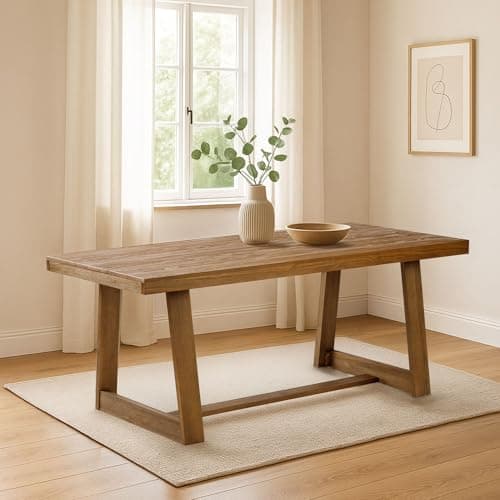
Plank+Beam Classic Rectangular Dining Table
Best for the room's anchor
A solid-wood rectangular table that seats six and reads far more expensive than it is.
Rooms
The shop-the-look and the sizing rules I use to make a dining room feel gathered, not cramped.
By Catherine Vizcaino · Home-renovation pro & founder
Updated August 2026
As an Amazon Associate, I Heart My Home earns from qualifying purchases. It never changes your price or our picks. Learn more.
A dining room lives or dies on one thing most people never measure: clearance. You can buy the prettiest table on the internet, but if there is not enough room to pull a chair out and sit down without hitting the wall, the room fights you every meal. After years of renovating homes, I can tell you the dining rooms that feel gathered rather than cramped almost always started with a tape measure, not a mood board.
The good news is that a dining room needs fewer pieces than a living room, so once the big decisions are right the rest falls into place fast. The order is the same one I use everywhere: anchor → lighting → soft goods → decor last. Here the anchor is the table and chairs, the lighting is the fixture that hangs over it, and a rug plus a sideboard do the quiet work of making the room feel finished. Below is the shop-the-look I would build a warm dining room around, and it borrows the same layering logic as our living room guide.
One honesty note: Amazon prices move constantly, so every pick shows a Check price on Amazon button instead of a number I cannot promise. For more anchor pieces across the whole category, our best furniture guide is the place to start.
Best for the room's anchor
A solid-wood rectangular table that seats six and reads far more expensive than it is.

Best for comfortable seating
Padded, high-back dining chairs that make people want to linger after the plates are cleared.
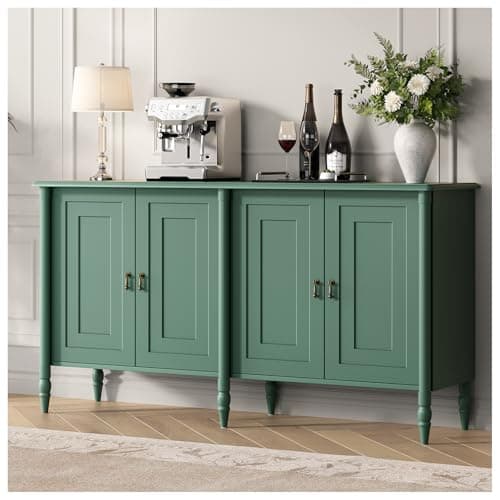
Best for serving and storage
A closed-front buffet that hides the table linens and doubles as a serving surface.
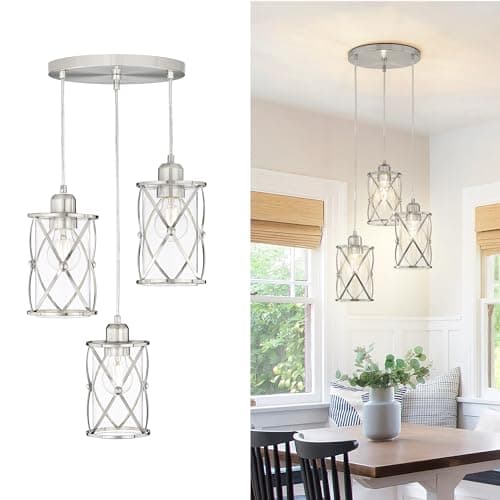
Best for the fixture over the table
A cluster pendant that gives the table its own pool of light and centers the whole room.
#ad · disclosure · Price as of September 19, 2026
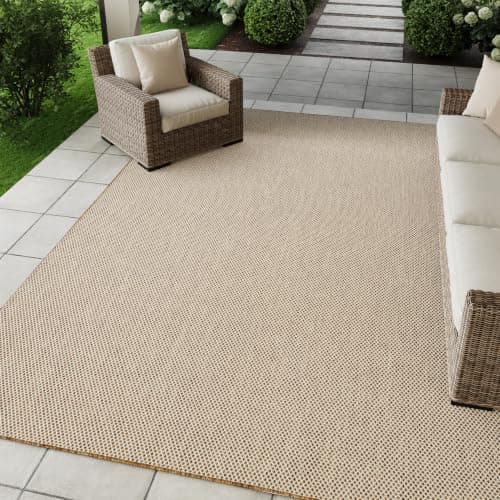
Best for grounding the table
A flat, natural-fiber rug big enough to keep every chair on it, even pulled out.
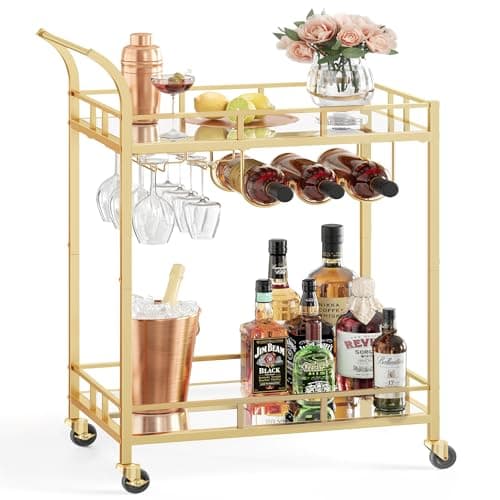
Best for hosting and flexibility
A rolling cart that serves as a bar when you host and styled decor the rest of the time.
Before you fall in love with a table, measure the room and subtract. A dining table needs roughly 36 inches of clearance on every side — from the table edge to the nearest wall or furniture — so a chair can pull out and a person can walk behind it without turning sideways. Take your room dimensions, knock about six feet off the length and the width, and what is left is the biggest table the room can actually hold.
For seating, plan on about 24 inches of table width per person so nobody is fighting for elbow room. That math is why a six-foot rectangular table is the honest size for six, and why the ten-seat farmhouse table that looked so generous online ends up wedged wall-to-wall in most homes. A resource like The Spruce has clear diagrams of these clearances if you want to see them drawn out.
Shape follows the room, too. Rectangular tables suit long rooms and seat the most people; a round table is the move for a small or square room because it has no corners to bump and everyone can see everyone. Commit to the table first and every piece after it — the rug size, the fixture width, the sideboard length — is a measurement, not a guess.
A dining room comes together in the same four moves as any other room, just with fewer pieces to buy:
The centerpiece is where people either overthink it or skip it entirely. Keep it low enough to see across — a runner with a few candles and a bowl of fruit or greenery does more than a tall arrangement nobody can talk over. For seasonal ideas that swap in and out on that last layer, our fall decor guide and home decor ideas are full of them.
My rule for a dining room is simple: spend on what gets used hard and seen most, which is the table and the chairs. A solid table lasts decades and can be refinished; comfortable chairs are the difference between a room people gather in and one they leave the moment they are done eating. Those two are worth real money.
Where I happily save: the rug, the bar cart, and the decor. A flat jute or a low synthetic rug does the job for a fraction of a hand-knotted wool one, the cart is a want rather than a need, and centerpieces are meant to change. If you inherited or thrifted a solid wood table with some wear, do not write it off — our home decor picks cover the finishing pieces that make an old table feel intentional again.
And remember that a dining room is a low-traffic room compared to a living room, so you can lean into things you could not elsewhere — a more delicate rug, a statement light, a real centerpiece — because it simply does not take the same daily beating.
Size up. The rug should extend at least 24 inches past every edge of the table so the chairs stay on it even when pulled out. For a standard six-seat rectangular table that usually means an 8 by 10, and for a larger table a 9 by 12. A rug that stops short of the pulled-out chairs is the most common dining-room mistake.
Leave about 36 inches from every edge of the table to the nearest wall or furniture so a chair can pull out and someone can walk behind it. In a tight room you can drop to about 30 inches on a side people do not walk past, but below that the room feels cramped every meal.
Hang the bottom of the fixture about 30 to 36 inches above the tabletop. Any higher and it lights the room instead of the food. Center it over the table, not the room, and choose a fixture roughly a foot narrower than the table so nobody bumps it reaching across. Our best ceiling light fixtures roundup covers dining chandeliers alongside the sizing math. Better Homes & Gardens has a good reference on fixture size and height.
No. A set of chairs that coordinates with the table by sharing a wood tone or a finish reads more collected than a matching suite bought as one set. You can also mix an upholstered pair at the head and ends with simpler side chairs, as long as the heights and proportions line up.
You do not need one, but it solves two real problems: where to store the linens and serveware you only use occasionally, and where to set platters when you host. It also gives you a surface to decorate and a spot for a lamp, which adds the second light source a dining room usually lacks.
Browse the roundups I'd actually hand a client — honest picks, real trade-offs, and the one to buy first.