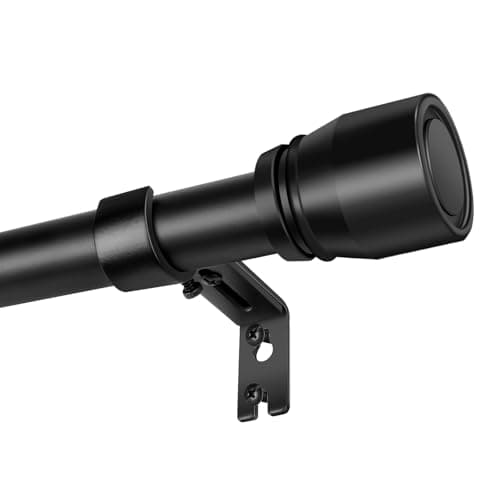
Adjustable Curtain Rod
Best for hanging high and wide
A telescoping rod with substantial diameter and brackets that let you mount well past the window frame.
$16.99 · View on Amazon
#ad · disclosure · Price as of September 19, 2026
Guides
Hang them high and wide - it's the one move that makes a whole room look taller.
By Catherine Vizcaino · Home-renovation pro & founder
Updated August 2026
As an Amazon Associate, I Heart My Home earns from qualifying purchases. It never changes your price or our picks. Learn more.
Curtains are the cheapest way to make a room look taller, wider, and more finished — and they’re also the thing most people hang wrong. Rod mounted right on the window frame, panels too skimpy to close, hems stopping short like they shrank in the wash. Every one of those is a two-inch decision that changes how the whole room reads.
The single most important rule is high and wide: mount the rod well above the window and extend it past the frame on both sides. That one move fixes more rooms than any purchase. Below I walk through the height, the width and fullness, the length options, and how to layer sheers with blackout so a room works in daylight and at night.
Prices on the hardware and panels move, so you’ll see a Check price on Amazon button rather than a number. When you’re ready to shop the panels themselves, my best curtains roundup has picks by type and room.
Best for hanging high and wide
A telescoping rod with substantial diameter and brackets that let you mount well past the window frame.
#ad · disclosure · Price as of September 19, 2026
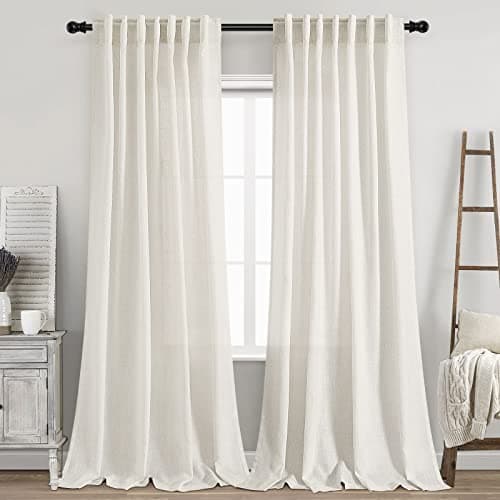
Best for soft, filtered daytime light
Airy sheer panels that soften daylight and add privacy without blocking the view entirely.
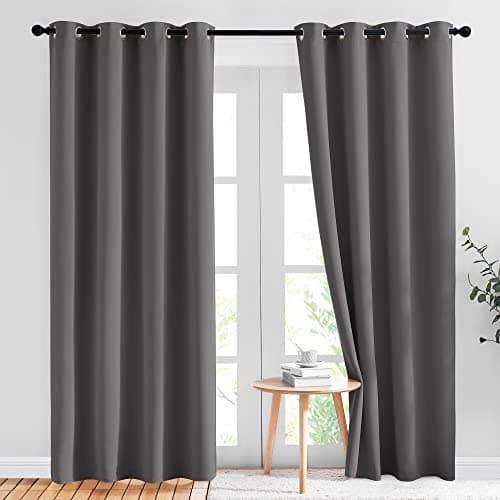
Best for bedrooms and media rooms
Room-darkening panels that block outside light for better sleep and glare-free screens.
#ad · disclosure · Price as of September 19, 2026
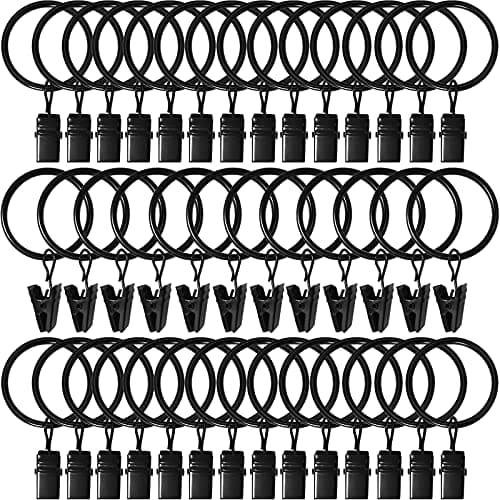
Best for even, gliding pleats
Clip-on rings that let almost any panel glide smoothly and hang in even folds.
#ad · disclosure · Price as of September 19, 2026
This is the rule that separates curtains that lift a room from curtains that shrink it. Forget mounting the rod on the window frame — go up and out.
That’s the whole magic trick: eyes travel up to the rod and read the window — and the ceiling — as taller than they are.
The most common curtain mistake after rod height is skimpy panels. A curtain that stretches flat across a window looks cheap no matter what it cost. You want fullness — soft, gathered folds even when the panels are closed.
If you can only fix one thing on a budget, buy wider before you buy fancier — fullness reads as quality far more than the fabric does.
Length is where curtains either look tailored or look like they shrank. Curtains should reach the floor — short panels that stop above the sill are the number-one thing that makes a room look unfinished. Pick your relationship with the floor:
To measure: decide the rod height first, then measure from where the ring or hook will sit down to the floor. Remember that rings and clips add a little height, so account for that in the panel length you order.
The rooms that feel truly finished usually run two layers: airy sheers for the day and heavier or blackout panels for privacy and darkness at night. It’s the same idea as layering light in a room — options for every time of day.
Curtains and lighting shape a room’s mood together — pair this with my home lighting guide and see how it all comes together at the living-room hub.
Mount the rod about 4 to 6 inches above the window frame, or halfway between the frame and the ceiling. With tall ceilings, taking it nearly to the ceiling or crown molding makes the walls soar. Hanging the rod right on the frame is the classic mistake — it makes the window and the whole room look short.
Total panel width should run about 2 to 2.5 times the window width so the curtains keep soft folds even when closed — for a 50-inch window, that’s roughly 100 to 125 inches of curtain across all panels. Sheers need even more, at least double the width per layer, or they look stretched. Fullness reads as quality more than fabric does.
Yes — curtains should reach the floor; short panels that stop above the sill are the top thing that makes a room look unfinished. Choose float (hem just kissing the floor), break (an inch or two long for a soft fold), or puddle (pooling a few inches, formal but a dust magnet). Float is the crispest and the easiest to live with.
Not always, but layering them makes a room work around the clock. Sheers soften daylight and give daytime privacy while keeping the room bright; blackout panels darken it for sleep and kill screen glare at night. A double rod holds both — sheer closest to the glass, heavier panel in front. See my lighting guide for how it pairs with the room’s light.
A sturdy adjustable rod that extends past the frame, brackets anchored into studs (or proper drywall anchors), finials to keep rings on, and a center support bracket for any span over about 48 inches so the rod doesn’t bow. Curtain rings with clips make panels glide and hang in even folds — and heavier blackout panels want a thicker rod to carry the weight.
Browse the roundups I'd actually hand a client — honest picks, real trade-offs, and the one to buy first.