Skip to content
IMH

Best Picks

The Best Faux Plants That Actually Look Real

Greenery with zero upkeep is one of the easiest wins in a room - as long as you buy the right ones and style them so nobody can tell.

By Catherine Vizcaino · Home-renovation pro & founder

Updated August 2026

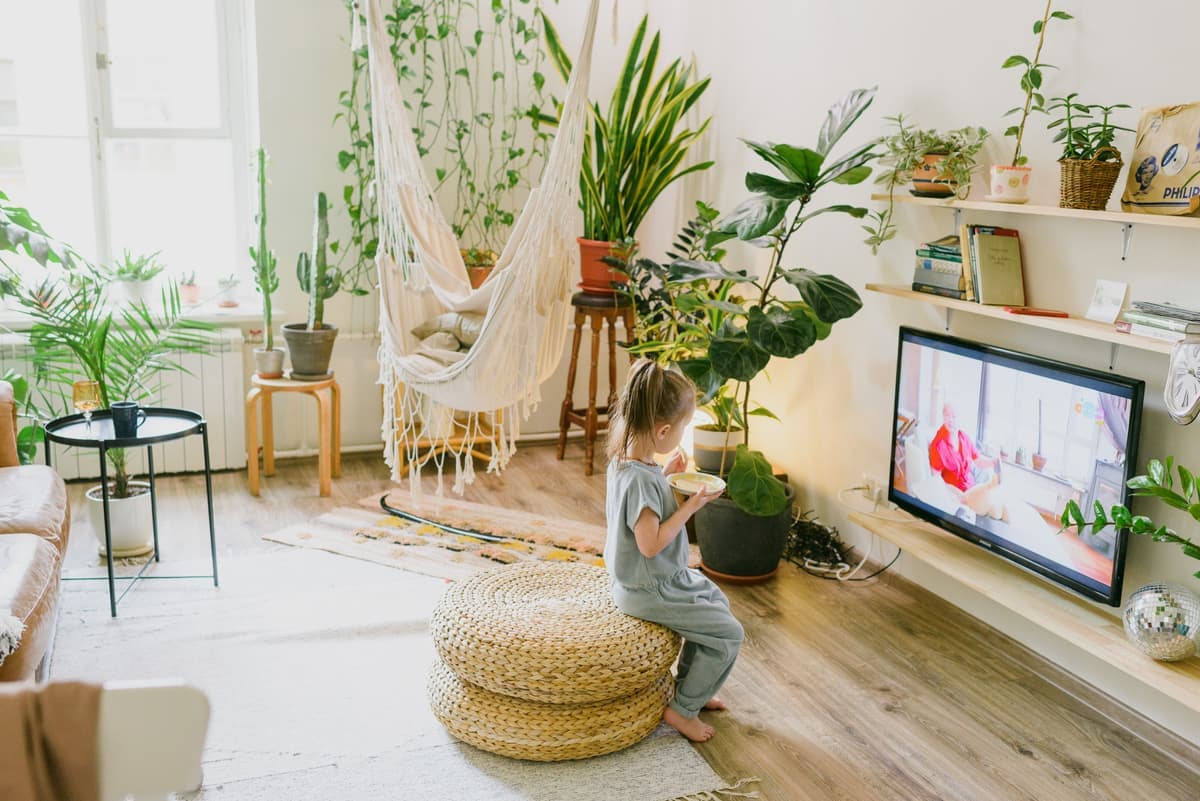
Indoor greenery styled in a living room

As an Amazon Associate, I Heart My Home earns from qualifying purchases. It never changes your price or our picks. Learn more.

Greenery is the fastest way to make a room feel alive, but real plants come with a standing appointment: the right light, a watering schedule, and the quiet guilt of a fiddle leaf fig slowly dropping its leaves in a dim corner. Good faux plants skip all of that. The catch is that most of the artificial greenery out there looks exactly like what it is - a plastic tell you can spot from the doorway. After styling a lot of rooms, I've learned the difference between a faux plant that fools people and one that cheapens the whole space comes down to a few specific things, and none of them is price alone.

The picks below cover the jobs I actually reach for faux greenery to do: a big statement tree for an empty corner, a low sculptural plant for a console, a set of small plants for shelves, something trailing for height, and a handful of stems to fill a vase. Every one is chosen on realism first - leaf material, color variation, and how believable it looks from a few feet away, which is the only distance anyone judges it from. For a look that leans hard on natural texture, these pair especially well with my boho decor guide and the whole living room setup.

One honesty note before you shop: Amazon pricing moves all day, so you'll see a Check price on Amazon button on every pick rather than a number I can't stand behind. As an Amazon Associate we earn from qualifying purchases at no cost to you - our editorial policy and affiliate disclosure spell out exactly how that works.

Quick picks at a glance

#ProductBest forPrice
1
A cozy reading corner with a chair, lamp, and plants
Nearly Natural Fiddle Leaf Fig Tree

A five-to-six-foot faux fig that fills a dead corner with the exact plant everyone wants but almost nobody can keep alive.

a big statement tree for an empty corner
2
An interior in earthy terracotta and sage tones
Fopamtri Artificial Olive Tree

A tall, open olive tree with slim silver-green leaves and little faux olives that reads lighter and more current than a dense ficus.

a warm, airy Mediterranean corner
3
An entryway console table with decor and a mirror
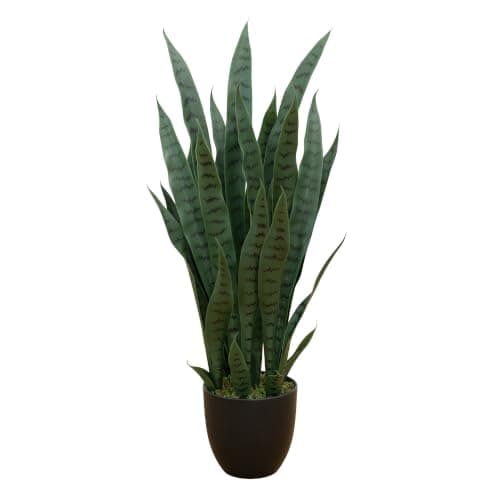
Nearly Natural Snake Plant

A stiff, upright sansevieria whose blade-like leaves already look architectural in real life, which makes the faux version almost impossible to call out.

a low sculptural plant for a console or shelf
4
A styled shelf with vases, books, and ceramics
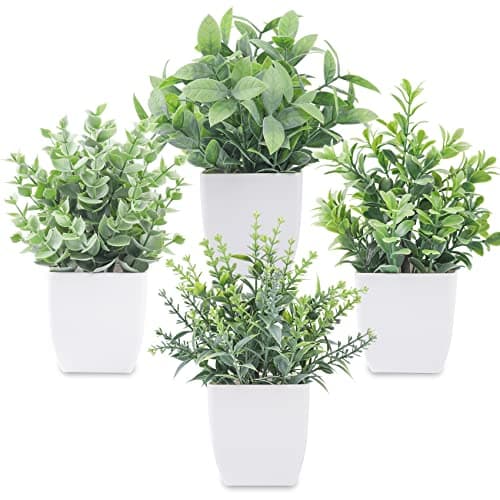
Der Rose Mini Potted Faux Plants (Set)

A set of small potted greens - the little faux plants that finish a bookshelf, a windowsill, or a desk without any of them demanding attention.

shelves, desks, and small surfaces
5
Indoor greenery styled in a living room
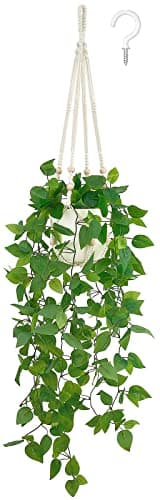
Mkono Macrame Hanging Faux Plant

A trailing faux plant in a macrame hanger that adds greenery at eye level and above, where floor and shelf plants can't reach.

trailing greenery with height
6
Ceramic vases styled on a shelf
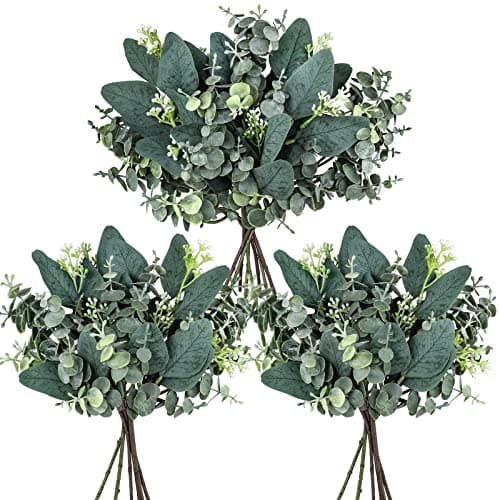
Winlyn Faux Eucalyptus Greenery Stems (Set)

A bundle of soft eucalyptus stems that turns any vase you already own into a fresh-looking arrangement with zero water and zero wilting.

filling a vase on a table or mantel

Tap any row to jump to the full write-up. Prices open on Amazon in a new tab.

How we chose these picks

Every pick here is chosen the way I’d choose it for a client’s home: real-world durability first, build quality and materials second, and value for the money third. Where I’ve installed or lived with a product on a job, I say so and tell you what I saw. Where a pick is based on research and verified buyer feedback rather than hands-on use, I say that too — I never claim to have tested something I haven’t.

Read our full editorial policy for how we evaluate and update these guides.

1

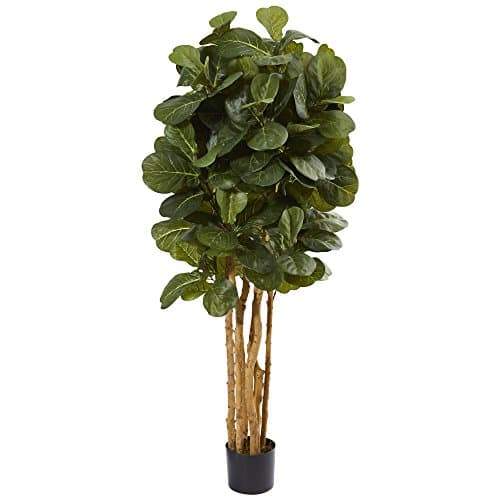
Nearly Natural Fiddle Leaf Fig Tree

Nearly Natural · Best for a big statement tree for an empty corner
A cozy reading corner with a chair, lamp, and plants

A five-to-six-foot faux fig that fills a dead corner with the exact plant everyone wants but almost nobody can keep alive.

A fiddle leaf fig is the plant people photograph their whole living room around, and it is also famously temperamental - it sulks in the wrong light and drops leaves at the first draft. That makes it the single best candidate for going faux: you get the exact silhouette everyone wants with none of the fuss. A tree this size does the work of a floor lamp and a piece of art at once, grounding an empty corner and drawing the eye up.

$90.00 · View on Amazon

#ad · disclosure · Price as of August 6, 2026

Pros

  • Fills a bare corner floor-to-eye-level in one purchase
  • The one trendy plant that is genuinely hard to grow for real
  • Broad leaves read convincingly green from across the room

Cons

  • Ships compressed, so every branch needs shaping out of the box
  • The basic grow-pot it comes in is the weak point - plan to hide it
2

Fopamtri Artificial Olive Tree

Fopamtri · Best for a warm, airy Mediterranean corner

An interior in earthy terracotta and sage tones

A tall, open olive tree with slim silver-green leaves and little faux olives that reads lighter and more current than a dense ficus.

The olive tree has quietly replaced the fiddle fig as the go-to statement plant, and for good reason - its narrow leaves and open shape let light through, so it warms a corner without crowding it. Fopamtri's version is the one I see hold up in photos because the leaf color has real variation and the little olives break up the uniformity that gives cheaper trees away. It leans Mediterranean and organic-modern, which is exactly where a lot of rooms are headed.

Pros

  • Airy, open canopy feels lighter than a big-leaf tree
  • Silver-green foliage suits neutral and warm palettes
  • Small faux olives add a detail that sells the realism

Cons

  • Thin leaves can look sparse if you do not spread the branches
  • Comes in a plain plastic pot that needs covering
3

Nearly Natural Snake Plant

Nearly Natural · Best for a low sculptural plant for a console or shelf

An entryway console table with decor and a mirror

A stiff, upright sansevieria whose blade-like leaves already look architectural in real life, which makes the faux version almost impossible to call out.

The snake plant is the smartest faux pick in the whole category because a real one is already stiff, waxy, and architectural - the exact qualities that expose most artificial plants are the ones this plant has for real. That means the faux version clears the believability bar with almost no effort. It brings vertical structure to a low surface like a console or a bathroom counter where a leafy trailing plant would look wrong, and it never needs the light a real one still prefers.

$59.99 · View on Amazon

#ad · disclosure · Price as of August 6, 2026

Pros

  • Rigid, upright leaves are naturally stiff, so faux reads real
  • Compact footprint fits a console, shelf, or bathroom counter
  • Structural shape adds height without spreading wide

Cons

  • Flat leaf surfaces show dust and need an occasional wipe
  • Base pot is small and light, so it can feel tippy on its own
4

Der Rose Mini Potted Faux Plants (Set)

Der Rose · Best for shelves, desks, and small surfaces

A styled shelf with vases, books, and ceramics

A set of small potted greens - the little faux plants that finish a bookshelf, a windowsill, or a desk without any of them demanding attention.

Small faux plants are the styling equivalent of punctuation - you scatter a few to break up a run of books or soften a hard shelf edge, and they do their job precisely because nobody looks at them closely. A set is the honest way to buy them, since one lonely mini plant looks stranded but three or four placed around a room read as a deliberate, lived-in touch. This is the cheapest entry point in the category and the one I reach for most.

$12.9923% off

$9.99 · View on Amazon

#ad · disclosure · Price as of August 6, 2026

Pros

  • A set styles several surfaces at once for one low price
  • Small scale fits shelves and sills a full plant would crowd
  • Simple pots read fine grouped or tucked among books

Cons

  • Small plastic leaves are the least convincing up close
  • The included pots are basic and often look better swapped out
5

Mkono Macrame Hanging Faux Plant

Mkono · Best for trailing greenery with height

Indoor greenery styled in a living room

A trailing faux plant in a macrame hanger that adds greenery at eye level and above, where floor and shelf plants can't reach.

Hanging greenery works a part of the room almost nobody decorates - the vertical space above shelf height - and it does it without the mess a real trailing plant makes when you water a pot suspended over the floor. Trailing vines soften the hard right angle where two walls meet and add a relaxed, layered feeling that upright plants can't. The macrame hanger is doing double duty here as its own bit of texture, which is very on-trend in a boho or coastal room.

$17.99 · View on Amazon

#ad · disclosure · Price as of August 6, 2026

Pros

  • Adds greenery up high, a plane most rooms leave empty
  • Trailing vines soften a hard corner or a bare wall
  • No drips, no wall damage from a heavy watered planter

Cons

  • Needs a ceiling hook or bracket rated for the weight
  • Vines tangle in shipping and need combing out to hang right
6

Winlyn Faux Eucalyptus Greenery Stems (Set)

Winlyn · Best for filling a vase on a table or mantel

Ceramic vases styled on a shelf

A bundle of soft eucalyptus stems that turns any vase you already own into a fresh-looking arrangement with zero water and zero wilting.

Stems are the most flexible faux greenery you can buy because they meet the vessel you already own instead of forcing you to buy a whole potted plant. A loose bundle of eucalyptus in a plain vase reads as fresh and intentional, and unlike cut flowers it never becomes a standing weekly expense. This is the pick that turns an empty vase - the most common half-finished object on a table - into an actual centerpiece for almost nothing.

$16.9918% off

$13.99 · View on Amazon

#ad · disclosure · Price as of August 6, 2026

Pros

  • Cheapest way to make a bare vase look styled and fresh
  • Works with a vase you already have, so no matched set to buy
  • Reusable every season, unlike a recurring cut-flower habit

Cons

  • The cheapest stems show a plastic sheen up close
  • Metal-core stems need trimming with wire cutters, not scissors

What makes a faux plant look real (and what gives it away)

Price is a poor predictor of realism - I've seen expensive faux plants look plastic and cheap ones look convincing. What actually separates the believable from the obvious is a short list of details, and once you know them you can judge any listing from the photos:

  • Leaf material and finish. Fabric or coated “real-touch” leaves beat hard, shiny plastic every time. A matte or lightly textured surface kills the tell-tale glare that announces a fake across the room.
  • Color variation. Real foliage is never one flat green - it has lighter new growth, darker mature leaves, and hints of brown at the edges. A plant molded in a single uniform green is the first thing your eye rejects.
  • Stem and trunk realism. A believable tree has a real or convincingly wrapped trunk, not a bare wire painted green. Little details like an olive tree's tiny fruit or a fig's raised leaf veins do a lot of the work.
  • The pot. The single biggest giveaway is the cheap black nursery pot almost every faux plant ships in. Hiding it is non-negotiable, which I get into below.

Get those right and a faux plant clears the believability bar. For how greenery fits into a whole room rather than sitting in isolation, my home decor ideas hub covers the bigger picture.

Styling faux plants so nobody can tell

A convincing faux plant that is styled badly still looks fake, and an average one styled well can fool a guest completely. The styling is where most of the realism actually comes from, and none of it costs anything:

  • Shape it out of the box. Bend, fluff, and separate every branch and leaf so no two point the same way. Ten minutes here does more than an extra twenty dollars of plant.
  • Always hide the grow-pot. Drop the whole nursery pot inside a basket, a ceramic planter, or a woven bin. Tuck a little moss or a few stones over the top to cover the transition.
  • Vary height and cluster. A tall tree, a mid snake plant, and a low trailing plant grouped together read as a real collection; identical plants in a row read as a display.
  • Keep them dusted. Nothing outs a faux plant faster than a gray film of dust. A quick wipe or a blast of canned air every couple of weeks keeps the color reading true.

Those habits scale from a single stem to a full corner tree. In an entryway or on a console table, one well-styled faux plant is often all a surface needs to feel finished.

Where faux beats real - and where it doesn't

I'm not anti-real-plant. There are rooms where living greenery is worth the effort, and there are spots where faux is simply the smarter call. Knowing which is which saves you both money and dead plants:

  • Go faux in dark corners. The dim spot that needs a plant most is exactly where a real one dies. A faux tree thrives in zero light.
  • Go faux up high and hard to reach. A trailing plant on a tall shelf or a hanging planter you'd need a ladder to water is a chore as a real plant and effortless as a faux one.
  • Go faux if you travel or forget. Buy-once greenery that looks the same in month six as it did on day one is a genuine relief for anyone who kills real plants.
  • Keep it real where you'll notice. A herb pot in a sunny kitchen window or a plant you tend as a hobby is worth the upkeep - up close and in good light, nothing fully replaces the real thing.

For most people, a mix is the honest answer: faux where it's hard, real where it's easy and rewarding. Either way, a little greenery is one of the cheapest ways to make a room feel cared-for, a theme that runs through my decorate-on-a-budget guide.

Frequently asked questions

Are faux plants tacky, or can they look expensive?

They can absolutely look expensive - what reads as tacky is usually a shiny plastic finish, a single flat green color, and the cheap nursery pot left on display. Choose plants with fabric or real-touch leaves and color variation, shape every branch out of the box, and always hide the grow-pot inside a basket or ceramic planter. Styled that way, faux greenery reads as intentional, not cheap.

Which faux plants look the most realistic?

The most convincing faux plants are ones that are naturally stiff and structural in real life - a snake plant is the best example, because a real one is already waxy and rigid, so the fake clears the believability bar easily. Olive trees and fiddle leaf figs look great too when you spread the branches and add color variation. Soft, thin plastic leaves molded in one uniform green are the least convincing.

How do I stop my faux plant from looking fake?

Do three things: shape it, hide the pot, and keep it dusted. Straight from the box every branch points the same way, so bend and separate them so no two sit alike. Drop the nursery pot inside a real basket or planter and cover the top with moss or stones. Then wipe the leaves every couple of weeks, because a gray film of dust is what gives a faux plant away fastest.

How do I clean and maintain artificial plants?

Faux plants need almost nothing - just dusting. Wipe broad, flat leaves like a snake plant with a barely damp microfiber cloth, and use a blast of canned air or a soft brush for feathery foliage and small leaves. Keep them out of direct, all-day sun, since strong UV can fade the color over months. That is the entire maintenance routine.

What size faux plant should I buy for a corner?

For an empty floor corner, go bigger than you think - a five-to-six-foot tree like a fiddle leaf fig or an olive tree fills the vertical space and grounds the corner, where a small plant just looks lost. On a console, shelf, or counter, scale down to a low structural plant like a snake plant or a set of minis. Match the plant's height to the surface it sits on and leave a little breathing room around it.

Ready to make your space feel like home?

Browse the roundups I'd actually hand a client — honest picks, real trade-offs, and the one to buy first.